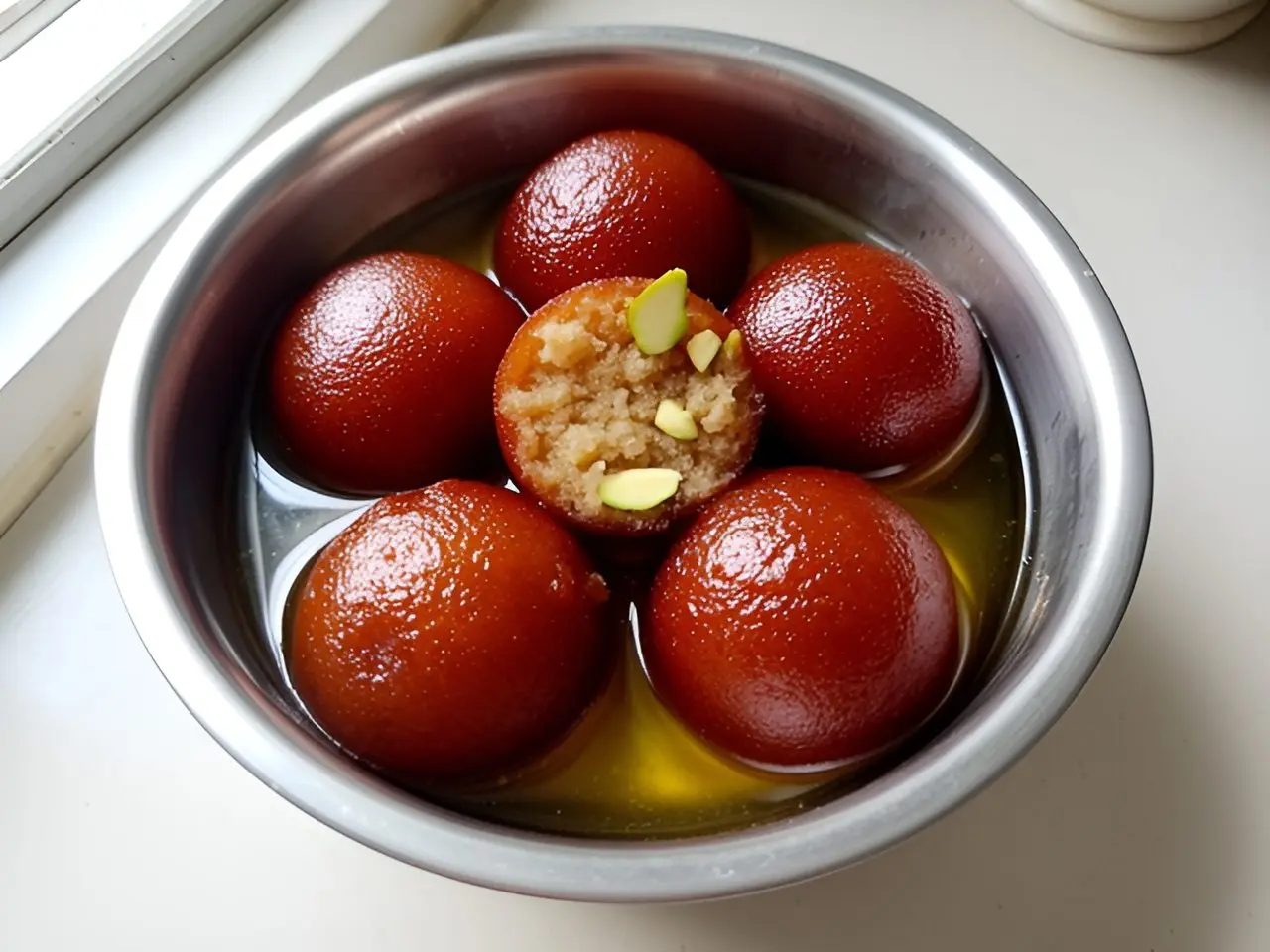
Gulab jamun are small milk dumplings, fried until dark golden and soaked in cardamom syrup, often scented with rose water, and they are on almost every Diwali sweet plate. The traditional base is khoya, milk reduced for hours; milk powder makes a quick, reliable dough with the same soft, syrupy result.
Why this recipe works
- A soft dough that is folded, not kneaded, keeps the jamun tender, so they swell and soak up syrup instead of turning rubbery.
- Frying at 140 to 150 °C cooks each ball through to the centre before the outside darkens, which prevents hard or raw cores.
- Warm, thin syrup with no string is absorbed all the way to the middle, while a thick or boiling syrup would seal the surface.
Method
Put the sugar, water and crushed cardamom in a wide pan over medium heat and stir until the sugar dissolves. Add the lemon juice and simmer for 5 to 6 minutes, until the syrup feels very slightly sticky but forms no thread at all. Turn off the heat, stir in the rose water and leave it to cool to warm.
Tip: To test, dip a spoon, let a drop cool on the back for 30 seconds, then touch it between finger and thumb. Never touch the syrup straight from the pan; hot sugar syrup burns badly and clings to skin.
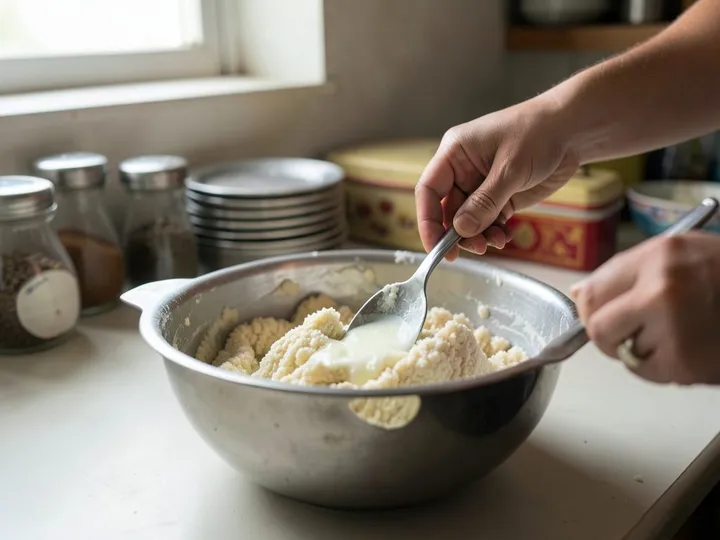
Mix the milk powder, maida and baking soda in a bowl. Rub in the ghee with your fingertips for 1 minute, until the mixture looks like damp breadcrumbs.
Add the milk a tablespoon at a time, folding with a spoon or your fingers, until the crumbs just come together into a soft, slightly sticky dough. Do not knead. Cover and rest for 10 minutes; it firms up as the milk powder absorbs the liquid.
Tip: Kneading develops gluten in the maida and gives hard, rubbery jamun. Fold just until no dry powder remains.
Grease your palms with ghee and divide the dough into 18 pieces of about 12 g. Roll each between your palms with light pressure for 15 to 20 seconds into a smooth ball with no cracks or creases. If cracks appear, add a few drops of milk to the remaining dough and roll again. Keep the balls covered.
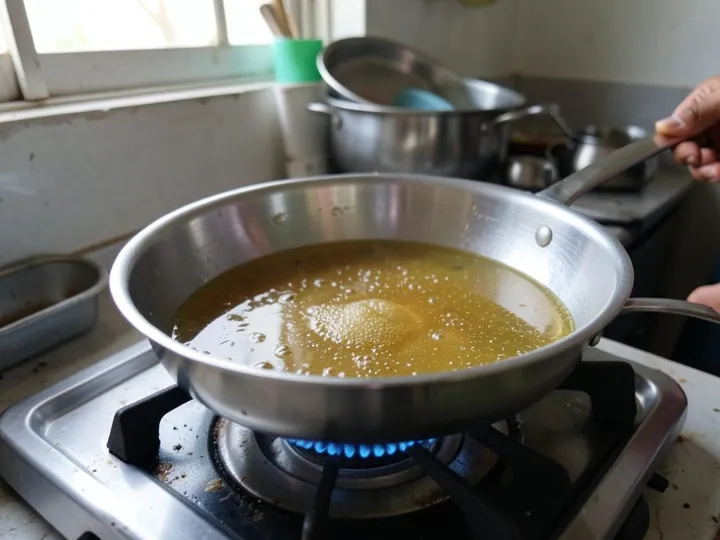
Pour the ghee or oil into a kadhai or small heavy pan, no more than half full, and heat over low to medium-low heat to 140 to 150 °C. Without a thermometer, drop in a pea-sized piece of dough. It should sink, then rise slowly after 5 to 10 seconds with gentle, small bubbles. If it rises at once and sizzles hard, the fat is too hot, so take the pan off the heat for a minute.
Slide in 6 balls from a spoon, close to the surface. Do not touch them for the first minute; gently swirl the fat around them with a spoon instead so they turn. Fry on low heat for 7 to 9 minutes, rolling them gently, until they have puffed to almost double and are an even, deep golden brown.
Lift them out with a slotted spoon, drain for 30 seconds, then drop them straight into the warm syrup. It should feel comfortably warm on the outside of the pan, not hot. If the syrup has cooled to lukewarm by the last batch, warm it briefly over low heat. Let the fat cool back to 140 °C and fry the remaining 2 batches.
Tip: Hot jamun going into warm syrup absorb it evenly. Boiling syrup makes the surface tough or splits the balls, and cold syrup is absorbed slowly.
Leave the jamun to soak for at least 2 hours, turning them once, until they have swelled further and are soft all the way through when pressed with a spoon. Serve warm or at room temperature, with a spoonful of syrup and the chopped pistachios.
Swaps & substitutions
- Maida → Fine semolina (16 g): Soak it in 1 tbsp of the milk for 5 minutes first. The jamun are slightly grainier but still soft.
- Baking soda → Baking powder (0.5 tsp): A gentler raising agent with less risk of a soapy taste; the jamun puff a little less.
- Rose water → A pinch of saffron (about 15 strands): Add it to the syrup with the lemon juice for colour and aroma.
Storage & reheating
Keep the jamun in their syrup in a covered container. They keep 1 day at a cool room temperature (below about 25 °C) and up to 5 days in the fridge. Warm gently in the syrup over low heat, or for 20 to 30 seconds in the microwave, before serving. Do not freeze; the texture turns spongy. Strain and cool used frying fat completely before storing it.
Frequently asked questions
Why did my gulab jamun crack while frying?
The dough was too dry or the balls were not rolled smooth. Add milk a spoonful at a time until the dough is soft and slightly sticky, rest it for 10 minutes, and roll each ball until the surface has no cracks or creases. Fat that is too hot also splits them, so keep it at 140 to 150 °C.
Why are my gulab jamun hard inside?
Usually the dough was kneaded, there was too much maida, or the fat was too hot so the centre stayed raw and dense. Fold the dough only until it comes together, fry for the full 7 to 9 minutes on low heat, and soak for at least 2 hours.
How thick should the syrup be?
Thin and only very slightly sticky, with no thread when pressed between finger and thumb. One-string syrup is too thick for jamun; it stops them absorbing syrup and can leave a sugary crust. Use it warm, not boiling and not cold.
Why did my jamun dissolve or break apart in the fat?
The dough was too soft, had too much baking soda, or too much ghee in the dough. Add a tablespoon more milk powder to the dough, measure the soda carefully, and test one ball before frying a full batch.
Can I use dairy whitener or sweetened milk powder?
Use unsweetened full-fat milk powder. Dairy whitener contains added sugar and other ingredients, so the jamun brown too fast and can turn chewy.
Which allergens does this contain?
Milk (milk powder, milk and ghee), wheat (maida) and pistachios. Use neutral oil for frying if you want to cut down the dairy fat, but the jamun themselves still contain milk.
Nutrition
| Calories | 271 kcal |
|---|---|
| Protein | 6 g |
| Carbohydrates | 36 g |
| Fat | 12 g |
| Fibre | 0 g |
| Sodium | 107 mg |
More in Mughlai & Awadhi Recipes and Indian Dessert Recipes. Learn the technique: The Indian Pantry: 25 Essentials, Indian Spices: A Practical Guide.