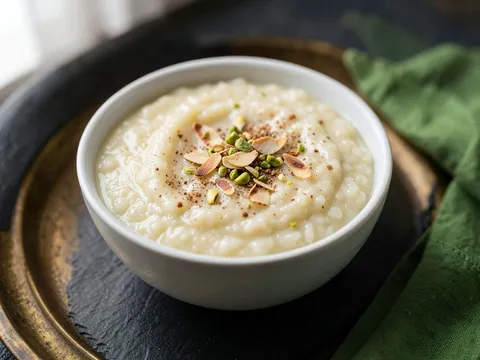
Lassi is a yogurt drink that began in the Punjab region (today in India and Pakistan), usually served sweet or salted in tall glasses. Mango lassi is the summer variation, made when ripe mangoes are in season. Using thick Greek-style yogurt here gives a creamy, scoopable body without needing cream.
Why this recipe works
- Thick yogurt plus a little milk gives a rich, creamy texture that pours smoothly instead of watering down.
- Blending the liquids first keeps the mango from sticking under the blades, so it purées in under a minute.
- Cardamom adds the warm, floral note that makes the drink taste distinctly Indian rather than like a smoothie.
Method
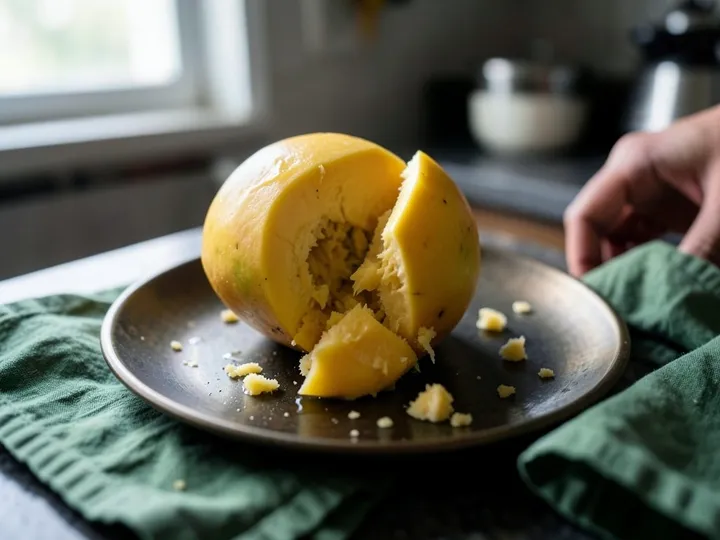
Wash the mango, peel it and slice the flesh off the stone, then weigh out 250 g. If it is fibrous near the stone, chop the flesh finely or scrape it from the skin so it blends smoothly.
Tip: A ripe mango smells sweet at the stalk and gives slightly when pressed. Unripe mango makes a sour, chalky lassi.
If using whole green cardamom pods, crack them open, crush the seeds with a rolling pin or mortar to a fine powder and sift out the husk.
Pour the milk and yogurt into a blender first, then add the mango, honey and most of the cardamom, so the blades catch the liquid immediately.
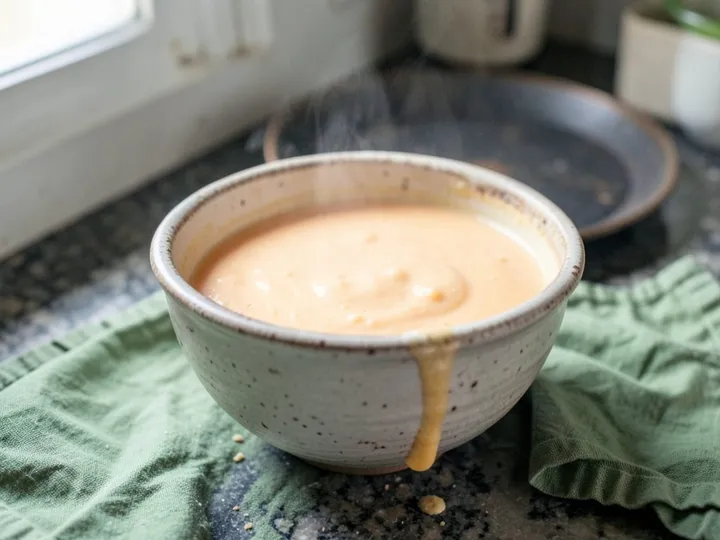
Blend on high for 45 to 60 seconds until completely smooth, pale orange and with no fibres. Taste, and add honey 1 teaspoon at a time if needed. For a thinner lassi, blend in 2 tablespoons of cold milk.
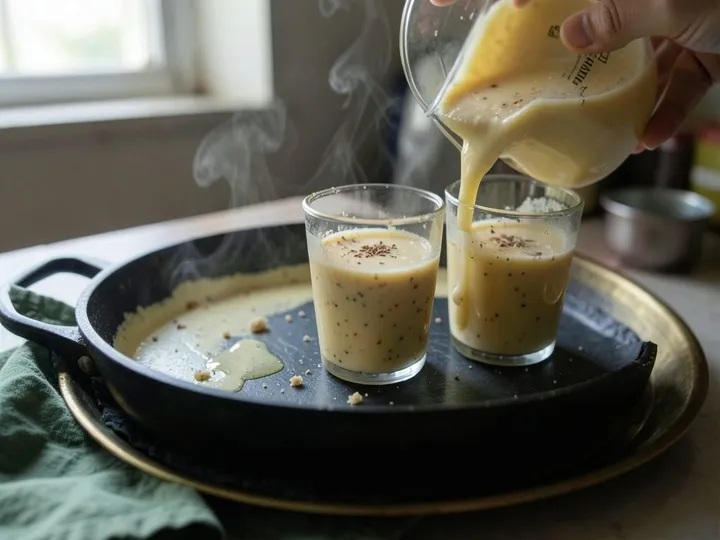
Pour into 2 chilled glasses, dust with the reserved pinch of cardamom, and serve straight away.
Swaps & substitutions
- Fresh mango → Canned Alphonso or Kesar pulp (250 g): Pulp is smoother and consistently flavoured, but much of it is sold sweetened, so check the label. If it lists sugar, leave out the honey and taste first.
- Greek yogurt and milk → 300 g plain dahi (regular yogurt): Gives a thinner, tangier, more traditional lassi. Skip the milk.
- Honey → Jaggery powder (15 g) or no sweetener: A very ripe mango needs little or none. Jaggery powder blends in more easily than a block.
- Dairy → Unsweetened coconut yogurt and oat milk: Makes it dairy-free. The texture is slightly looser and tastes mildly of coconut.
Storage & reheating
Best drunk straight away. Keeps up to 24 hours in a covered jar in the fridge, though it separates, so shake or re-blend it before serving. Do not leave it at room temperature for more than 2 hours, particularly in hot weather. For a thicker, colder drink, blend in a few frozen mango chunks instead of ice.
Frequently asked questions
Can I use canned mango pulp instead of fresh mango?
Yes, and for Alphonso or Kesar it is often the more reliable choice outside mango season. Use 250 g, but check the label because much of it is sweetened. If so, leave out the honey and taste before adding any.
How sweet is this lassi?
About 33 g of sugars per glass, mostly from the mango and the lactose in the dairy, of which roughly 8 g is added honey. Skipping the honey removes the added sugar.
Why is my mango lassi stringy?
Some varieties are fibrous, particularly near the stone. Blend longer, chop the flesh smaller, or switch to canned pulp or a smoother variety such as Alphonso or Kesar, which have little fibre.
Why did my lassi turn out sour?
Either the mango was under-ripe or the yogurt was tart. Add a teaspoon of honey, or a splash more milk. Stay with a ripe, fragrant mango, because sugar cannot fully fix an unripe one.
Is mango lassi a Punjabi drink?
Lassi, the yogurt drink, comes from the Punjab region (today in India and Pakistan), traditionally served salted or sweet. The mango version is a modern, widely loved variation, most popular in summer when mangoes are in season.
Nutrition
| Calories | 249 kcal |
|---|---|
| Protein | 12.5 g |
| Carbohydrates | 35 g |
| Fat | 8 g |
| Fibre | 2 g |
| Sodium | 69 mg |
More in Punjabi Recipes and Drinks & Lassis. Learn the technique: Indian Spices: A Practical Guide.