 1 hr 15 minGluten-free
Punjabi Chicken Curry (Dhaba Style)
1 hr 15 min · Medium
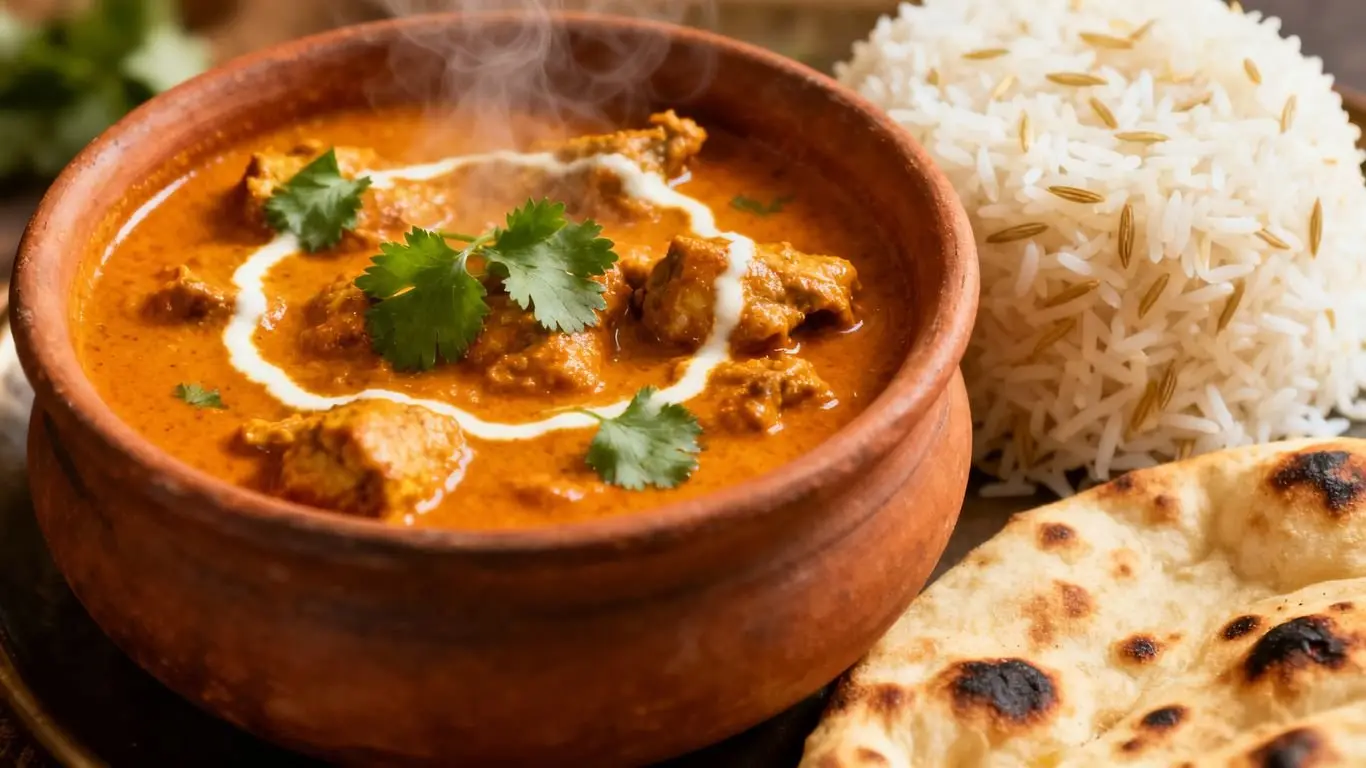
A good curry is a balance of three things: a well-cooked base, spices added at the right moment, and meat or vegetables simmered until just done. Most failures come from rushing the base. Onions that are only soft and pale give a curry a raw, sharp taste. Onions browned slowly for 12 to 15 minutes give sweetness, colour and depth.
Bhuna. Fry whole spices briefly, brown the onions, add ginger and garlic, then tomatoes and ground spices, and cook until oil shows at the edges of the pan. Our curry base guide shows each stage and the cues for judging it, plus how to adjust for different tomatoes. After that, add the protein and water, and simmer. Finish with garam masala and crushed dried fenugreek leaves, kasuri methi, for aroma. Spice timing matters too, which is covered in the spices guide.
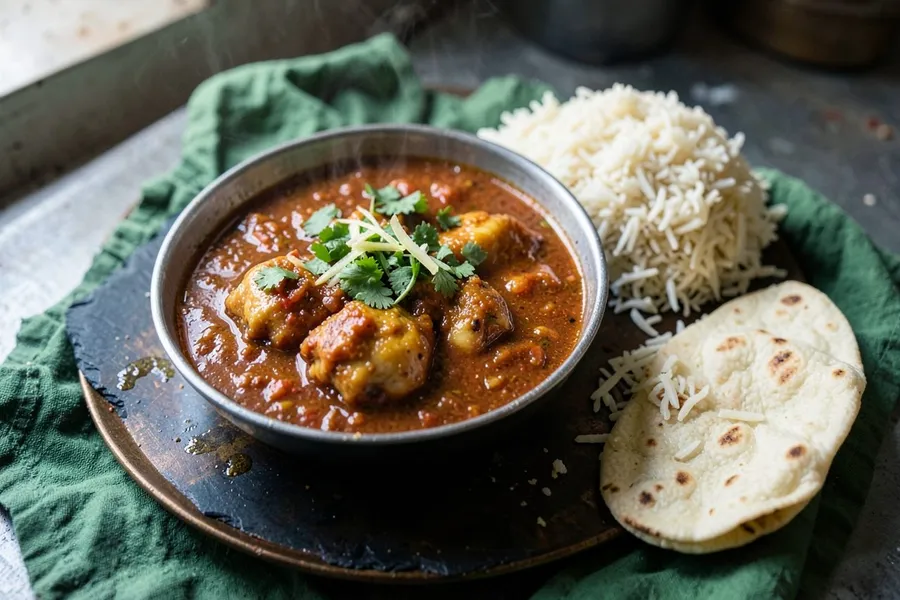
The hub is intentionally small and focused on the bhuna family. Punjabi chicken curry is the best starting point: bone-in thighs simmered for 25 minutes in a dhaba-style masala, about 75 minutes total for 4 servings. Crock pot lamb curry uses the same logic but swaps the stovetop for a slow cooker. Lamb shoulder is browned, cooked in an onion and tomato masala, then slow-cooked on low for 7 hours, with coconut milk added for the last 15 minutes. It is a home adaptation rather than a regional classic.
Other dishes use the same base, even if they are filed elsewhere. Egg bhurji is a fast egg version, and oven paneer tikka pairs well with a curry as a starter.
Cook the chicken curry once and follow the timings closely. Then repeat it with a vegetable or paneer in place of the chicken, adjusting the simmering time. Stock cumin, coriander, turmeric, Kashmiri chilli and garam masala first; the pantry guide shows what else is worth having. Serve with basmati rice or flatbread.
In India there is no single dish called curry. The word is used loosely for any dish with a spiced gravy, and each region has its own names, such as masala, korma, kadhi or sambar. Here it means a gravy dish served with rice or bread.
Bhuna is the technique of frying onions, ginger, garlic, tomatoes and ground spices in fat until the mixture is deeply cooked and the oil separates at the edges. It is the base of many North Indian curries.
Look for oil pooling around the edges, a paste that holds together on the spoon, and a raw tomato smell that has turned sweet and cooked. If the masala still looks wet and pale, give it a few more minutes.
Yes. Use less oil, skim fat from the surface before serving, or swap in chicken breast as the recipe's swap explains. The chicken curry has about 17 g of fat per serving as written.