 Street FoodAI illustration
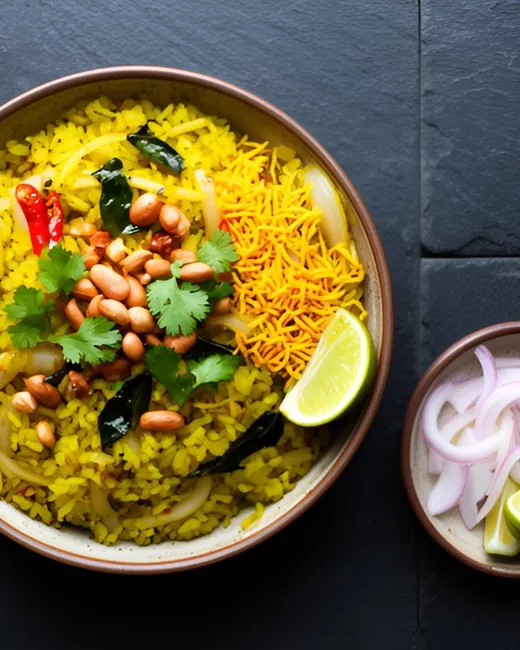
Kanda Poha (Maharashtrian Onion Poha)
27 min · Easy
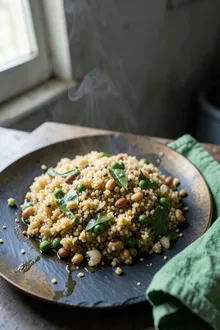
Rava upma, South Indian semolina breakfast with mustard seeds, dals, cashews and peas. A 1 to 2.5 rava-to-water ratio keeps it soft. Serves 2.
By Nomisto KitchenUpdated First published
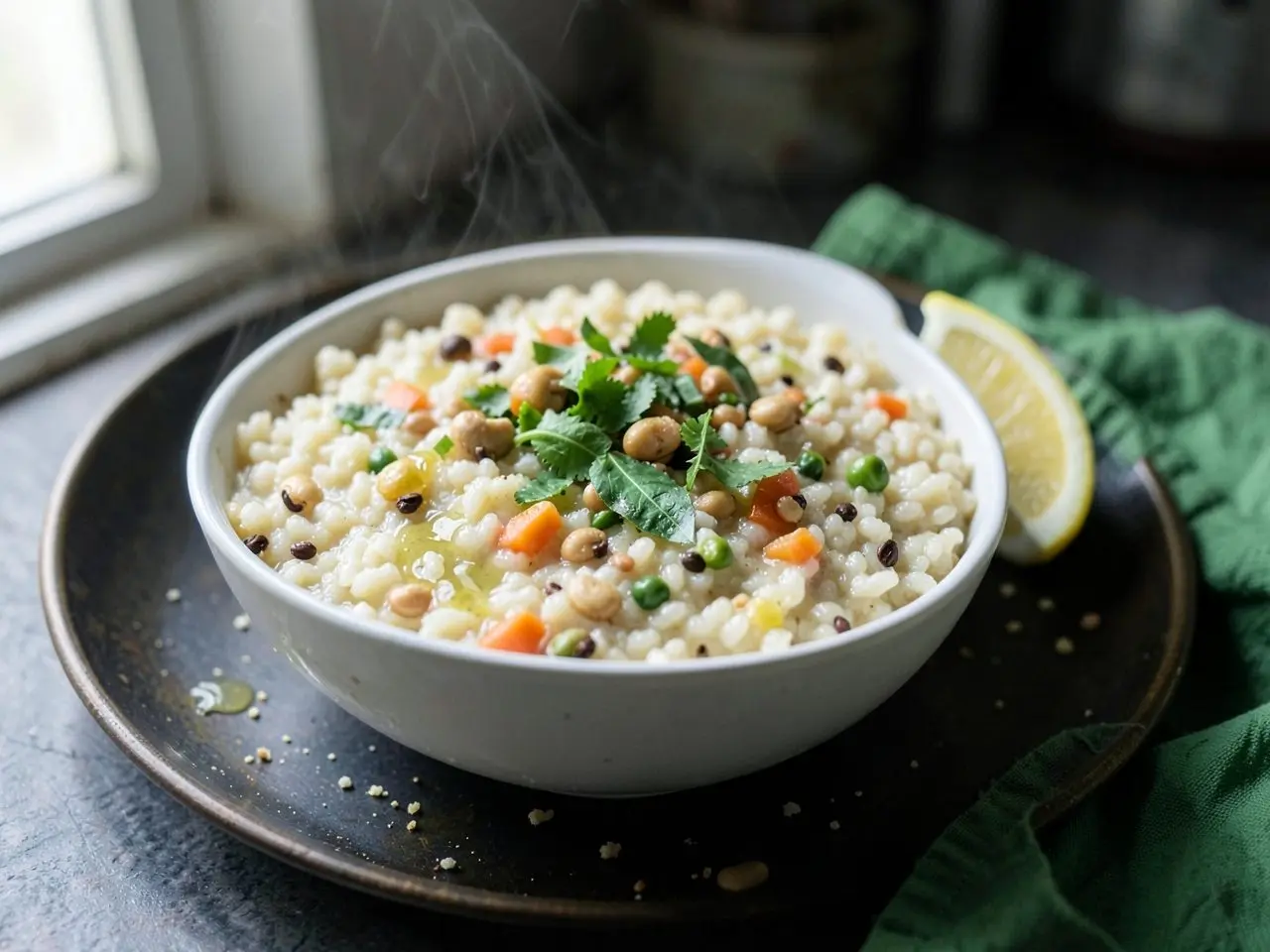
Rava upma is a South Indian breakfast of dry-roasted semolina cooked in a tempering of mustard seeds, dals, cashews, curry leaves, ginger and onion. Use hot water at a ratio of 1 cup rava to 2.5 cups water, and pour the rava in a thin stream while stirring so it stays lump-free. Serves 2 in 30 minutes.
Upma is a thick, savoury porridge made across South India from dry-roasted semolina, known as rava or sooji, cooked in a spiced tempering. It is one of the most common home breakfasts in Karnataka, Tamil Nadu and Andhra Pradesh because it needs only a pan and a handful of pantry ingredients.
30 min · Serves 2 · Easy · Vegetarian
Dry-roast the rava in a wide, heavy pan over medium-low heat for 4 to 5 minutes, stirring constantly, until it smells nutty and flows freely like sand. It should not take on colour. Tip it onto a plate.
Tip: Roasting keeps the grains separate when they cook. Skip it and the upma turns sticky.
Heat the 450 ml of water in a kettle or small pan until steaming hot, then keep it nearby.
Wipe the pan, add the oil and heat over medium. Add the mustard seeds and let them pop for 15 to 30 seconds, until the popping slows. They scorch quickly, so lift the pan off the heat if they darken.
Add the chana dal, then after 20 seconds the urad dal and cashews. Stir for about 1 minute, until the dals and cashews turn golden.
✓ Ready when the dals and cashews turn golden
Add the curry leaves, green chilli and ginger and stir for 15 to 20 seconds, standing back from the spatter, until fragrant.
✓ Ready when fragrant
Add the onion and cook for about 3 minutes, until soft and translucent but not browned.
✓ Ready when soft and translucent but not browned
Add the peas, hot water, salt and sugar. Bring to a rolling boil, about 2 to 3 minutes, then reduce the heat to low.
Pour the roasted rava into the water in a thin, steady stream with one hand while stirring constantly with the other, until it absorbs the water and thickens, about 1 minute. Cover and cook on the lowest heat for 2 minutes.
Tip: Pouring slowly into water that is boiling gently is what prevents lumps. If lumps form, break them with the back of the spoon straight away.
Turn off the heat and leave it covered for 2 minutes. Fluff with a fork, stir in the lemon juice and coriander, and serve hot.
Raw cashews → Roasted peanuts (10 g)
Add them at the end of step 4. Use this if cashews are not available, but note the peanut allergen.
Fine rava → Gluten-free rava made from broken rice or millet (120 g)
Semolina is made from wheat, so choose a gluten-free alternative if needed. Cooking times and water ratios vary by product, so follow the pack.
Neutral oil → Ghee (2 tbsp)
Gives a richer flavour but adds dairy.
Frozen green peas → Finely diced carrot (40 g)
Add with the onion and cook for 1 extra minute.
Upma is best served fresh, as it firms up as it cools. Cool leftovers within 1 hour and refrigerate in an airtight container for 1 to 2 days. Reheat once with a splash of water in a covered pan until steaming hot all the way through.
This recipe uses 1 cup of rava to 2.5 cups of water by volume, 120 g of rava to 450 ml of hot water. Use 2 cups of water per cup of rava for a firmer upma, and add a splash more if you want it looser.
Dry-roast the rava, add it to gently boiling hot water in a thin stream and stir constantly while you pour. Cold water and dumping the rava all at once are the usual causes of lumps.
Either the rava was not roasted, there was too much water or it was stirred too hard after absorbing. Roast until free-flowing, measure the water and just fluff with a fork at the end.
It contains wheat (gluten) from the semolina, cashews (a tree nut) and mustard. Most hing contains wheat flour; this recipe does not use it.
Coconut chutney, Indian pickle, plain yoghurt or a ripe banana are common choices, and some homes serve sambar alongside it.
| Calories | 435 kcal |
|---|---|
| Protein | 12 g |
| Carbohydrates | 58 g |
| Fat | 18 g |
| Fibre | 5 g |
| Sodium | 893 mg |
More in South Indian Recipes and Breakfast Recipes. Learn the technique: Indian Spices: A Practical Guide, The Indian Pantry: 25 Essentials.