 2 hrHigh-protein
Mutton Yakhni Pulao (Home-Style)
2 hr · Medium
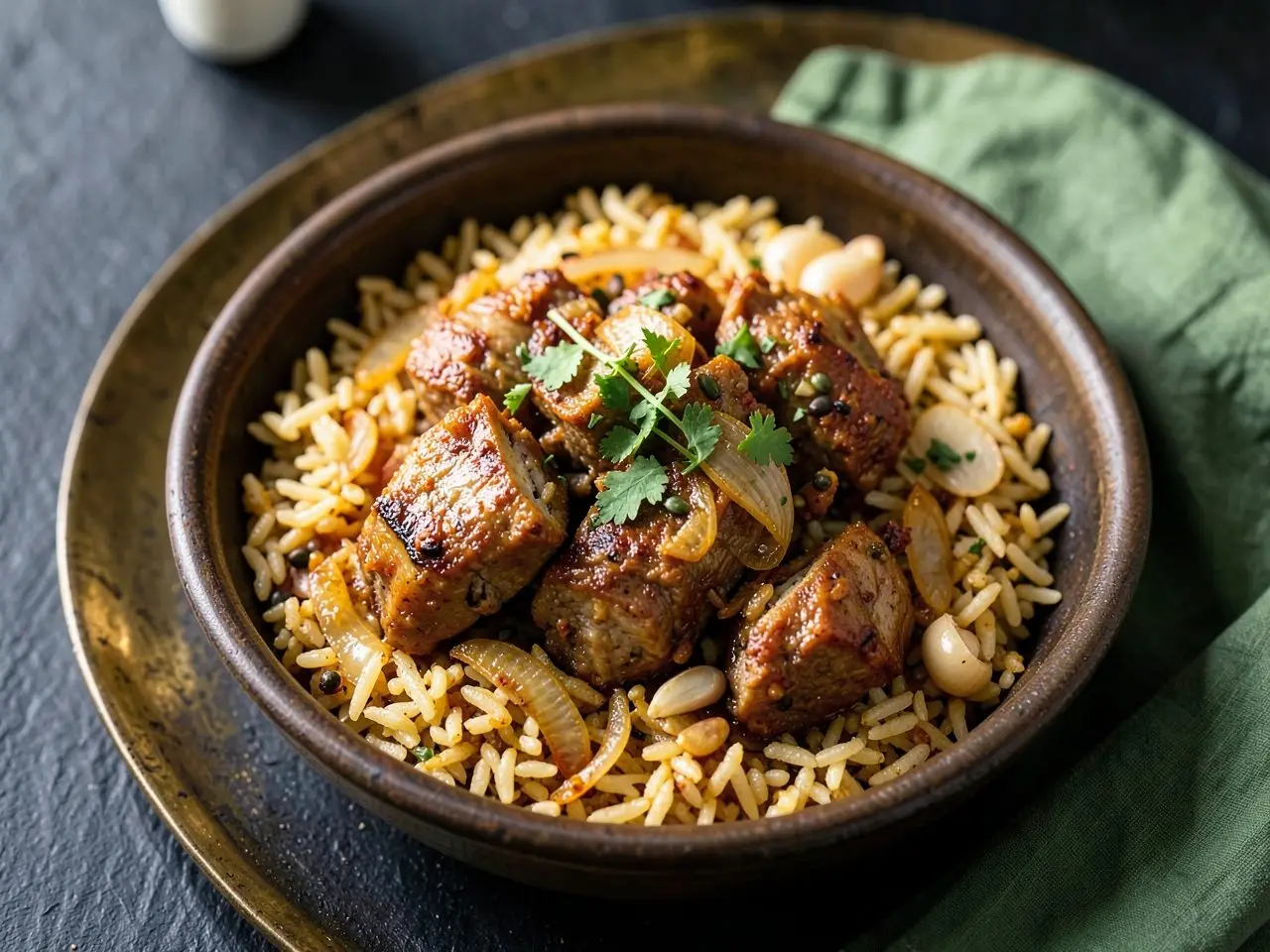
Mughlai food grew from the royal kitchens of the Mughal empire and blends Persian and Indian influences: whole spices, yogurt, nuts, dried fruit and slow-cooked meat. Awadhi cooking, from the Lucknow region, shares that heritage but is often described as more subtle, relying on gentle heat and the sealed dum method, where food cooks slowly in its own steam. Aroma matters as much as heat. Cardamom, cloves, cinnamon and fennel scent the dish rather than overwhelm it.
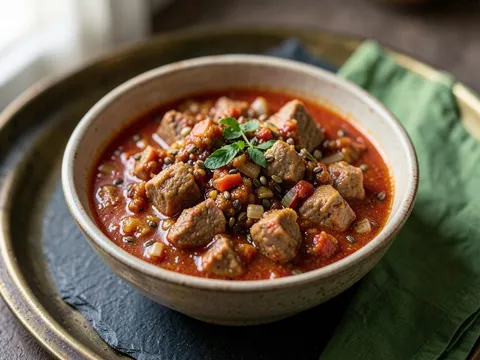
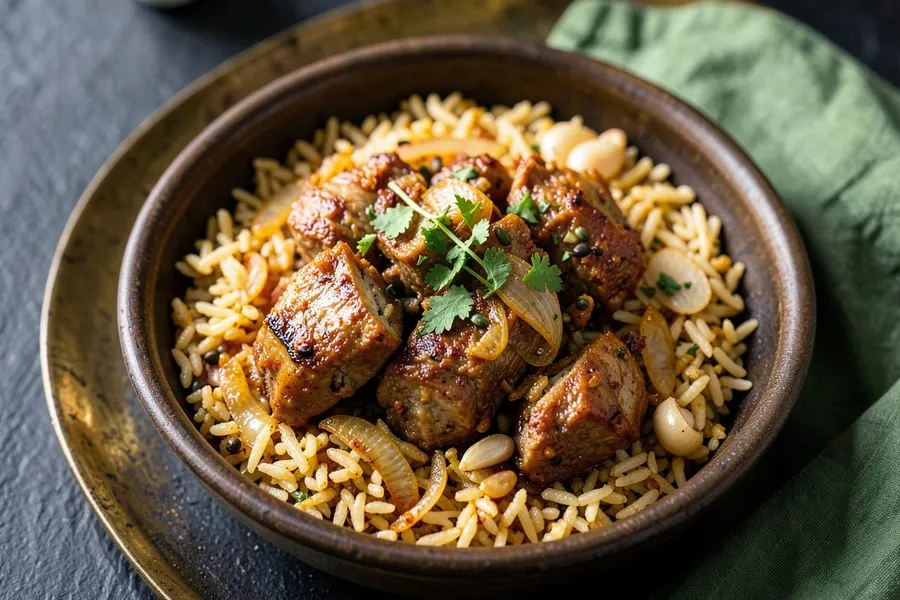
This is a small hub, with two recipes, and it is honest about both. Mutton yakhni pulao is a home-style version, leaning Awadhi and Kashmiri. It pressure-cooks the mutton stock, strains it, then cooks soaked basmati in that stock with the meat and golden onions. Crock pot lamb curry is not a classic Mughlai recipe: it is a slow-cooker adaptation that borrows the long, gentle cooking of the style. We file it here because that is the closest cuisine match on the site, and we would rather say so than overstate it.
Making a stock is first. Simmer meat with whole spices, skim the surface, then strain so the broth is clear. Second is browning onions evenly until golden, which gives gravies and pulao their sweetness and colour. The bhuna guide covers the onion-tomato stage that underpins the lamb curry. Third is rice handling: rinse and soak basmati before cooking, and cool leftover rice quickly, since rice kept warm can grow harmful bacteria. The pulao recipe gives the exact times.
Whole spices are central here. The spices guide explains how to use them whole, ground and in blends, and how to avoid biting into a clove.
Cook the pulao on a weekend, when about two hours of simmering and resting will not feel rushed. Both dishes are high in protein, with about 27 g per serving. Serve either with a simple raita and sliced onion.
Mughlai cooking comes from the Mughal courts and favours rich gravies with yogurt, nuts, cream and whole spices. Awadhi cooking comes from Lucknow and the Awadh region, and is known for slow, gentle dum cooking and delicately balanced aroma. They overlap heavily, which is why they share this hub.
Yakhni is a stock made by simmering meat with whole spices such as fennel, cardamom and bay leaf, plus ginger and onion. It is strained and used to cook rice or a gravy, so the flavour of the meat carries through the whole dish.
No. It is a home adaptation: lamb shoulder is browned, cooked in an onion and tomato masala, then slow-cooked for 7 hours with coconut milk added near the end. It borrows the slow-cooked richness of the style but uses a slow cooker rather than a sealed dum pot.
Shoulder or other cuts with some connective tissue and fat. They stay tender and juicy through a long cook, while lean cuts can turn dry.