Cooking with India's Seasons: Winter, Summer, Monsoon
What Indian home kitchens cook through the year: sarson, gajar and bajra in winter, raw mango and cooling drinks in summer, pakoras and bhutta in the monsoon, and the festival food of each season.
By Nomisto KitchenUpdated First published
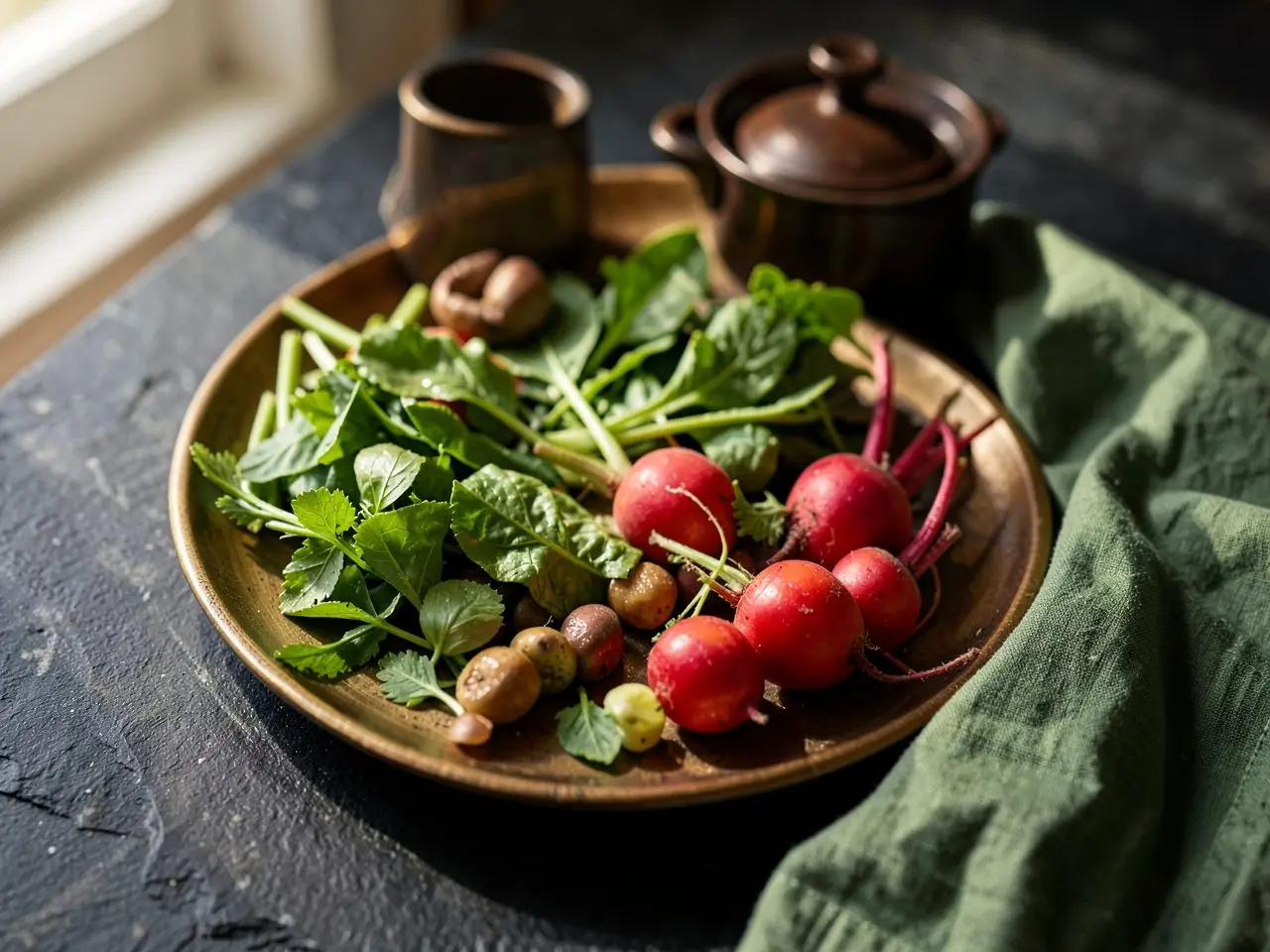
Indian home cooking follows the weather closely. Winter brings mustard greens, red carrots, fresh peas and warming bajra; summer is for raw mango, curd and cooling drinks; the monsoon is the season of hot pakoras, roasted corn and masala chai. Festivals add their own foods on top of each season, from til and jaggery at Sankranti to the sweets of Diwali.
How are the Indian seasons usually divided?
The traditional Hindu calendar names six seasons (ritus): Vasant (spring), Grishma (summer), Varsha (monsoon), Sharad (early autumn), Hemant (pre-winter) and Shishir (winter). In everyday cooking, most families think in four broad stretches:
- Winter: roughly December to February, longest and coldest in the north.
- Summer: roughly March to June, with the hottest weeks just before the rains.
- Monsoon: roughly June to September, arriving in Kerala first and moving north.
- Post-monsoon: roughly October and November, the main festival season.
The timing varies a lot by region: Chennai barely has a winter, and Tamil Nadu gets most of its rain from the north-east monsoon in October to December. Kerala’s monsoon starts weeks before Delhi’s. Abroad, local seasons will not match, but Indian grocers stock much of the produce below around the festivals.
What do Indian kitchens cook in winter?
Winter is the richest season for vegetables in North India, and the cooking leans on ghee, jaggery and slow-cooked greens.
- Sarson ka saag with makki di roti. Mustard greens, often cooked with spinach and bathua, simmered for a long time, mashed and finished with a ghee tadka of garlic, ginger and green chilli. It is served with maize flour rotis and white butter.
- Gajar ka halwa. Grated red carrots (the deep red winter variety sold in the north) cooked slowly in milk until it reduces, then with ghee, sugar and cardamom. The orange carrots sold all year work, but give a paler, less sweet halwa.
- Bajra. In Rajasthan and Gujarat, bajra rotla or roti with ghee and jaggery, bajra khichdi and bajra raab (a thin, warm porridge) are winter staples.
- Fresh peas, methi and other greens. Matar paneer, aloo methi, methi thepla and matar kachori are made when peas and fenugreek are cheap and sweet.
- Undhiyu. Gujarat’s mixed winter vegetable dish of surti papdi, purple yam, baby potatoes, aubergine and methi muthiya, cooked slowly with green masala.
- Til and gur. Sesame and jaggery go into chikki, gajak, rewri and laddoos, especially around Lohri and Makar Sankranti.
Hearty meat dishes fit winter too: a whole-spice mutton yakhni pulao or a slow-browned Punjabi chicken curry suits a cold evening.
What do Indian kitchens cook in summer?
Summer cooking is about lighter meals, sour flavours and drinks that cool you down. It is also raw mango season.
- Raw mango (kairi). Aam panna, a drink of cooked or roasted raw mango with roasted cumin, black salt, mint and sugar or jaggery; kairi chutney; raw mango dal; and the year’s batch of mango pickle, made when the hard green mangoes arrive in spring.
- Ripe mango. From about April, Alphonso, Kesar, Banganapalli and later Dasheri and Langra mangoes, eaten as they are, as aamras with puri, or blended into a mango lassi.
- Cooling drinks. Chaas (thin spiced buttermilk with roasted cumin and coriander), nimbu pani, sattu sharbat in Bihar, kokum sharbat and sol kadhi on the Konkan coast, and jaljeera. A watermelon mint mocktail belongs here too.
- Curd and light meals. Curd rice in the south, raitas, kachumber salads, and lighter dals and sabzis made with summer gourds such as lauki, tori and tinda.
On very hot days, choose quick dishes over long-simmered ones, and make cooling drinks fresh: chaas and nimbu pani are best drunk the same day.
What do Indian kitchens cook in the monsoon?
The rains bring cooler evenings, fresh corn and a strong desire for something hot and fried.
- Pakoras and bhajiyas. Onion, potato, chilli and spinach pakoras, served with green chutney and masala chai. Our crispy onion pakoras use besan with a little rice flour for crunch.
- Bhutta. Corn on the cob roasted over coals, then rubbed with lime, salt and chilli powder. At home, roast it over a gas flame, turning often.
- Hot snacks and chai. Vada pav, samosas, corn chaat and ginger or masala chai.
- Comfort food. Khichdi, dal-rice and hot rasam are common on wet days.
Monsoon damp affects the pantry. Keep flour, besan, rice and spices in airtight jars, wash leafy greens thoroughly in several changes of water, and use fresh oil for deep-frying rather than reusing it many times.
Which festival foods belong to each season?
Many festivals follow the lunar calendar, so their dates shift from year to year. Eid al-Fitr and Eid al-Adha follow the Islamic lunar calendar and move through every season over the years.
- Winter: Lohri and Makar Sankranti in January bring til-gur laddoos, gajak, peanuts, khichdi and, in Gujarat, undhiyu for Uttarayan. Pongal in Tamil Nadu is named after its sweet and savoury rice-and-moong dishes. Christmas in Goa means plum cake, kulkuls and neureos; in Kerala, plum cake with appam and stew.
- Spring and early summer: Holi brings gujiya, thandai and dahi bhalle. Ugadi and Gudi Padwa begin the new year in the Deccan with Ugadi pachadi (raw mango, neem flowers, jaggery, tamarind, salt and chilli or pepper, one for each of six tastes), and puran poli and shrikhand-puri for Gudi Padwa. Baisakhi in Punjab is a harvest festival.
- Monsoon: Janmashtami brings panjiri and makhan-mishri; Ganesh Chaturthi brings modak; Onam in Kerala centres on the sadya, a vegetarian feast served on a banana leaf.
- Post-monsoon: Navratri brings fasting food such as sabudana khichdi, kuttu puris and samak rice, and the Ashtami prasad of puri, black chana and sooji halwa. Sharad Purnima is traditionally marked with rice kheer left in the moonlight. Diwali is the peak of the sweet-making year, with besan ladoo, kaju katli and gulab jamun. Chhath in Bihar brings thekua.
How can you cook more seasonally at home?
- Plan festival cooking early. Mithai such as besan ladoo keeps for days, so make it ahead of Diwali rather than on the day.
- Preserve the glut. Pickle raw mango in summer, blanch and freeze shelled peas in winter, and dry-roast and store the spices you need for festival sweets.
- Adapt abroad. Frozen sarson, canned Alphonso pulp and frozen grated coconut fill the gaps when fresh produce is out of season where you live.