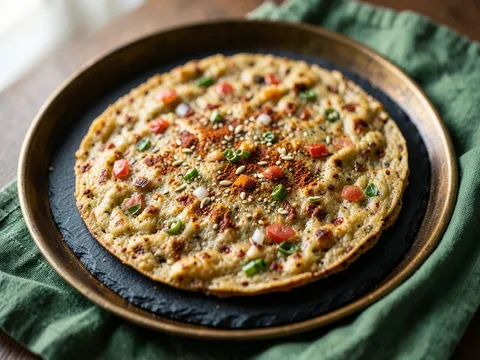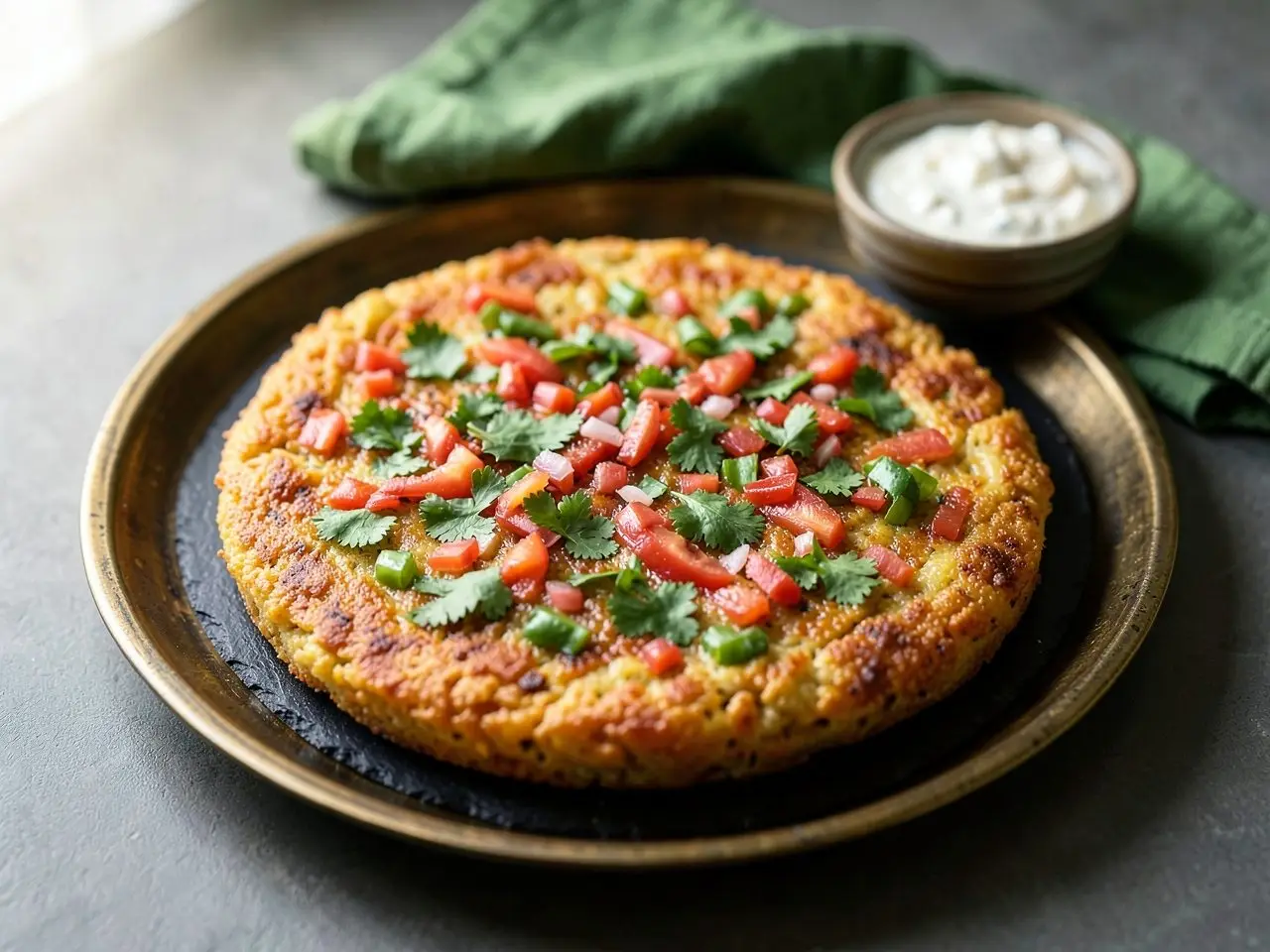
Uttapam is a thick South Indian pancake that is usually made from fermented rice and urad batter. This rava version, a shortcut known as instant uttapam, swaps the fermentation for semolina and yoghurt, so a batch can be started on the morning you want it.
Why this recipe works
- Resting the batter for 20 minutes lets the semolina absorb the liquid and swell, so the uttapam is tender and not gritty.
- Pressing the topping into the batter keeps the vegetables attached when the uttapam is flipped.
- Covering the pan on the first side cooks the thick centre through with steam while the base browns slowly.
Method
Mix the rava, yoghurt, water and salt in a bowl until smooth. The batter should be thick but pourable, like a thick pancake batter. Cover and rest for 20 minutes.
Tip: The rava swells and thickens as it rests. After the rest, add 2 to 4 tablespoons of water, only until it is thick and spoonable again.
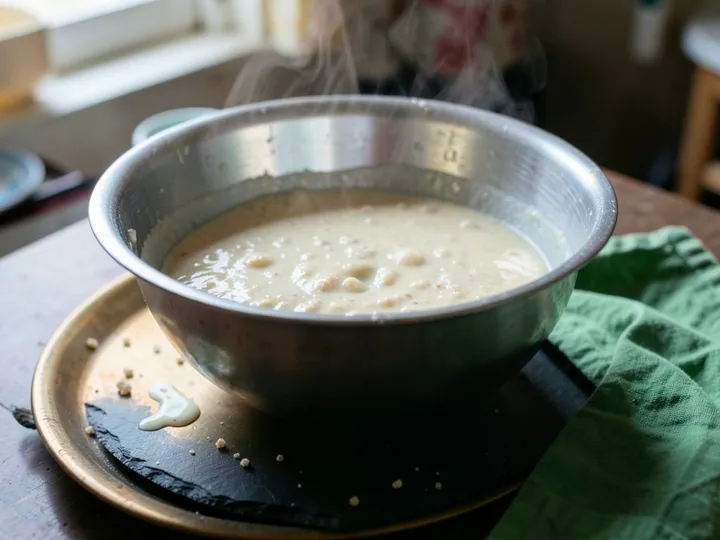
While the batter rests, mix the onion, tomato, capsicum, green chilli and coriander in a bowl for the topping.
Stir the baking soda into the rested batter gently, just until combined. Do not overmix.
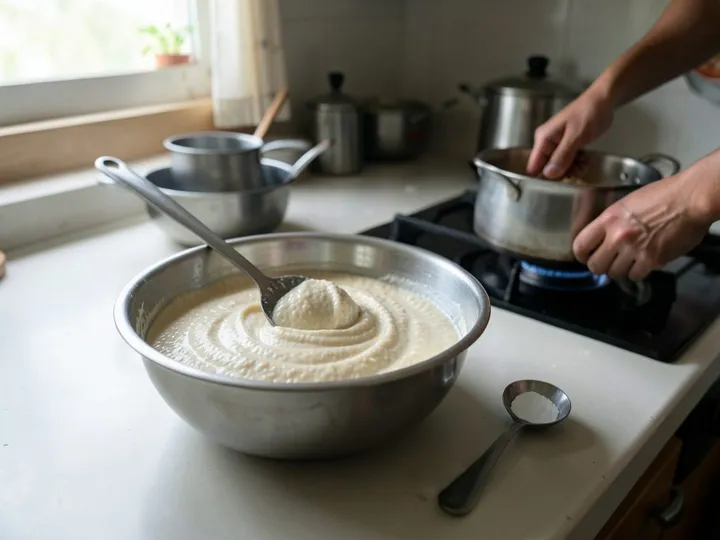
Heat a non-stick tawa or heavy frying pan over medium heat for 2 minutes and brush it with a few drops of oil.
Pour a ladle of batter, about 80 ml, into the pan and spread gently to about 12 cm across, keeping it about 1 cm thick. Scatter ¼ of the topping over it and press down lightly with the back of the spoon.
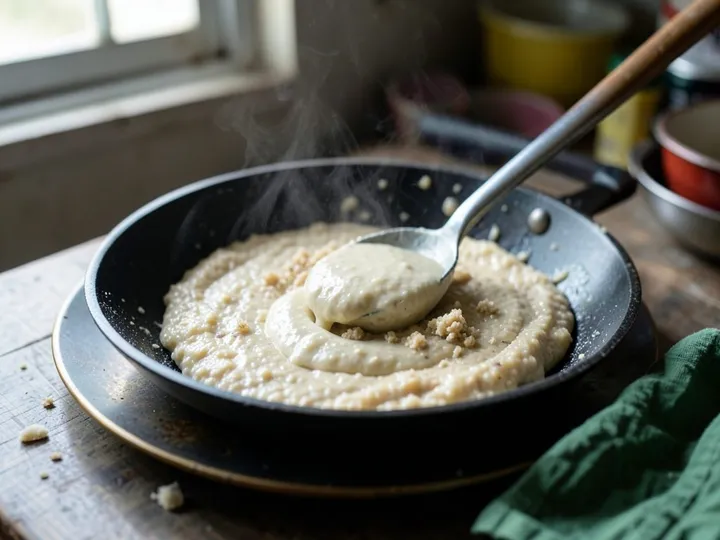
Drizzle a little oil around the edges, cover and cook on medium-low heat for 2 to 3 minutes, until the underside is golden and the top has lost its wet shine.
Flip carefully with a wide spatula and cook uncovered for 1 to 2 minutes, until the topping has browned spots and the centre is cooked through.
Repeat with the remaining batter, stirring it each time, to make 4 uttapams. Serve hot with coconut chutney or sambar.
Swaps & substitutions
- Plain yoghurt → Unsweetened plain soy or coconut yoghurt (100 g) plus 1 tsp lemon juice: Makes a dairy-free batter (soy yoghurt adds soy). The lemon juice supplies the tang.
- Green capsicum → Grated carrot (50 g): Squeeze out extra moisture and add it to the topping; it makes a sweeter uttapam.
- Fine rava → Gluten-free millet or rice rava (100 g): Semolina contains wheat. Absorption varies by product, so adjust the water until the batter is thick and pourable.
Storage & reheating
Uttapam is best eaten hot. Cool leftovers within 1 hour and refrigerate in an airtight container for 1 to 2 days, then reheat once on a tawa for about 1 minute a side until steaming hot all the way through. The batter keeps covered in the fridge for 1 day, but stir in the baking soda just before cooking.
Frequently asked questions
Do I need to ferment the batter?
No. Rava uttapam is an instant version, and the yoghurt gives it a light tang while the baking soda gives lift. The 20-minute rest lets the semolina swell and soften.
Why is my uttapam raw in the middle?
It is too thick or the heat is too high. Spread the batter to about 1 cm, cook on medium-low and keep the pan covered for the first 2 to 3 minutes so the steam cooks the middle.
Why is my uttapam falling apart?
The batter is too thin or the pan is not hot enough. If it runs on the pan, stir in 1 tablespoon of rava and rest it 5 minutes. Wait until the underside is golden before flipping.
Can I use baking soda or Eno?
Either works for lift. Use baking soda as listed, and fruit salt such as Eno at 1/2 tsp if you prefer, stirring it in just before cooking. Do not let the batter sit once it is added.
Which allergens does this contain?
It contains wheat (gluten) from the semolina and dairy from the yoghurt. The soy or coconut yoghurt and gluten-free rava swaps remove them.
Nutrition
| Calories | 328 kcal |
|---|---|
| Protein | 9 g |
| Carbohydrates | 44 g |
| Fat | 13 g |
| Fibre | 3 g |
| Sodium | 756 mg |
More in South Indian Recipes and Breakfast Recipes. Learn the technique: The Indian Pantry: 25 Essentials.