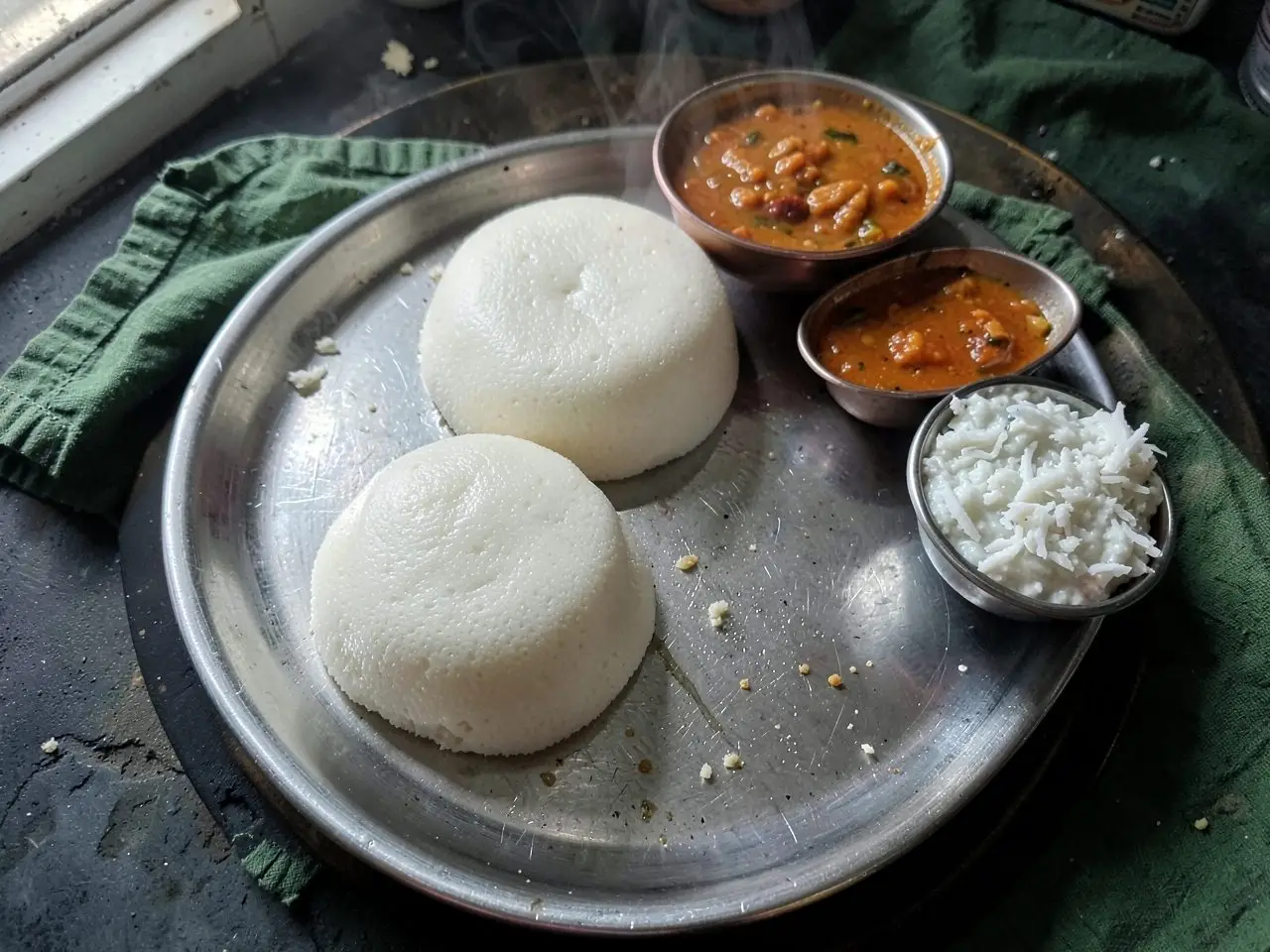
Idli are soft, round steamed cakes made across South India from a batter of rice and urad dal that is left to ferment overnight. Almost all of the time here is passive soaking and fermenting; the hands-on work is about an hour, and the batter keeps in the fridge for several days.
Why this recipe works
- Grinding the urad until fluffy traps air in the batter, which is what makes the steamed idli light.
- Fermenting until the batter doubles builds gas and gentle sourness, so the idlis rise and taste like idli rather than plain steamed rice.
- A 5-minute rest after steaming firms up the surface so the idlis release from the moulds without tearing.
Method
Rinse the rice 3 times until the water runs almost clear, and soak it in plenty of cold water for 4 to 6 hours. In a separate bowl rinse the urad dal with the fenugreek seeds and soak them together in cold water for the same time. They must be soaked separately.
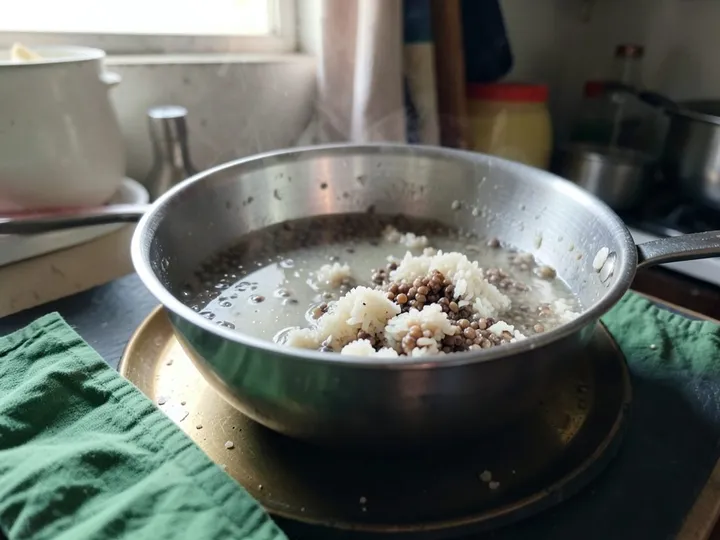
Drain the urad and fenugreek. Grind in a wet grinder or a high-powered blender with about 120 ml of cold water added a splash at a time for 15 to 20 minutes, until pale, fluffy and doubled in volume, with no grit when rubbed between your fingers. Pulse in short bursts in a blender so the batter does not heat up. Scrape into a large pot.
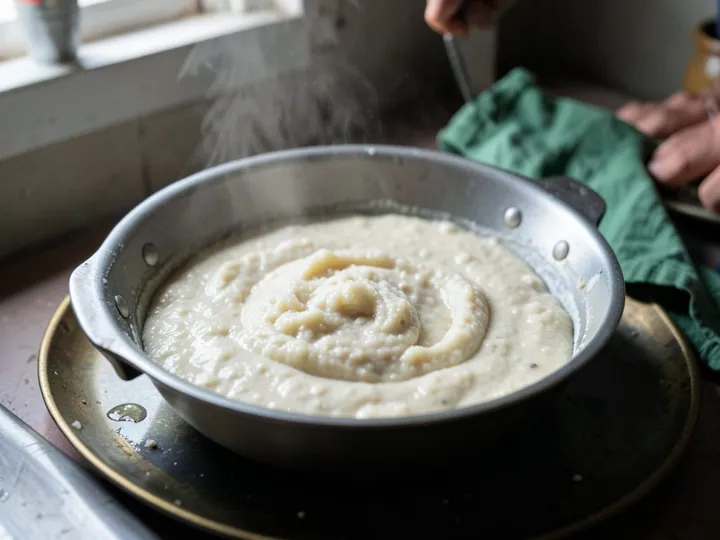
Drain the rice and grind with 130 to 180 ml of cold water for 5 to 8 minutes, until it is fine but slightly grainy like fine semolina. Add it to the urad, add the salt and mix for 2 minutes by hand. The batter should be thick and pour in a slow ribbon.
Tip: The warmth of your hand helps the first stage of fermentation, which is why the mixing is traditionally done by hand.
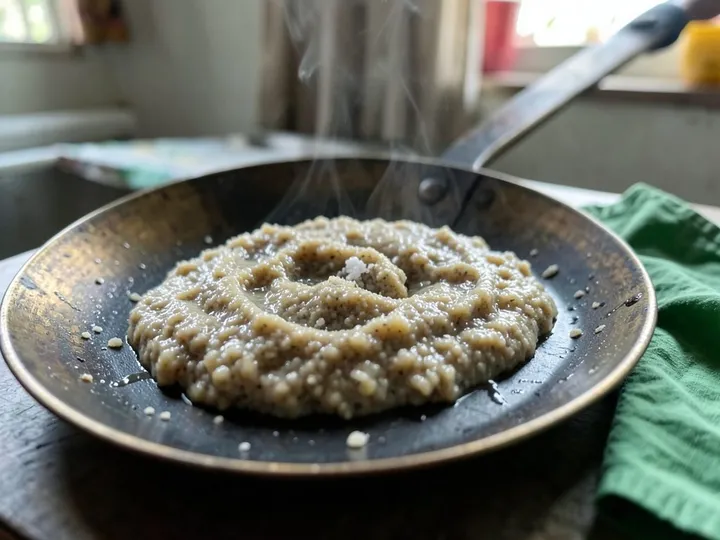
Cover the pot loosely, leaving room for the batter to double, and ferment it. At 25 to 30 °C it takes 8 to 12 hours. In a kitchen at 18 to 22 °C, allow 14 to 18 hours, or move it to a warm spot (an oven with only the light on, checked so it stays below about 35 °C) and use the 8 to 12 hour timing. Above 32 °C, check from 6 hours, because over-fermented batter turns very sour and runny. It is ready when it has roughly doubled, is full of bubbles and smells pleasantly sour. Discard batter that has not risen after 24 hours, or any that is pink, orange or black, mouldy, or smells putrid rather than pleasantly sour.
Stir the batter gently just once; do not whip out the air. It should pour slowly, so add 1 to 2 tablespoons of water if it is too thick. Grease the idli moulds with the oil. Bring about 2 cm of water to a boil in the steamer.
Fill each mould about three-quarters full and steam, covered, over medium-high heat for 10 to 12 minutes, until a skewer pushed into the centre comes out clean. Switch off the heat and rest the idlis for 5 minutes. Loosen with a wet spoon and repeat with the remaining batter. Make the chutney while the idlis steam.
For the chutney, blend the coconut, roasted chana dal, green chillies, ginger, salt and 80 ml of water for about 1 minute into a smooth, thick chutney. Spoon it into a bowl.
Heat the oil in a small pan over medium heat. Add the mustard seeds and let them pop for 15 to 30 seconds. Add the curry leaves and the red chilli, stir for 10 seconds, then pour the tempering over the chutney.
Serve the idlis hot, 4 or 5 per person, with the chutney.
Swaps & substitutions
- Idli rice → Parboiled rice (300 g): Common in homes where idli rice is hard to find; the idlis may be slightly less soft.
- Fresh or frozen grated coconut → Unsweetened desiccated coconut (60 g): Soak it in 100 ml of warm water for 15 minutes first and use less extra water in the chutney.
- Roasted chana dal → Roasted peanuts (20 g): A different nutty flavour, but it adds the peanut allergen.
Storage & reheating
Refrigerate leftover fermented batter in a covered container for up to 3 days and let it come to room temperature before steaming. Cool cooked idlis within 1 hour and refrigerate them for 1 to 2 days, then reheat once by steaming for 3 to 4 minutes until steaming hot all the way through. The chutney keeps 1 day in the fridge; refrigerate it within 2 hours of making and add fresh tempering when serving.
Frequently asked questions
Why are my idlis hard?
The batter was under-fermented, too thick or the rice was ground too coarsely. Ferment until it doubles and is full of bubbles, loosen the batter if it will not pour, and grind the urad until it is light and fluffy.
How do I ferment idli batter in a cold climate?
At 25 to 30 °C it takes 8 to 12 hours. In a kitchen at 18 to 22 °C, allow 14 to 18 hours, or move it to a warm spot (an oven with only the light on, checked so it stays below about 35 °C) and use the 8 to 12 hour timing. Above 32 °C, check from 6 hours, because over-fermented batter turns very sour and runny. Discard batter that has not risen after 24 hours, or any that is pink, orange or black, mouldy, or smells putrid rather than pleasantly sour.
How long can I keep the batter?
Refrigerate fermented batter in a covered container for up to 3 days. Let it stand for 30 minutes at room temperature before steaming, and loosen it with a spoonful of water if it has thickened.
Do I need a wet grinder?
No. A high-powered blender works if you grind the urad in short pulses with cold water so it does not heat, and grind the rice separately to a fine, slightly grainy texture.
Which allergens does this contain?
The idlis contain urad dal and the chutney contains coconut and mustard. Coconut is classed as a tree nut in some countries. The recipe has no hing, which often contains wheat.
Nutrition
| Calories | 499 kcal |
|---|---|
| Protein | 14 g |
| Carbohydrates | 84 g |
| Fat | 12 g |
| Fibre | 9 g |
| Sodium | 905 mg |
More in South Indian Recipes and Breakfast Recipes. Learn the technique: The Indian Pantry: 25 Essentials, Indian Spices: A Practical Guide.