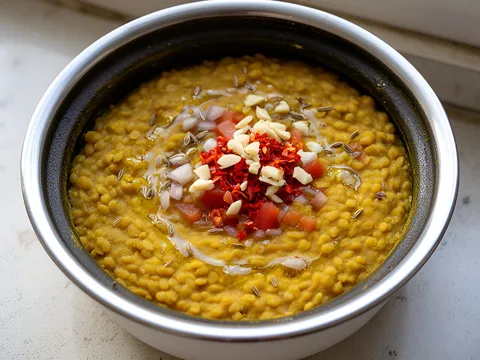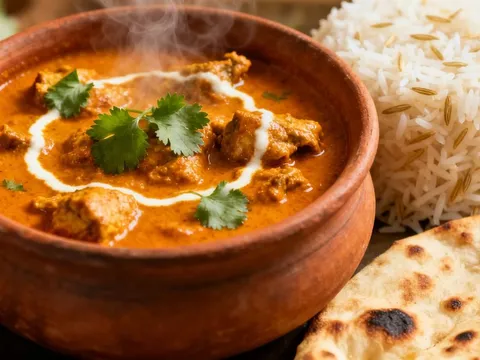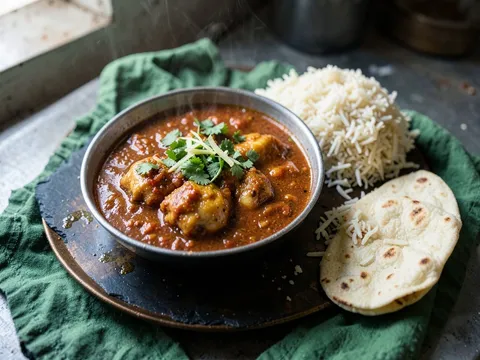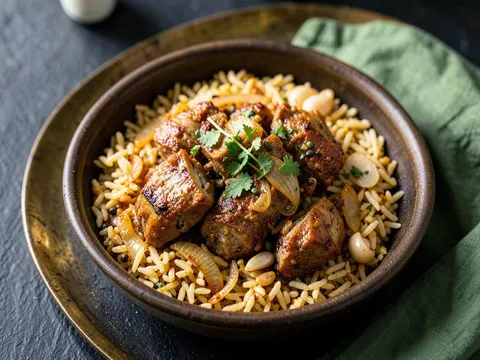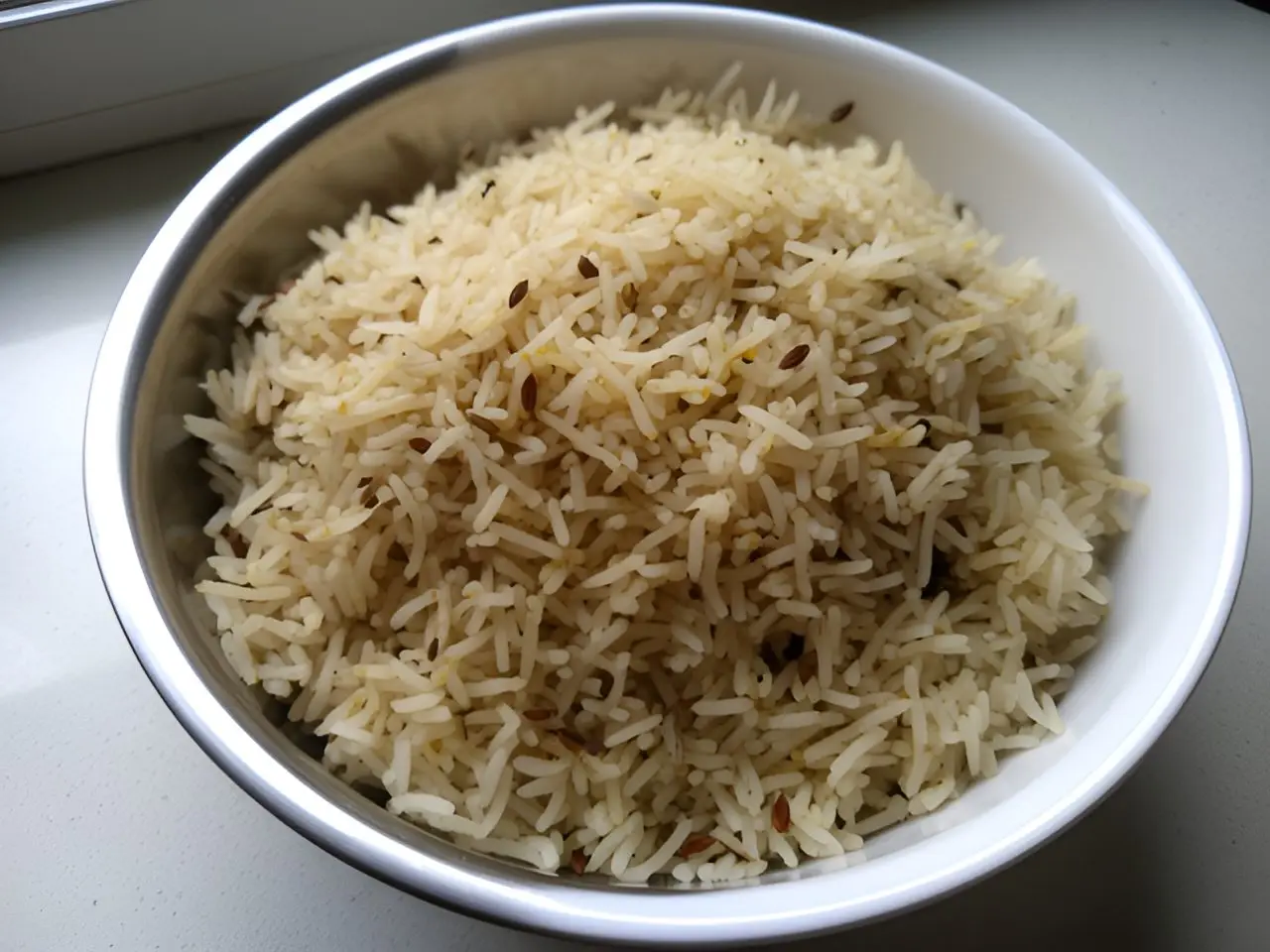
Jeera rice is basmati cooked with cumin seeds toasted in ghee, a popular rice to serve with dal, rajma and chole across North India. It has only a handful of ingredients, so the technique is what makes the difference between sticky rice and grains that fall apart from each other.
Why this recipe works
- Rinsing until the water runs almost clear washes off the loose surface starch that glues grains together.
- A 30-minute soak and a measured 1 : 1.5 ratio let the grains absorb water evenly, so they cook through without splitting.
- A covered 10-minute rest off the heat finishes the rice in its own steam and firms the grains so they fluff up separately.
Method
Put the rice in a bowl, cover with cold water and swirl gently with your fingertips, then pour off the cloudy water. Repeat 4 or 5 times until the water runs almost clear. Swirl rather than rub, so the grains do not break.
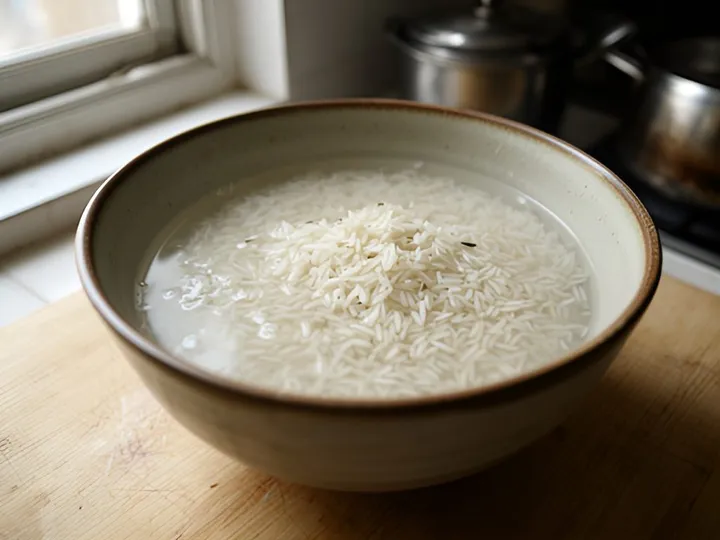
Cover the rice with the 750 ml soaking water and leave for 30 minutes, then drain in a sieve for at least 5 minutes. The grains turn opaque white and slightly longer.
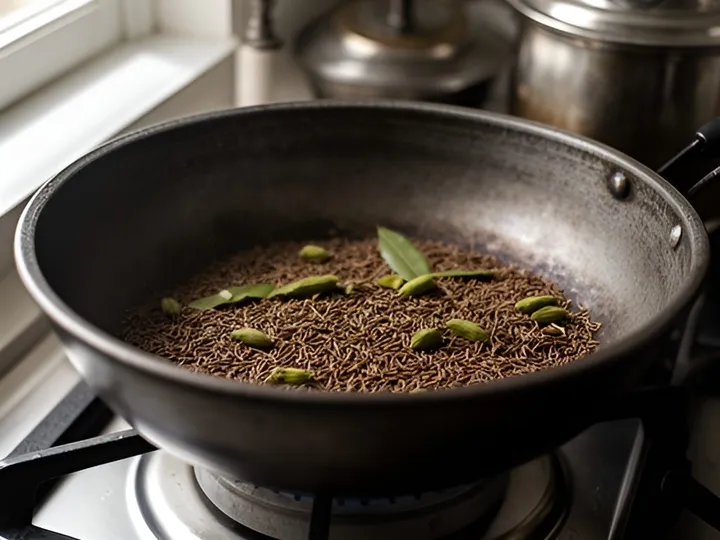
Heat the ghee in a heavy 2 to 3 litre pan with a tight-fitting lid over medium heat. Add the cumin seeds, bay leaf and cardamom and let them sizzle for 30 to 40 seconds, until the cumin darkens a shade and smells nutty. Do not let it turn black.
Add the drained rice and fold it gently with a flat spatula for 2 minutes, until every grain is coated in ghee and the rice smells lightly toasted.
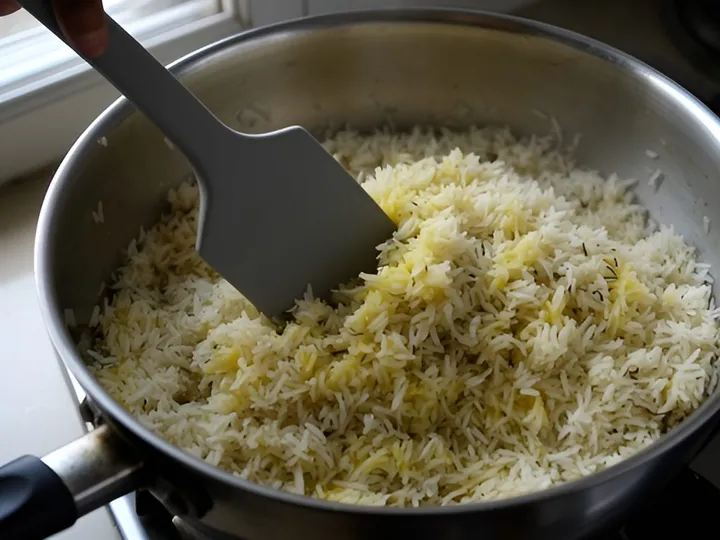
Pour in the 540 ml boiling water, add the salt and lemon juice and stir once, gently. Boil uncovered over high heat for 3 to 5 minutes, until the water has dropped just below the surface of the rice and small steam holes appear.
Cover tightly, turn the heat to the lowest setting and cook for 10 minutes. Do not lift the lid or stir.
Tip: If your lid is loose, lay a sheet of foil over the pan before putting the lid on, so the steam stays in.
Turn off the heat and leave the pan covered and undisturbed for 10 minutes. The grains finish cooking in the steam and firm up so they separate.
Lift the lid, take out the bay leaf and cardamom pods and fluff the rice gently with a fork, working from the edges inwards. Scatter over the coriander and serve hot with dal tadka, rajma or chole.
Tip: Cool any leftover rice within 1 hour. Spread it on a tray so it cools quickly, then refrigerate it.
Swaps & substitutions
- Ghee → Neutral oil: Makes the rice vegan. It is a little less fragrant, so toast the cumin until it smells clearly nutty.
- White basmati → Brown basmati (300 g): Soak it for 1 hour, use 600 ml water and cook covered on the lowest heat for 25 to 30 minutes, until the water is absorbed, before the 10-minute rest.
Storage & reheating
Cool leftover rice within 1 hour, spreading it out on a tray so it cools quickly, then refrigerate it in a covered container and eat it within 24 hours. Reheat it only once, sprinkled with a little water and covered, until steaming hot all the way through. Do not leave cooked rice standing at room temperature.
Frequently asked questions
What is the water ratio for jeera rice?
For soaked basmati, 1.5 cups of water for every cup of rice: here 300 g (1.5 cups) of rice to 540 ml (2.25 cups) of water. Aged basmati sometimes needs a little more; new-crop rice a little less.
Why is my jeera rice sticky or mushy?
The rice was not rinsed until the water ran clear, there was too much water, or it was stirred or uncovered while cooking. Rinse 4 or 5 times, measure the water, stir only once, and rest it covered for the full 10 minutes.
Why is the rice on top still hard?
Too little water or a loose lid let the steam escape. Sprinkle 2 to 3 tbsp of hot water over the top, cover tightly and leave on the lowest heat for 5 minutes, then rest for 5 minutes.
Do I have to soak basmati rice?
Soaking for 30 minutes gives longer, evenly cooked grains that are less likely to break. If you skip it, add about 60 ml more water and cook 3 to 4 minutes longer before the rest.
How do I store leftover rice safely?
Cooked rice can carry spores of bacteria that survive cooking and multiply at room temperature. Cool leftovers within 1 hour, refrigerate them, eat them within 24 hours and reheat only once, until steaming hot.
Which allergens does this contain?
Milk (ghee). With neutral oil instead of ghee, the rice is vegan and free from the main listed allergens.
Nutrition
| Calories | 311 kcal |
|---|---|
| Protein | 7 g |
| Carbohydrates | 59 g |
| Fat | 6 g |
| Fibre | 1 g |
| Sodium | 587 mg |
More in Punjabi Recipes and Rice, Biryani & Pulao Recipes. Learn the technique: Indian Spices: A Practical Guide, The Indian Pantry: 25 Essentials.