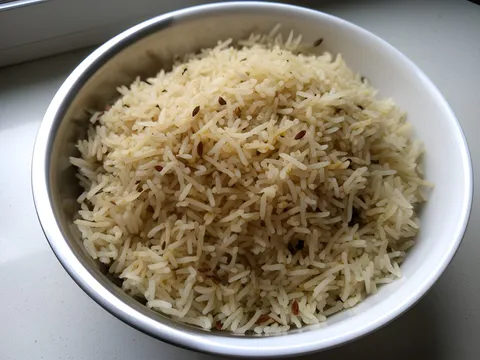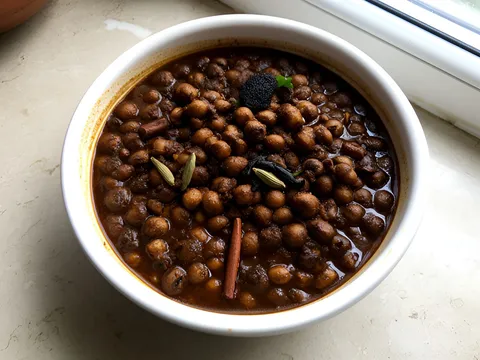
Rajma chawal, kidney beans in a thick onion and tomato gravy spooned over plain rice, is a weekend favourite in Punjabi and Delhi homes. It is usually made from dried beans soaked overnight, but two tins of kidney beans make a very good weeknight version, because the depth comes from the masala rather than the beans.
Why this recipe works
- Deeply browned onions and a tomato masala cooked until the oil separates give the gravy its savoury depth, whether the beans come from a tin or a pressure cooker.
- Mashing a ladleful of beans thickens the gravy naturally, so it turns creamy in a 20-minute simmer.
- The 10-minute hard boil for dried beans makes them safe to eat before any gentle simmering or pressure-cooking.
Method
For canned beans, tip them into a sieve and rinse under cold running water until they no longer foam, then leave to drain. If you are using dried beans, do step 2 first, then carry on from step 3.
Dried beans instead: rinse 200 g dried kidney beans and soak them in 1 litre of cold water for 8 to 12 hours, until doubled in size. Drain, discard the soaking water and cover with 1 litre of fresh water in a pressure cooker base or large pot. Boil hard, uncovered, over high heat for at least 10 minutes at a full rolling boil. Then lock the pressure-cooker lid, bring to the first whistle on high and cook on low for 20 to 25 minutes, letting the pressure drop naturally; or simmer covered in the pot for 60 to 90 minutes. They are done when a bean squashes completely between finger and thumb with no chalky centre. Keep the cooking liquid.
Tip: Raw or undercooked red kidney beans contain a natural toxin (phytohaemagglutinin, a lectin) that can cause severe vomiting and diarrhoea. The 10-minute hard boil destroys it; a slow cooker or a gentle simmer on its own does not get hot enough. Never skip it. Canned beans are already cooked and safe.
Heat the oil in a heavy pan over medium heat. Add the cumin seeds and bay leaf and let them sizzle for 20 to 30 seconds until the cumin darkens a shade.
Add the onions and cook for 10 to 12 minutes, stirring often, until deep golden brown all over. Add the ginger, garlic and green chilli and stir for 1 minute until the raw smell goes.
Turn the heat to medium-low, add the chilli powder, coriander and turmeric with 2 tbsp water and stir for 1 minute. The water stops the spices burning.
Add the tomato purée and salt and cook over medium heat for 8 to 10 minutes, stirring every minute or so, until the masala is thick, has darkened to a deep brick red and the oil separates at the edges.
Tip: This is the bhuna stage. If the masala sticks before the oil separates, add a tablespoon of water and keep going.
Add the beans and the 500 ml water or bean cooking liquid and bring to the boil. Mash a ladleful of beans against the side of the pan, then half-cover and simmer on low for 20 minutes, stirring every 5 minutes, until the gravy is thick and creamy and coats the beans.
Stir in the garam masala and crush the kasuri methi between your palms over the pan. Simmer for 2 minutes, taste and adjust the salt, then turn off the heat and leave it to rest for 10 minutes; it thickens as it stands. Scatter over the coriander and serve with jeera rice or plain basmati.
Swaps & substitutions
- Neutral oil → Ghee: Richer and traditional in many Punjabi homes, but no longer vegan.
- Red kidney beans → Small Jammu or Kashmiri rajma (200 g dried): Softer and creamier. Soak and hard-boil them exactly the same way; they may cook 5 to 10 minutes faster.
- Fresh tomatoes → A 400 g tin of chopped tomatoes, blended: Cook the masala 2 to 3 minutes longer, as tinned tomatoes hold more water.
Storage & reheating
Cool within 2 hours and refrigerate in a covered container for up to 3 days; the flavour deepens overnight. Reheat with a splash of water until steaming hot all the way through. Rajma freezes well for up to 3 months. If you serve it as rajma chawal, cool any leftover rice within 1 hour and refrigerate it separately.
Frequently asked questions
Can I make rajma with canned kidney beans?
Yes. Canned beans are already cooked, so drain and rinse them, then simmer them in the masala for 20 minutes. Mashing a ladleful gives the creamy gravy that long-cooked dried beans would. Use less salt, as canned beans are usually salted.
Do I really need to boil dried kidney beans hard?
Yes, always. Raw and undercooked red kidney beans contain a natural toxin that can cause severe vomiting and diarrhoea, even from a few beans. Soak them, discard the water, then boil hard in fresh water for at least 10 minutes before simmering or pressure-cooking. Slow cookers on their own do not get hot enough.
How long should I soak dried kidney beans?
8 to 12 hours in plenty of cold water. For a quicker soak, boil them for 2 minutes, then leave them in the hot water for 1 hour. Either way, drain and discard the water and still give them the 10-minute hard boil in fresh water.
Why is my rajma gravy thin and watery?
The masala was not cooked down enough or the beans were not mashed. Mash a few more beans, simmer uncovered for 5 to 10 minutes, and let it rest off the heat for 10 minutes before serving.
Why are my dried beans still hard after cooking?
Old beans, hard water or a short soak all slow them down. Keep cooking until a bean squashes completely between finger and thumb, and cook them fully before they go into the tomato masala, because acid stops them softening.
Which allergens does this contain?
None of the main listed allergens: no milk, nuts, wheat or mustard. Kidney beans are legumes. The recipe has no hing, which is often blended with wheat flour.
Nutrition
| Calories | 296 kcal |
|---|---|
| Protein | 13 g |
| Carbohydrates | 39 g |
| Fat | 11 g |
| Fibre | 11 g |
| Sodium | 722 mg |
More in Punjabi Recipes and Indian Curry Recipes. Learn the technique: How to Make a Curry Base (Bhuna Masala), Indian Spices: A Practical Guide.