Indian Kitchen Starter Kit: Pans, Spices and Staples
The few pans, tools, spices and pantry staples you need to cook everyday Indian food at home, and the gadgets and spice blends you can safely skip.
By Nomisto KitchenUpdated First published
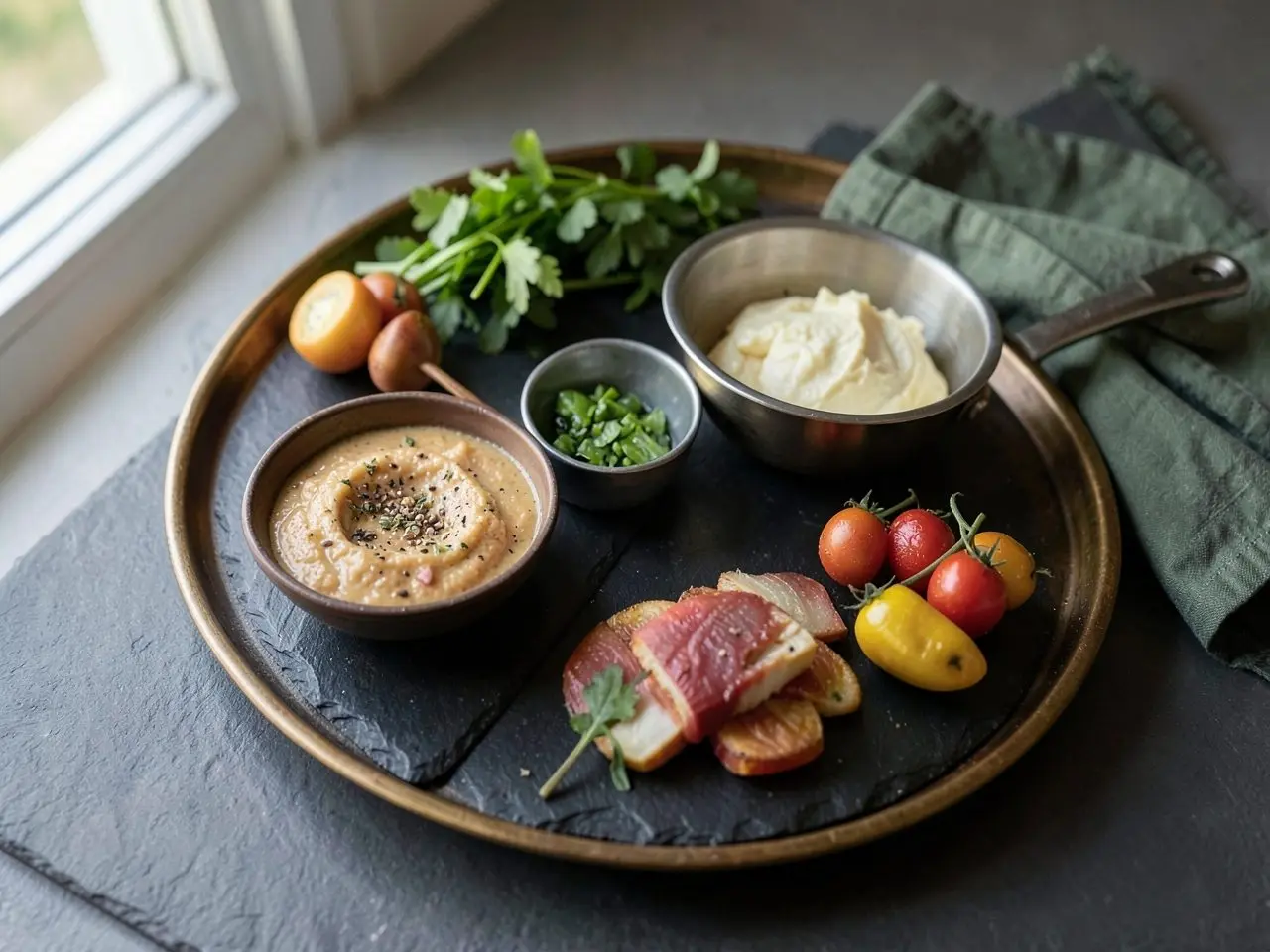
You can cook most everyday Indian food with five pans (a kadhai, a tawa, a pressure cooker, a small tadka pan and a heavy-bottomed saucepan), a handful of tools, about a dozen spices and a short list of dals, flours and rice. Buy those first, cook from them for a few weeks, and add specialist equipment only when a dish you make often truly needs it. This is the kit we would suggest for a first Indian kitchen, whether you are setting up in Pune or in Leicester.
Which pans do you need to cook Indian food?
1. Kadhai. A deep, round-bottomed pan with two handles, for curries, sabzis, bhuna masala and deep-frying. A 24 to 26 cm kadhai suits a family of three or four. Cast iron or carbon steel holds heat well; heavy stainless steel or tri-ply is easier to look after. A deep frying pan or wok does most of the same jobs.
2. Tawa. A flat or slightly concave griddle for rotis, parathas, chillas, dosas and uttapams. Iron, cast or sheet, is traditional. Season it with a thin film of oil and avoid soaking it, and it becomes almost non-stick over time. A non-stick tawa is easier for dosas and chillas while you learn. The anda paratha and besan chilla recipes are both made on a tawa.
3. Pressure cooker. This is the one appliance that changes how Indian food is cooked at home, because dals, chickpeas, rajma and tough cuts of meat cook in a fraction of the time. A 3 litre cooker suits one or two people; 5 litres suits a family. Whistle counts vary by cooker and hob, so learn how yours behaves. Follow the maker’s instructions, check the gasket and vent before each use, and never force the lid open. The mutton yakhni pulao uses one for its stock.
4. Tadka pan. A small, deep pan with a long handle, used to heat a tablespoon or two of ghee or oil and fry whole spices for seconds before pouring them over dal, raita or chutney. A small steel saucepan works, but a tadka pan pours more neatly and heats quickly.
5. Patila. A heavy-bottomed saucepan for rice, milk, chai and rice kheer. A thick base stops milk catching on the bottom.
Which tools are worth having?
- A sharp chef’s knife and a large chopping board. Most Indian recipes start with chopped onion, tomato, ginger and chilli.
- A mixer grinder or blender. For ginger-garlic paste, tomato purée, chutneys and batters. A mixer grinder with a small jar also grinds spices; otherwise a cheap blade coffee grinder kept only for spices is fine.
- Chakla and belan (rolling board and pin), if you plan to make rotis.
- A flat spatula and a slotted spoon (jhara) for stirring masalas and lifting pakoras out of oil.
- A fine sieve for rinsing dal and rice and for sifting besan.
- A masala dabba (round spice tin with small bowls), so the spices you use daily sit in one place by the hob. Refill it in small amounts.
- Measuring spoons and cups. Indian recipes are often written in cups and teaspoons, and ratios matter for rice, rava and sooji.
Which 12 spices should you buy first?
Buy small packs and use them within the year. These twelve cover most everyday North and South Indian dishes:
- Cumin seeds (jeera), for tempering, dals, rice and curry bases.
- Mustard seeds (rai), for South Indian and western Indian tempering.
- Ground turmeric (haldi), in almost every dal and sabzi.
- Kashmiri chilli powder, for colour with mild heat. Add a hotter chilli powder later if you like heat.
- Ground coriander (dhaniya), the body of most curry masalas.
- Garam masala, a finishing blend, added at the end.
- Asafoetida (hing), a pinch in dal and tempering. Most compounded hing is blended with flour, often wheat, so check the label if you avoid gluten.
- Green cardamom (elaichi), for chai, kheer, pulao and sweets.
- Cloves (laung), for pulao and whole-spice curries.
- Cinnamon or cassia (dalchini), for pulao and meat dishes.
- Black peppercorns (kali mirch), for rasam, pulao and egg dishes.
- Dried red chillies, for tadka and South Indian dishes.
Next in line, once you cook regularly: kasuri methi (dried fenugreek leaves), fennel seeds, ajwain, amchur and bay leaves. The Indian spices guide explains how and when to add each one.
What should be in the pantry?
The Indian pantry essentials guide lists 25 staples and the recipes each one unlocks. For a first shop, start with:
- Dals: toor dal for everyday dal and sambar, and moong dal for quick dal and khichdi. Add chana dal and urad dal for South Indian tempering.
- Flours and grains: atta for rotis, besan for chillas and pakoras, fine rava for rava upma, and thick poha for kanda poha.
- Rice: basmati for pulao and everyday rice.
- Fats: ghee and one neutral oil, such as sunflower or groundnut.
- Sour and sweet: tamarind paste, lemons, sugar and jaggery.
- Fresh: onions, tomatoes (or tinned chopped tomatoes, which work well in curries abroad), ginger, garlic, green chillies, coriander and curry leaves.
- Dairy: plain yoghurt, and paneer when you need it.
Store dals and flours in airtight containers, and keep flour in the fridge in hot, humid weather.
What can you skip?
- Single-use spice blends. Chana masala, pav bhaji masala, chaat masala and the like are useful, but buy each only when you cook that dish often. The twelve spices above cover the rest.
- A separate dosa tawa, appe pan or idli steamer until you make those dishes regularly. Many cooks steam idli in an idli stand set inside a pressure cooker with the whistle removed, or in any large lidded pan with a rack.
- A tandoor or specialist oven. A home oven or grill gives good results for tikka; see the oven paneer tikka.
- Large sets of matching pans. Five good pans used every day are worth more than a boxed set.
- Bulk spice packs. Large packs go stale before most households finish them.
Where should you start cooking?
Pick three or four recipes that use the same kit and cook them until they feel easy. A breakfast of kanda poha, a tawa dish such as besan chilla, and a kadhai curry such as Punjabi chicken curry between them use the kadhai and tawa and most of the spices on this list. Add a pressure-cooked dal finished with a tadka, with rice cooked in the patila, and you have used every pan.