The Millet Revival: Why Heritage Grains Matter
Bajra, jowar and ragi fed much of India for centuries, then slipped off the plate in a single generation. Why they are coming back, and why that matters for the way Indian homes cook.
By Nomisto KitchenUpdated First published
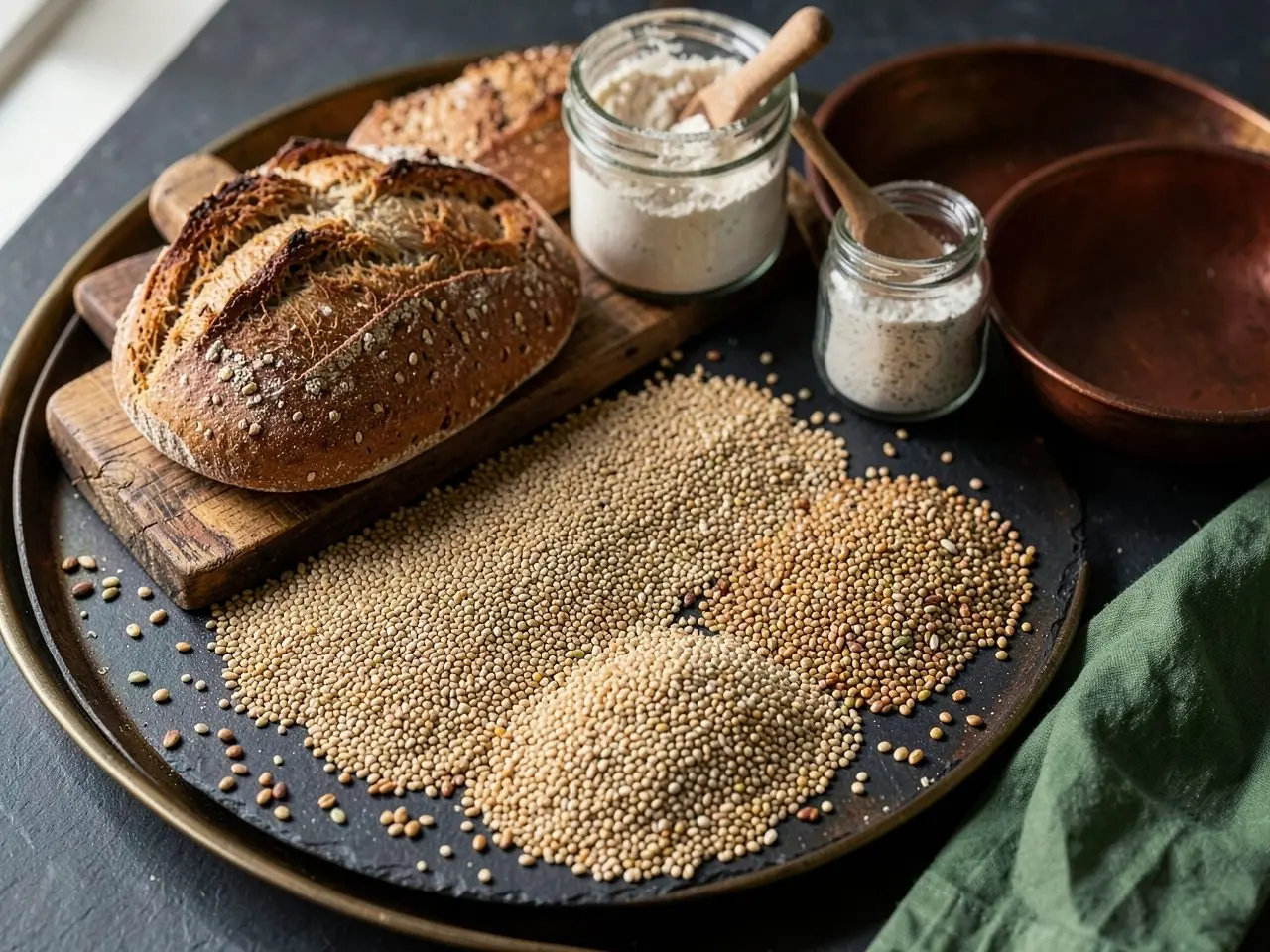
For a long stretch of Indian history, the everyday grain on many tables was not wheat or rice. In Rajasthan and Gujarat it was bajra; across Maharashtra and northern Karnataka, jowar; in southern Karnataka and its neighbours, ragi. Smaller millets such as foxtail, kodo and little millet fed hill and tribal communities across the country. Then, within roughly one generation, much of that changed. Our argument in this essay is that the current revival of millets is more than a health trend. It is a correction, and it is worth taking seriously in the home kitchen.
How millets lost their place
The shift has a well-known turning point. In the 1960s India faced serious food shortages, and the Green Revolution answered them with high-yielding varieties of wheat and rice, backed by irrigation, fertiliser and guaranteed government procurement. It worked: India moved from food scarcity towards self-sufficiency in staple grains, one of the great agricultural achievements of the twentieth century.
But it also tilted the whole system towards two crops. Research, subsidies and procurement favoured wheat and rice, and the public distribution system that supplied cheap grain to millions of households distributed mostly those two. Millets, often filed under the faintly dismissive heading of “coarse grains”, had none of that support. Farmers moved irrigated land to the crops the system rewarded, and urban households came to see wheat chapatis and polished rice as the modern, aspirational choice. Bajra roti and ragi mudde started to look like food from the village, or from hard times.
Nothing about the grains themselves had changed. Their status had.
What was lost
What makes millets remarkable is not that they are fashionable but that they are tough. According to the Food and Agriculture Organization of the United Nations, millets can grow on arid land with minimal inputs and maintenance, and in dry areas they are often the only crops that can be harvested in the dry season. They suit exactly the rain-fed, drought-prone farmland that covers much of India and that the Green Revolution, built on irrigation, largely passed by.
They also carry a nutritional reputation that is well earned. Millets are whole grains, eaten with their bran, and they bring fibre and minerals that polished rice and refined flour lose. Finger millet in particular has long been valued for its calcium, which is one reason ragi porridge has traditionally been given to babies and older people in Karnataka and Tamil Nadu. And they are naturally free of gluten, which matters for anyone who has to avoid it, though packs milled alongside wheat can still carry traces.
Most of all, a whole culinary vocabulary was at risk: jowar bhakri with thecha in Maharashtra, bajra rotla with ghee and jaggery in a Gujarati winter, ragi mudde with saaru in Karnataka, and the barnyard millet dishes eaten on fasting days in the north. These are not substitutes for wheat dishes. They are dishes in their own right, with their own textures and pairings.
The revival
The turn back began in kitchens, farms and research centres long before it reached policy, but policy has helped. In 2018 India’s agriculture ministry declared a National Year of Millets and began promoting them as “nutri-cereals”, a deliberate change of language from “coarse grains”. At India’s proposal, the United Nations General Assembly, at its 75th session in March 2021, declared 2023 the International Year of Millets, with the FAO leading the celebrations. Several states have run their own programmes, and millets have been added to some public food schemes.
In shops, the change is easy to see. Supermarkets that once stocked only atta now sell jowar, bajra and ragi flour, foxtail millet in place of rice, millet dosa mixes and millet snacks. Some of that is marketing, and a packet of millet biscuits is not the same as a bajra roti. But the direction is real.
The honest difficulties
We do not want to pretend the revival is simple, because the reasons millets fell away have not all disappeared.
Millet flour behaves differently from wheat. With no gluten, the dough has no stretch: it cracks, tears and dries out, and rotis have to be patted rather than rolled and eaten hot. Millet flours also go stale faster than refined wheat flour, because the oils in the whole grain turn rancid, so they are best bought in small amounts. For a household used to rolling a stack of thin chapatis in the morning to eat at lunch, that is a real change of habit, not a straight swap.
There is also a question of balance. A revival driven only by health claims can tip into hype, as if one grain could fix a whole diet. It cannot. Millets are valuable because they add variety to a diet that has become narrow, and because they connect the plate to farming that suits the land.
What this means at home
Our view is that the best way to bring millets back is the way they were eaten before: as part of a varied, regional diet, not as a novelty ingredient. That suggests a few practical habits rather than a set of rules.
Start with the grain of a region and its pairings, not with a millet version of a wheat dish. A hot bajra roti with ghee belongs next to a winter saag or a bowl of dal tadka; jowar bhakri is at home with thecha and a simple vegetable; ragi suits porridge, dosa and mudde. If pure millet dough feels daunting, mix a share of millet flour into ordinary atta, the dough used for our anda paratha, and increase it as you get used to the feel. Small millets can stand in for some of the rice in khichdi, pongal or upma, or alongside a curry such as rajma or palak paneer.
And treat millet flour as a fresh ingredient: buy small packs, store them airtight and in the fridge in hot weather, and smell before you use. Our Indian pantry essentials guide covers how to store flours and grains, and the same principles apply.
None of this asks anyone to give up wheat or rice. It asks only that bajra, jowar and ragi get their place back on the table, alongside the dishes that grew up with them. That is what a revival should mean: not a fashion, but a return.
Sources: FAO, International Year of Millets 2023; FAO, about the International Year of Millets.