Indian Millets: Bajra, Jowar, Ragi and How to Cook Them
A practical guide to bajra, jowar, ragi and the small millets: their regional names, typical soak times and water ratios, how millet atta behaves in rotis, and storage.
By Nomisto KitchenUpdated First published
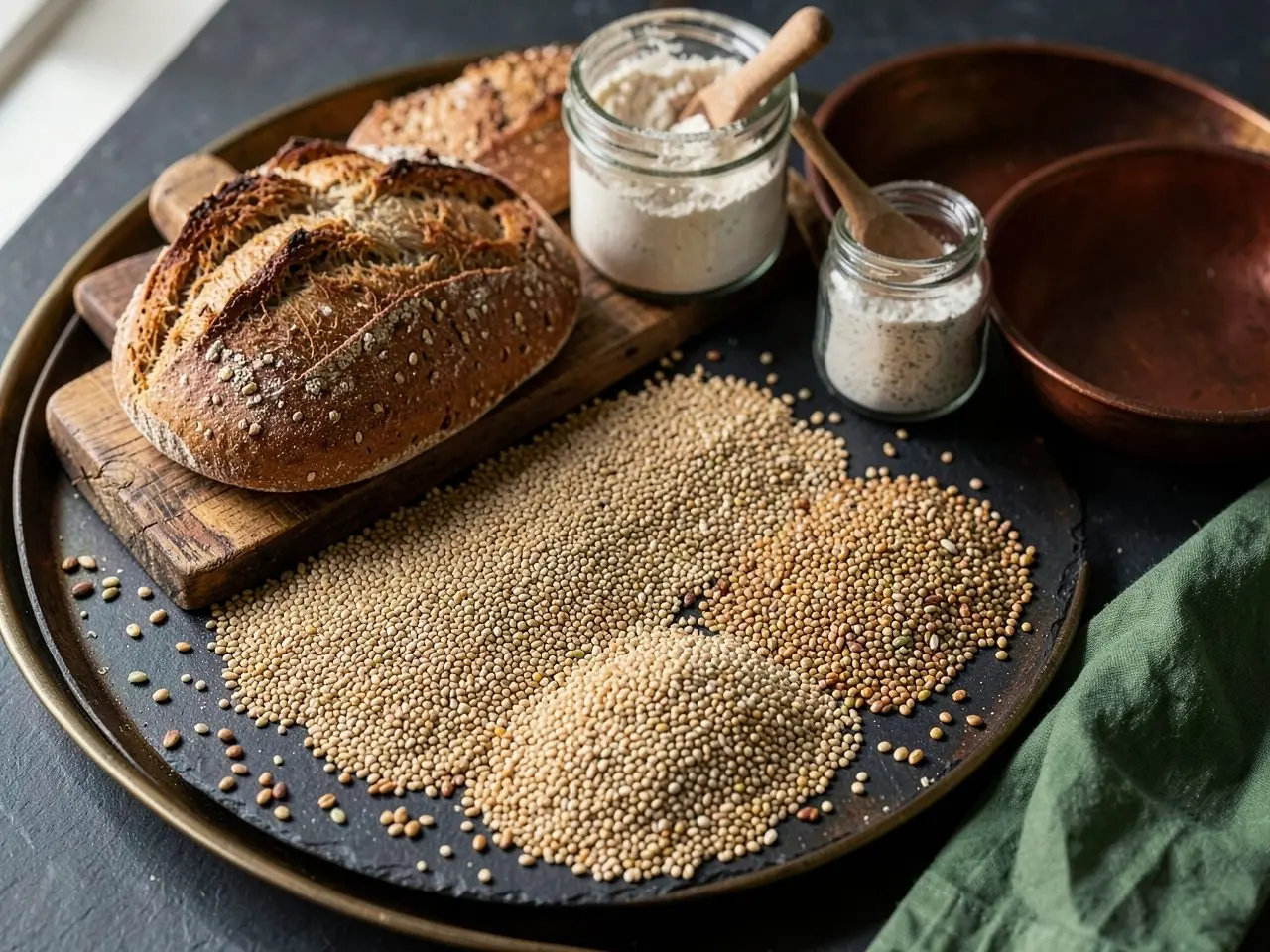
Millets are small-seeded grains that were everyday staples across much of India until the Green Revolution of the 1960s and 70s made wheat and rice the default in most kitchens. The ones you are most likely to find are bajra, jowar and ragi, sold mainly as flour, and the small millets (foxtail, kodo and little millet), sold as whole grain to cook like rice. They need a little more water and a different hand with dough than wheat, but none of them is difficult once you know what to expect.
What are the main Indian millets called?
The same grain goes by different names across India, which is the main source of confusion when shopping. These are the common names; spellings vary on packets.
| Millet | English name | Other common names | Usually sold as |
|---|---|---|---|
| Bajra | Pearl millet | Bajri (Marathi, Gujarati), kambu (Tamil), sajjalu (Telugu), sajje (Kannada) | Flour, some whole grain |
| Jowar | Sorghum | Jwari (Marathi), jola (Kannada), cholam (Tamil), jonna (Telugu) | Flour, whole grain |
| Ragi | Finger millet | Nachni (Marathi), mandua (Uttarakhand), kezhvaragu (Tamil), ragulu (Telugu) | Flour |
| Foxtail millet | Foxtail millet | Kangni or kakun (Hindi), rala (Marathi), thinai (Tamil), korra (Telugu), navane (Kannada) | Whole grain |
| Kodo millet | Kodo millet | Kodra (Hindi), varagu (Tamil), arikelu (Telugu), harka (Kannada) | Whole grain |
| Little millet | Little millet | Kutki (Hindi), samai (Tamil), samalu (Telugu), same (Kannada) | Whole grain |
Barnyard millet (samak or sama ke chawal in Hindi, bhagar or vari in Marathi) is another small millet, widely eaten on fasting days in North and West India.
Broadly, bajra belongs to the drier north-west (Rajasthan, Gujarat, Haryana), jowar to Maharashtra and northern Karnataka, and ragi to Karnataka and its neighbours.
What do they taste like?
- Bajra: earthy and slightly bitter, with a grey colour; a winter flour in Rajasthan and Gujarat.
- Jowar: the mildest of the three, pale and slightly sweet. It is the easiest place to start.
- Ragi: deep brown and earthy, used for rotis, porridge, dosa and the Karnataka staple ragi mudde (soft cooked balls).
- Small millets: mild and slightly nutty, closer to broken rice in feel.
How do you cook whole millets?
Rinse millets in several changes of water until it runs mostly clear. Soaking shortens the cooking time and gives a more even texture. The ratios and times below are typical ranges; they vary with the grain, the pan and how soft you like it, so check the packet and adjust after your first batch.
Small millets (foxtail, kodo, little, barnyard)
- Soak: 30 minutes to a few hours. Some cooks soak for 6 to 8 hours; longer soaking means slightly less water and a shorter cook.
- Water: about 2 to 3 cups of water for 1 cup of millet. Use the lower end for separate grains in a pulao or lemon-rice-style dish, and the higher end for a soft, khichdi-like texture.
- Stovetop: bring to the boil, cover, and simmer on low for roughly 15 to 20 minutes until the water is absorbed. Rest covered for 5 minutes and fluff with a fork.
- Pressure cooker: typically 1 to 2 whistles on medium heat, then let the pressure release naturally.
Whole jowar and bajra
These are larger and harder. Soak for 6 to 12 hours, or overnight. Use roughly 3 to 4 cups of water per cup of grain and pressure-cook for longer, often 4 to 6 whistles. Cracked bajra makes a savoury winter khichdi in Rajasthan.
Small millets swap in for rice in khichdi, upma, pongal, lemon rice and curd rice. Start by replacing half the rice.
How does millet atta behave in rotis?
This is where most people struggle. Wheat atta contains gluten, which makes a stretchy dough you can roll thin and that puffs on the tawa. Millets contain no gluten, so millet dough has no stretch. It cracks at the edges, tears when rolled, and dries out quickly.
A few habits make it work:
- Use warm or hot water. Hot water partly cooks the starch and helps the dough hold together. Many cooks stir jowar or ragi flour with just-boiled water, then knead once it is cool enough.
- Knead fresh, in small batches. Knead only enough for one or two rotis at a time, with the heel of your hand, until smooth. Millet dough does not keep or rest well.
- Pat, do not roll. Traditional jowar and bajra bhakris are patted out by hand on a floured board or between two sheets of baking paper or a plastic sheet. Keep them a little thicker than a wheat roti.
- Cook on a hot tawa. Some cooks brush the top with water once it is on the tawa to stop it drying. Cook both sides, then puff it over a direct flame or press the edges with a cloth.
- Seal cracks with a wet finger as you shape it.
If you are new to millet flour, mixing a quarter to half millet into wheat atta gives a dough that rolls almost like a normal chapati. Pure millet rotis are eaten hot with ghee or white butter, alongside thecha, garlic chutney, dal or sarson ka saag. They harden as they cool, so make them just before serving.
Are millets gluten-free?
Millets are naturally free of gluten, which is why the dough behaves so differently. Flours can still be milled or packed alongside wheat, so anyone who must avoid gluten strictly should choose packs labelled gluten-free.
How should you store millets and millet flour?
- Whole millets: in an airtight container in a cool, dry cupboard. They generally keep for several months; check the date on the pack.
- Millet flour: keeps less well than wheat atta, because the oils in the whole grain go stale and can turn the flour bitter. Bajra flour is especially prone to this. Buy small packs, or have small amounts milled at a local chakki, and aim to use them within about 1 to 2 months. In hot, humid weather, or if you use it slowly, keep it in the fridge or freezer in a sealed bag.
- Check before use. A bitter or musty smell means the flour has gone off. Throw it away.
Refined and wheat flours, rice and dals are covered in the Indian pantry essentials guide. If you are still learning roti dough, start with wheat in the anda paratha recipe, then move on to millet once you are used to how a good dough feels.