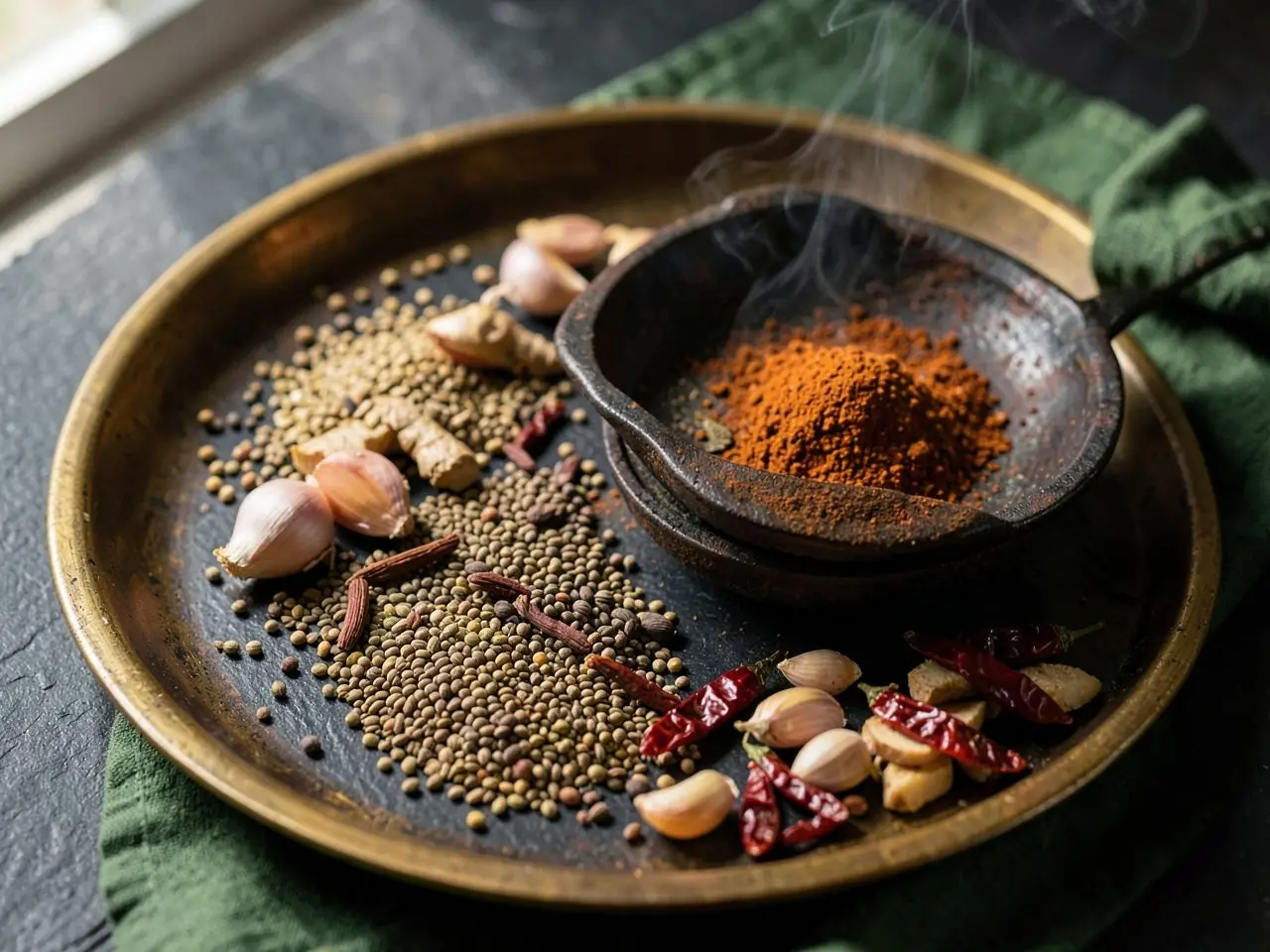
The Alchemy of Spices
Understanding the transformative power of dry-roasting and the delicate balance of aromatic oils in traditional Punjabi cuisine.
By Nomisto Kitchen · Updated
The transformation of a spice begins with heat. In the traditional kitchens of Punjab, the process of dry-roasting is considered a sacred ritual. It is the moment when the dormant oils within a cumin seed or a peppercorn are awakened, releasing a depth of flavor that raw spices simply cannot match.
The Heat Transformation
Dry-roasting is not merely about browning; it is about the precise application of heat to drive out moisture and concentrate the essential oils. When done correctly, the spice changes color slightly and begins to emit a fragrant, toasted aroma. This is the signal to remove it from the heat immediately, as the line between roasted and burnt is razor-thin.
The Grinding Ritual
Once roasted, the spices are typically ground while still warm, ensuring that the oils are evenly distributed throughout the powder. This freshly ground masala becomes the backbone of the dish, providing a complex, layered flavor profile that defines authentic Punjabi cooking. It is a technique that requires patience and a keen sense of smell, but the results are transformative.