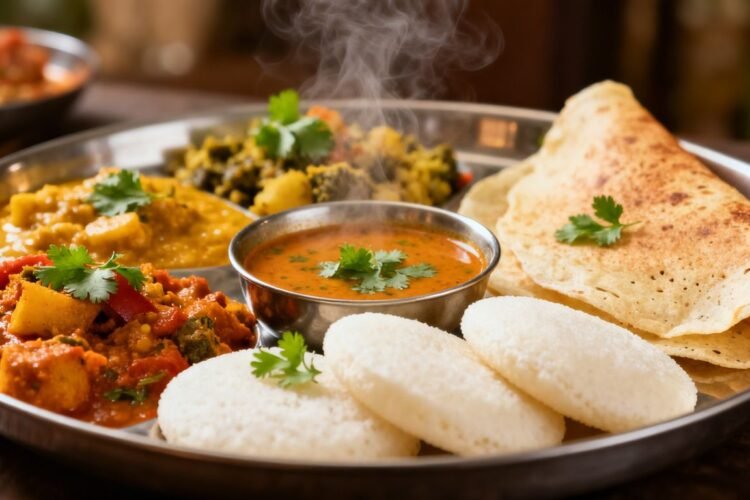
South Indian food is pretty amazing, especially if you’re looking for tasty vegetarian options. It’s got this whole range of flavors, from super tangy to just plain comforting. You might think Indian food is all about heavy curries, but the south has its own thing going on, and it’s mostly vegetarian-friendly. We’re talking about dishes that are light, healthy, and packed with spices that just make your taste buds happy. It’s a real delight for anyone who loves good food, no matter if you eat meat or not.
Key Takeaways
- South Indian cuisine offers a fantastic variety of vegetarian dishes, known for their unique flavors and spices.
- Iconic dishes like Idli, Masala Dosa, and Sambar are central to the South Indian vegetarian experience.
- From hearty stews to sweet desserts, South Indian vegetarian dishes provide a complete and satisfying culinary journey.
Exploring Iconic South Indian Vegetarian Dishes
South Indian vegetarian cuisine brings together years of tradition, smart ingredient choices, and bold flavors. Every region of South India puts its own spin on classics, but there are a few dishes that just about everyone knows and craves. If you wander into any South Indian home around breakfast or lunch, odds are you’ll come across some of these favorites. Let’s talk about two of the most iconic: idli and masala dosa.
Idli: The Steamed Rice Cake Staple
Idlis have fans all over India, and honestly, it’s easy to see why. At first look, they seem simple—just soft, white, round cakes made of fermented rice and lentil batter. But there’s more to them than meets the eye:
- Fermentation is key: The batter needs a good long rest so it gets that slight tang.
- Steaming makes them light: Instead of baking or frying, steaming keeps idlis pillowy and easy on the stomach.
- Pairs well with everything: Locals eat them with coconut chutney, spicy tomato coulis, and always—always—with hot sambar.
| Ingredient | Purpose |
|---|---|
| Rice | Texture, softness |
| Urad dal | Fermentation, protein |
| Salt | Taste, activates yeast |
When the mornings feel rushed, grabbing a hot idli and dunking it in chutney is honestly one of the best ways to start the day.
Masala Dosa: A Crispy Potato-Filled Delight
Now, if there’s one South Indian dish you’ll see everywhere from roadside shops to swanky buffets, it’s masala dosa. The dosa is a thin, crackling crepe made from the same sort of fermented batter as idli, only spread paper-thin over a skillet. Inside, it’s got a warm, lightly spiced mash of potatoes and onions. Here’s why dosa is a must-try:
- That crazy satisfying crunch when you break off a piece.
- The richly-flavored potato filling, not too spicy, but full of little surprises like raw ginger or mustard seeds.
- All the dips—most people can’t stop at just one chutney!
| Step | Description |
|---|---|
| Prepare batter | Mix and ferment rice and lentil for 8-12 hours |
| Cook crepe | Spread batter on hot skillet until crisp and golden |
| Make potato filling | Sauté mashed potatoes, onions, and spices |
| Assemble and serve | Place filling inside dosa, fold, and serve with chutney |
Sitting with friends, tearing into a crunchy dosa straight from the griddle—it’s a meal and a small celebration, all rolled into one.
The Hearty and Flavorful World of South Indian Vegetarian Cuisine
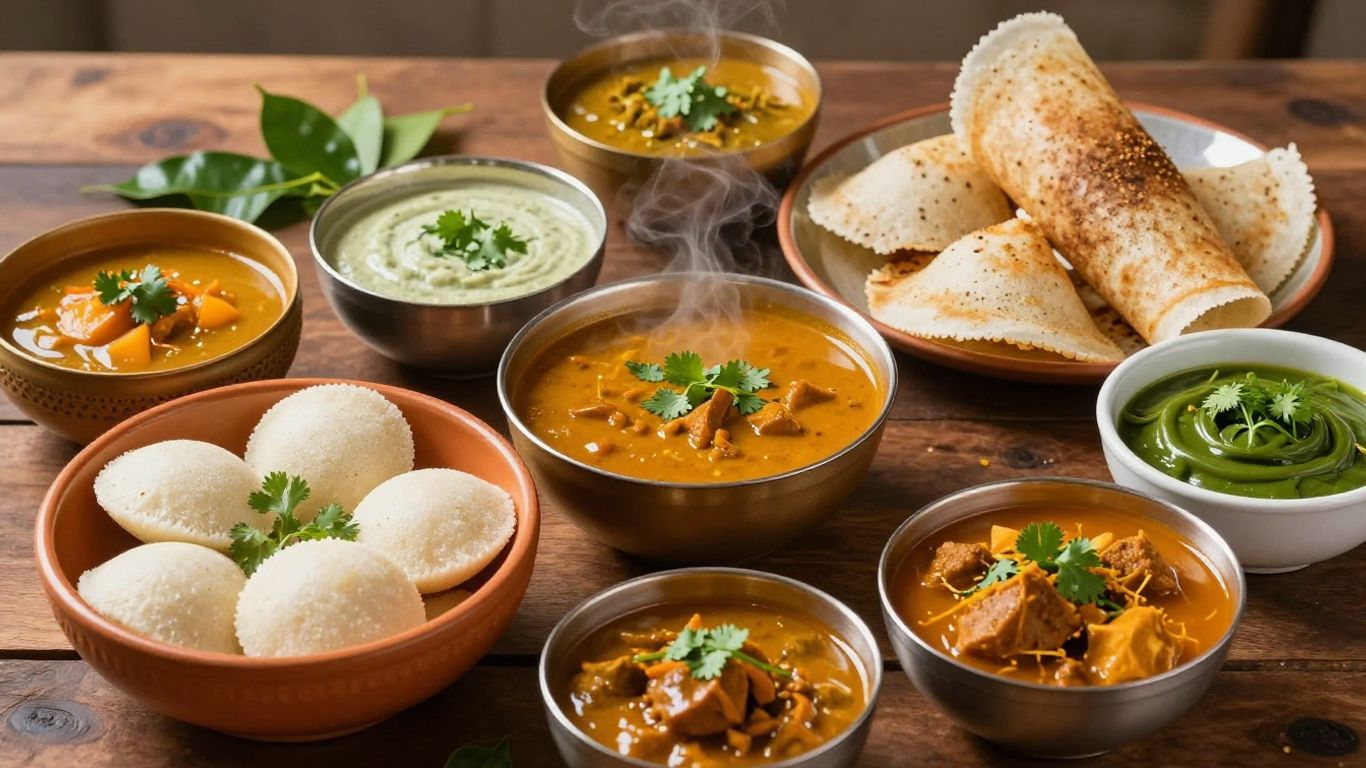
South Indian food is a whole different ballgame when it comes to vegetarian cooking. It’s not just about avoiding meat; it’s about celebrating vegetables, lentils, and grains with a symphony of spices that really wakes up your taste buds. Forget bland and boring – this is food with personality.
Sambar: A Tangy Lentil and Vegetable Stew
Sambar is pretty much the backbone of many South Indian meals. It’s a lentil-based stew, but calling it just a stew doesn’t do it justice. It’s packed with vegetables like drumsticks, pumpkin, and okra, all simmered in a broth flavored with tamarind for that signature tang. The real magic, though, comes from the special sambar powder, a mix of roasted spices that gives it a warm, complex aroma. It’s hearty, healthy, and goes with just about everything, from fluffy idlis to crispy dosas.
It’s a dish that feels both comforting and exciting with every spoonful.
Here’s a quick look at what makes sambar so special:
- Base: Toor dal (split pigeon peas) or sometimes masoor dal (red lentils).
- Vegetables: A rotating cast including eggplant, tomatoes, onions, carrots, and gourds.
- Flavor Profile: Tangy from tamarind, spicy from chili, and aromatic from a blend of ground spices.
- Accompaniments: Almost always served with rice, idli, dosa, or vada.
Sambar is more than just a side dish; it’s a complete meal in a bowl, offering a balanced mix of protein, fiber, and vitamins. Its versatility means it can be adapted to whatever vegetables are in season.
Pongal: Comforting Rice and Lentil Porridge
When you want something truly soul-warming, Pongal is the answer. It’s a simple yet incredibly satisfying dish made from rice and lentils cooked together until they’re soft and creamy, almost like a porridge. There are two main types: the savory ‘Ven Pongal’ and the sweet ‘Sakkarai Pongal’.
Ven Pongal is seasoned with black peppercorns, cumin seeds, ginger, and curry leaves, often tempered in ghee. It’s a popular breakfast item, usually served with sambar and coconut chutney. Sakkarai Pongal, on the other hand, is made with jaggery (unrefined cane sugar) and ghee, making it a sweet treat perfect for festivals and special occasions. It’s a dish that embodies comfort and tradition.
Here’s a breakdown of the two Pongal varieties:
- Ven Pongal (Savory):
- Ingredients: Rice, moong dal, ghee, black pepper, cumin, ginger, curry leaves.
- Taste: Savory, peppery, and aromatic.
- Best served: For breakfast or brunch.
- Sakkarai Pongal (Sweet):
- Ingredients: Rice, moong dal, jaggery, ghee, cardamom, cashews.
- Taste: Sweet, rich, and fragrant.
- Best served: As a dessert or festive offering.
Both versions showcase how simple ingredients can be transformed into something truly delicious and comforting. It’s the kind of food that makes you feel good from the inside out.
Sweet Endings and Quick Bites in South Indian Vegetarian Fare
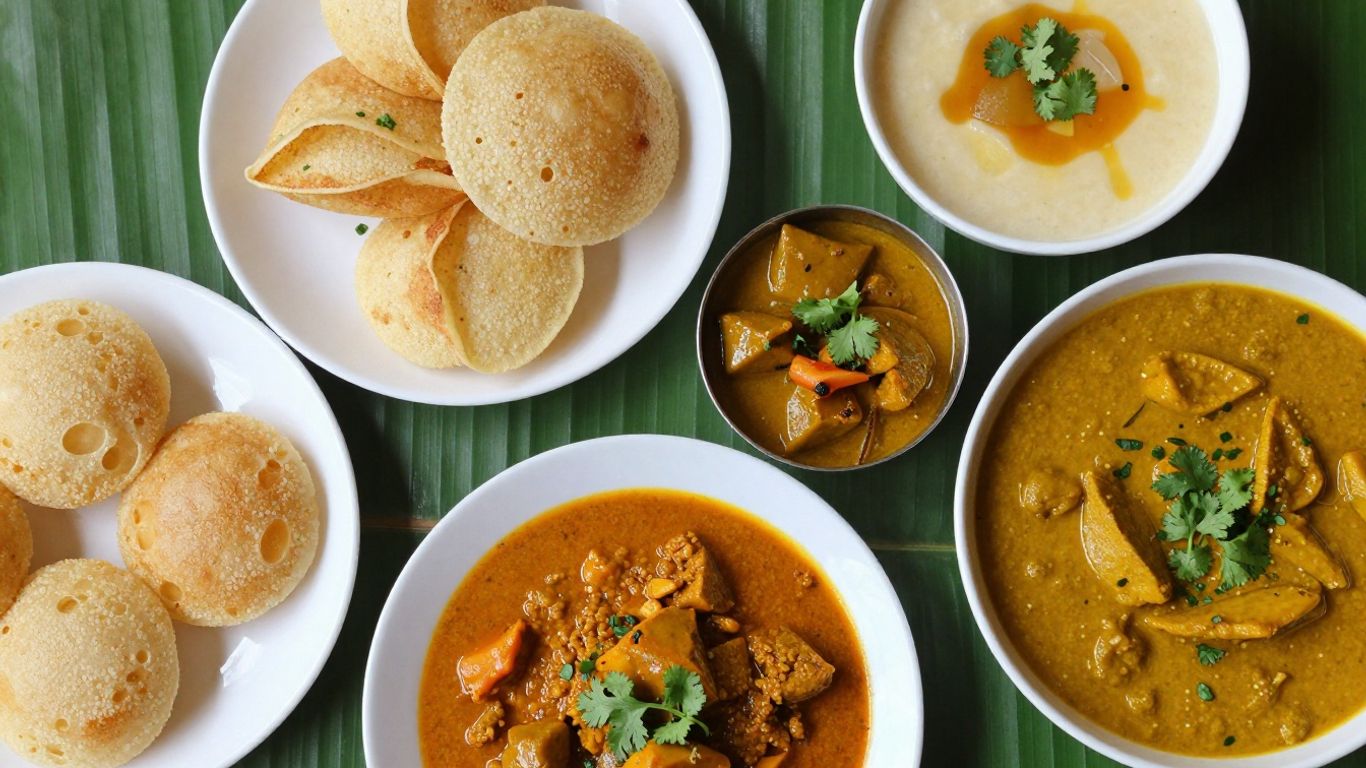
No South Indian meal feels truly complete without a little something sweet to finish things off, or perhaps a quick, satisfying bite to tide you over. Luckily, the region offers some fantastic options that are both simple and incredibly delicious.
Payasam and Kesari: Traditional Sweet Delicacies
When it comes to desserts, Payasam and Kesari are the stars of the show. Payasam is a creamy, comforting pudding, often made with milk, rice or vermicelli, and sweetened with jaggery or sugar. It’s frequently flavored with cardamom and garnished with nuts and raisins, making it a rich and satisfying treat. Kesari, on the other hand, is a vibrant, semolina-based sweet. It gets its name and color from saffron, and it’s cooked with ghee, sugar, and often flavored with cardamom. Both are perfect for celebrations or just when you need a little sweetness in your life.
Here’s a quick look at what makes them special:
- Payasam: Creamy, milk-based, often uses rice or vermicelli, flavored with cardamom, garnished with nuts.
- Kesari: Semolina-based, vibrant color from saffron, rich with ghee and sugar, also flavored with cardamom.
These sweets are more than just desserts; they’re a way to share joy and tradition. Making them at home is a rewarding experience, filling your kitchen with wonderful aromas.
Rava Upma: A Simple Semolina Breakfast
For a quick and hearty start to your day, Rava Upma is a go-to dish. It’s made from roasted semolina (rava) cooked with water or buttermilk, and it’s incredibly versatile. You can add a variety of vegetables like peas, carrots, and onions, along with spices like mustard seeds, cumin, and curry leaves, to give it a flavorful kick. It’s a dish that proves simple ingredients can create something truly satisfying. Often served with a side of coconut chutney or a dollop of yogurt, Rava Upma is a wholesome and filling breakfast that doesn’t take long to prepare. It’s the kind of meal that gets you going without weighing you down.
A Flavorful Journey’s End
So, there you have it – a little taste of the amazing vegetarian food South India has to offer. From the fluffy idlis to the crispy dosas and the comforting sambar, these dishes are more than just meals; they’re a whole experience. They’re packed with flavor, good for you, and honestly, pretty fun to make. Whether you’re a seasoned cook or just starting out in the kitchen, giving these recipes a try is totally worth it. You’ll bring a bit of that South Indian sunshine right to your own table. Happy cooking, and even happier eating!
Frequently Asked Questions
What are some common South Indian vegetarian dishes?
Some very popular South Indian dishes that are naturally vegetarian include Idli, which are soft steamed rice cakes, Masala Dosa, a crispy pancake filled with spiced potatoes, and Sambar, a flavorful lentil and vegetable stew. Pongal, a comforting rice and lentil dish, and Rava Upma, a quick semolina dish, are also favorites.
Are South Indian vegetarian recipes easy for beginners?
Yes, many South Indian vegetarian recipes are quite simple to make! Dishes like Rava Upma and Idli are straightforward and don’t need fancy cooking skills. Sambar is also relatively easy to prepare, especially if you use pre-made spice mixes. These are great starting points for anyone new to South Indian cooking.
Can I prepare parts of South Indian meals ahead of time?
Absolutely! Making South Indian food ahead of time is very common. You can prepare the batter for Idli and Dosa and store it in the fridge for a few days. Sambar can also be made a day in advance and simply reheated before serving. This makes busy mornings much easier!