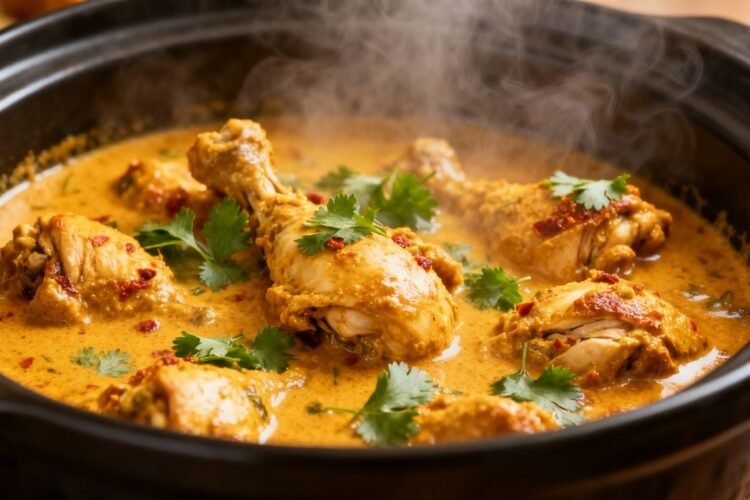
Craving the rich, warm flavors of Indian cuisine but short on time? This crock pot chicken curry indian recipe is your answer. Forget complicated steps and long hours over the stove. We’re talking about a simple, set-it-and-forget-it meal that fills your home with amazing aromas and delivers tender, flavorful chicken without all the fuss. It’s perfect for busy weeknights or when you just want a comforting, delicious dinner with minimal effort.
Key Takeaways
- This crock pot chicken curry indian recipe simplifies authentic Indian flavors for easy home cooking, using common grocery store ingredients.
- Using chicken thighs is recommended for slow cooking as they stay tender, but chicken breasts can be used with a shorter cooking time to avoid drying out.
- Adding creamy elements like coconut milk towards the end of cooking prevents curdling and ensures a rich, smooth sauce.
Effortless Crock Pot Chicken Curry Ingredients
Key Components For Authentic Indian Flavors
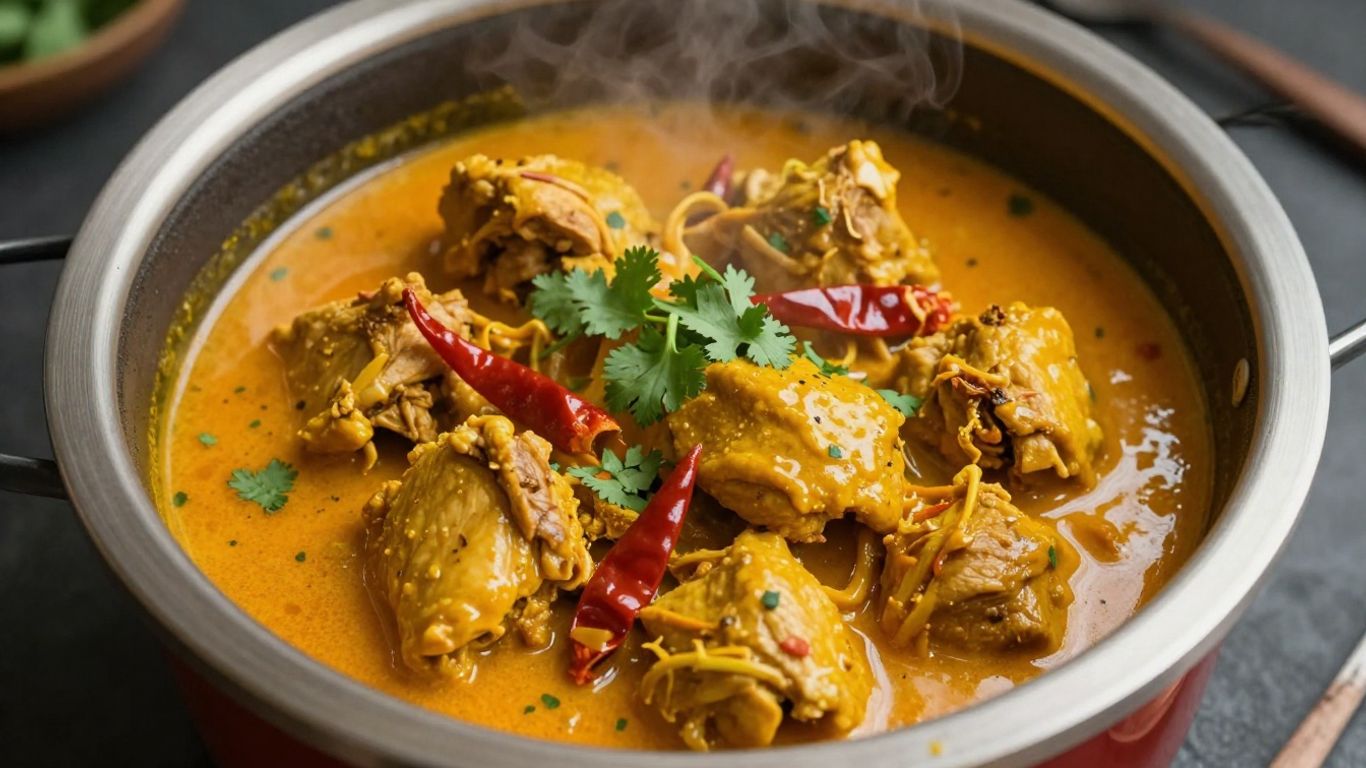
Getting that authentic Indian curry taste doesn’t mean you need a pantry stocked with obscure spices. We’re focusing on a blend that’s easy to find but still packs a punch. The heart of our curry comes from a mix of warming spices. Think cumin, turmeric, and coriander for that earthy base. A touch of garam masala, added towards the end, brings a fragrant warmth that really makes the dish sing. Don’t forget ginger and garlic – they’re non-negotiable for building deep flavor.
- Ground Cumin: Provides a warm, earthy foundation.
- Turmeric: Adds a beautiful golden color and a slightly bitter, peppery note.
- Ground Coriander: Offers a citrusy, slightly sweet flavor that complements the cumin.
- Garam Masala: A blend of warming spices like cinnamon, cloves, and cardamom, added later for aroma.
- Fresh Ginger & Garlic: The aromatic backbone of most Indian dishes.
We’re also using coconut milk, which is key for that creamy texture and mild sweetness that balances the spices. You can use light coconut milk if you’re watching calories, but full-fat will give you the richest result. Just remember, don’t add it to the slow cooker until the very end, or it might get a little weird and curdle.
The magic of a good curry often lies in the balance of spices. Too much of one thing can throw the whole dish off. It’s about building layers of flavor, starting with the aromatics and building up with the ground spices, then finishing with something fragrant and warm.
Selecting The Right Chicken For Slow Cooking
When it comes to slow cooker chicken curry, not all chicken cuts are created equal. For this recipe, chicken thighs are your best friend. They have a bit more fat, which means they stay incredibly moist and tender even after hours of slow cooking. Chicken breasts can work, but you have to be really careful not to overcook them, or they can turn dry and stringy. If you do opt for breasts, just keep an eye on them and maybe pull them out a little earlier.
Here’s a quick rundown:
- Boneless, Skinless Chicken Thighs: The top choice for tenderness and flavor in slow cooking.
- Boneless, Skinless Chicken Breasts: A leaner option, but requires more attention to avoid drying out.
Cut your chicken into bite-sized pieces, about 1-inch cubes, so they cook evenly and are easy to serve. You can put raw chicken straight into the slow cooker; it’s designed for that. Some people like to give the chicken a quick sear on the stovetop first to add a little extra color and depth of flavor, but it’s totally optional for this easy recipe. It’s one of those things that makes a difference, but you can skip it if you’re really short on time.
Crafting Your Crock Pot Chicken Curry
Simplifying The Indian Curry Process
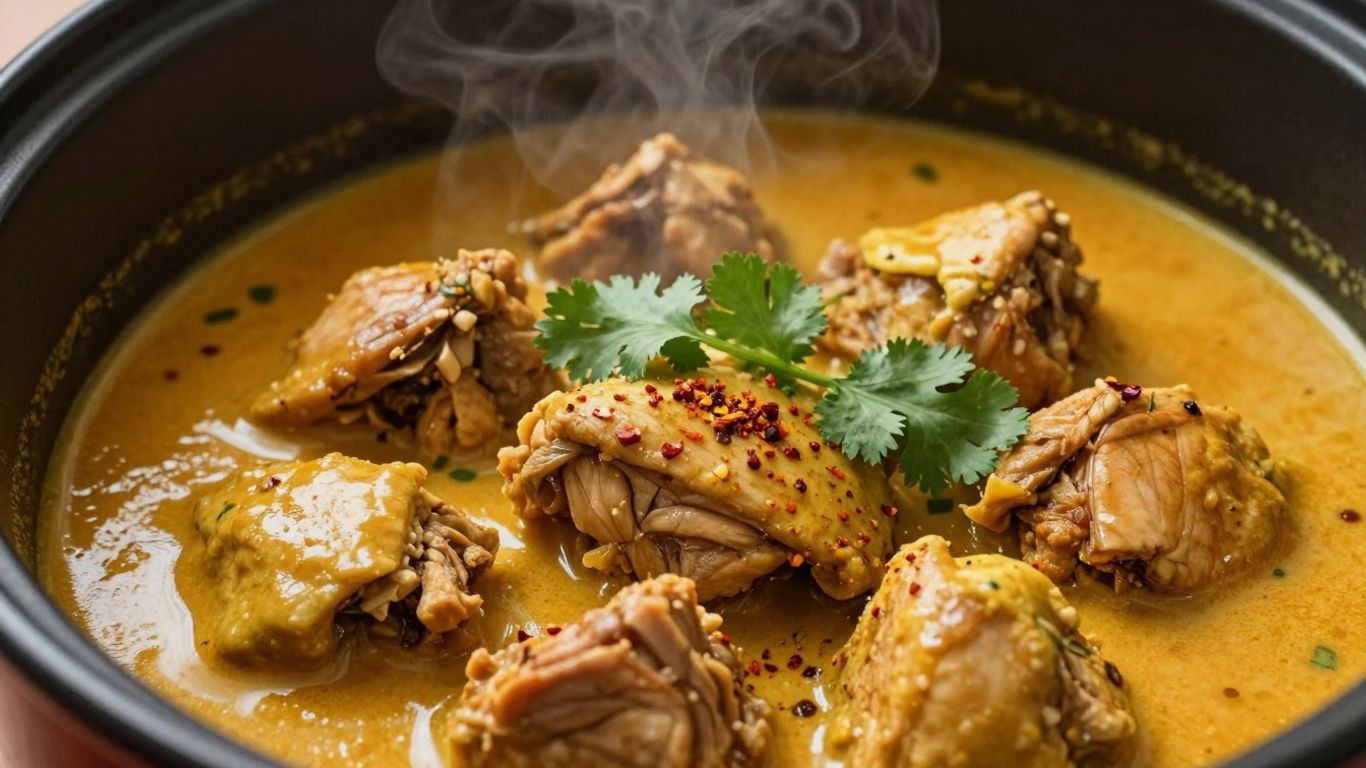
Making a flavorful Indian curry at home doesn’t have to be complicated, especially when your trusty crock pot does most of the heavy lifting. The beauty of using a slow cooker is that it allows the flavors to meld and deepen over several hours, resulting in a tender chicken and a rich sauce that’s hard to achieve on the stovetop in a short amount of time. You can pretty much just toss everything in and let it do its thing. This hands-off approach is what makes crock pot cooking so appealing for busy weeknights or lazy weekends.
Here’s a general idea of how the process breaks down:
- Combine the Base: Start by mixing your aromatics (like onions, garlic, and ginger) with your liquids (broth, tomato puree) and the main spices. This creates the flavor foundation.
- Add the Chicken: Place your chicken pieces into the slow cooker, then pour the spice mixture over them. Give it a good stir to make sure everything is coated.
- Slow Cook: Cover and let it cook on low for several hours. This is where the magic happens, tenderizing the chicken and allowing the spices to work their wonders.
- Thicken and Finish: Towards the end of cooking, you’ll often add a thickening agent, like a cornstarch slurry or sometimes a bit of yogurt or cream, to give the sauce that perfect, luscious consistency.
Remember, the slow cooker traps moisture, which is great for tenderizing but can sometimes lead to a thinner sauce than you might expect. Don’t be afraid to adjust the thickening step to your liking.
Tips For Perfect Crock Pot Chicken Curry Consistency
Getting the sauce just right is key to a great curry. Since slow cookers seal in moisture, the sauce can sometimes end up a bit too thin. Here are a few tricks to ensure your curry has the perfect consistency:
- The Cornstarch Slurry: This is your best friend for thickening. Mix about 1-2 tablespoons of cornstarch with an equal amount of cold water or broth until smooth. Stir this into the crock pot during the last 30 minutes of cooking. It works wonders.
- Yogurt or Cream: Adding a dollop of plain Greek yogurt or some heavy cream towards the end of cooking can add richness and help thicken the sauce slightly. Just be sure to stir it in gently and avoid boiling after adding dairy to prevent curdling.
- Reduce the Liquid: If you find your sauce is consistently too thin even after thickening, you can try reducing the amount of liquid you add initially. Start with a little less broth or water, and you can always add more if needed.
- Don’t Overcrowd: While it’s tempting to pack the slow cooker full, leaving a little space at the top can help some of the liquid evaporate, leading to a slightly thicker sauce naturally.
Here’s a quick look at common cooking times:
| Setting | Time Range | Notes |
|---|---|---|
| Low | 6-8 hours | Ideal for maximum tenderness and flavor development. |
| High | 3-4 hours | A quicker option, but keep an eye on the chicken to prevent overcooking. |
Always check your chicken for doneness – it should be cooked through and easily shreddable.
Enjoy Your Effortless Curry!
So there you have it – a super simple way to get that delicious Indian curry flavor without all the fuss. This slow cooker chicken curry is proof that you don’t need to be a master chef to make something really tasty. It’s perfect for those busy weeknights when you just want to come home to a warm, comforting meal. Give it a try, and I bet it becomes a regular in your dinner rotation. Don’t forget to serve it up with some rice or naan, and enjoy the amazing aromas filling your kitchen!
Frequently Asked Questions
Can I use chicken breasts instead of thighs?
Yes, you can use chicken breasts, but they cook faster than thighs. Keep an eye on them to make sure they don’t get too dry or overcooked. Thighs tend to stay more tender in the slow cooker.
Why shouldn’t I add coconut milk at the beginning?
Adding coconut milk too early can cause it to curdle or separate while it cooks in the slow cooker. It’s best to stir it in near the end of the cooking time for a creamy, smooth sauce.
How can I make the curry thicker if it’s too watery?
Slow cookers don’t let much liquid escape, so curries can sometimes be a bit thin. To thicken it, you can mix a little cornstarch with water to make a paste, then stir it into the curry during the last 30 minutes of cooking. Stirring well helps it thicken up nicely.