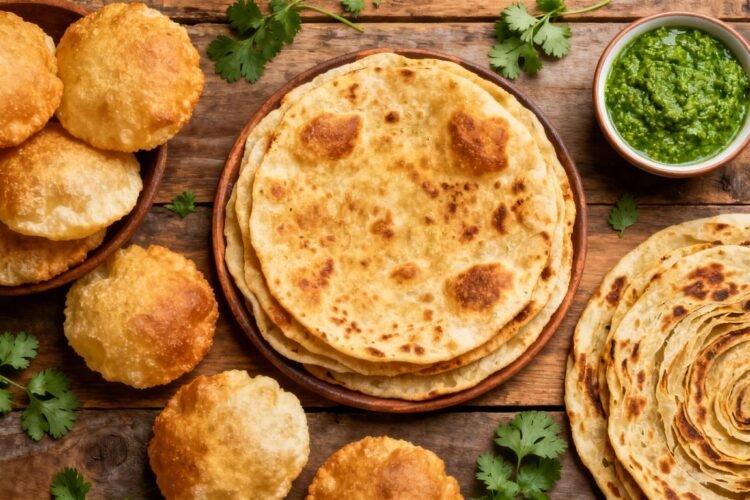
When most people picture Indian food, they think of spicy curries and colorful dishes, but honestly, the real star of the table is often the bread. The Indian breads list is long and full of surprises, from soft rotis and pillowy naan to crispy puris and flaky parathas. Each bread has its own story and way of being made, and you’ll find them everywhere—from small village kitchens to busy city restaurants. Some are perfect for scooping up curry, others are great just with a little butter or chutney. No matter where you go in India, there’s always a type of bread waiting to be tried.
Key Takeaways
- Indian breads come in many forms—some are soft and simple like roti, while others are layered or fried, like paratha and puri.
- Different regions of India have their own special breads, using local flours and cooking styles, making the Indian breads list incredibly diverse.
- Trying various Indian breads is a fun way to explore the country’s food culture, and there’s a bread for every meal or craving.
A Culinary Exploration of India’s Staple Flatbreads
When you think about Indian food, your mind probably goes straight to all those amazing curries and fragrant spices. But there’s another star player that’s just as important, and that’s the bread. Indian flatbreads are everywhere, and they’re not just something to soak up sauce with – they’re a big part of the meal itself.
The Ubiquitous Roti and Chapati
Let’s start with the everyday heroes: roti and chapati. These are basically the same thing, just called differently in various parts of India. They’re made from whole wheat flour, water, and a pinch of salt, then cooked on a flat griddle called a ‘tava’. They are the most common bread you’ll find on Indian tables. Simple, right? But don’t let their simplicity fool you. A warm, freshly made chapati, maybe brushed with a little ghee, is incredibly satisfying, especially when paired with a hearty lentil dish or a vegetable curry. It’s the kind of bread that feels like home, no matter where you are.
The Beloved Naan and Its Variations
Then there’s naan. Ah, naan! This is the leavened bread that most people outside of India recognize. It’s typically made with refined flour, sometimes with a bit of yogurt or milk mixed in for extra softness. The magic really happens when it’s slapped onto the hot, searing walls of a tandoor oven. It puffs up beautifully, getting those lovely charred spots that give it so much flavor. You’ll often find it served with rich dishes like butter chicken or paneer tikka masala. Garlic naan is a popular choice, but you can also find cheese-stuffed or even keema (minced meat) naan, showing just how adaptable this bread can be.
While naan is often associated with restaurant meals, making it at home is totally doable. You might not have a tandoor, but a hot cast-iron skillet or even your oven broiler can get you pretty close to that delicious, slightly smoky flavor. It just takes a bit of practice to get that perfect puff!
Here’s a quick look at how these two staples differ:
- Roti/Chapati:
- Made with whole wheat flour (atta).
- Unleavened (no yeast or baking powder).
- Cooked on a flat griddle (tava).
- Generally thinner and chewier.
- Naan:
- Often made with refined flour (maida), sometimes mixed with whole wheat.
- Leavened (using yeast or sometimes yogurt/baking powder).
- Traditionally cooked in a tandoor (clay oven).
- Typically thicker and softer with a slightly chewy texture.
Discovering the Diverse Indian Breads List
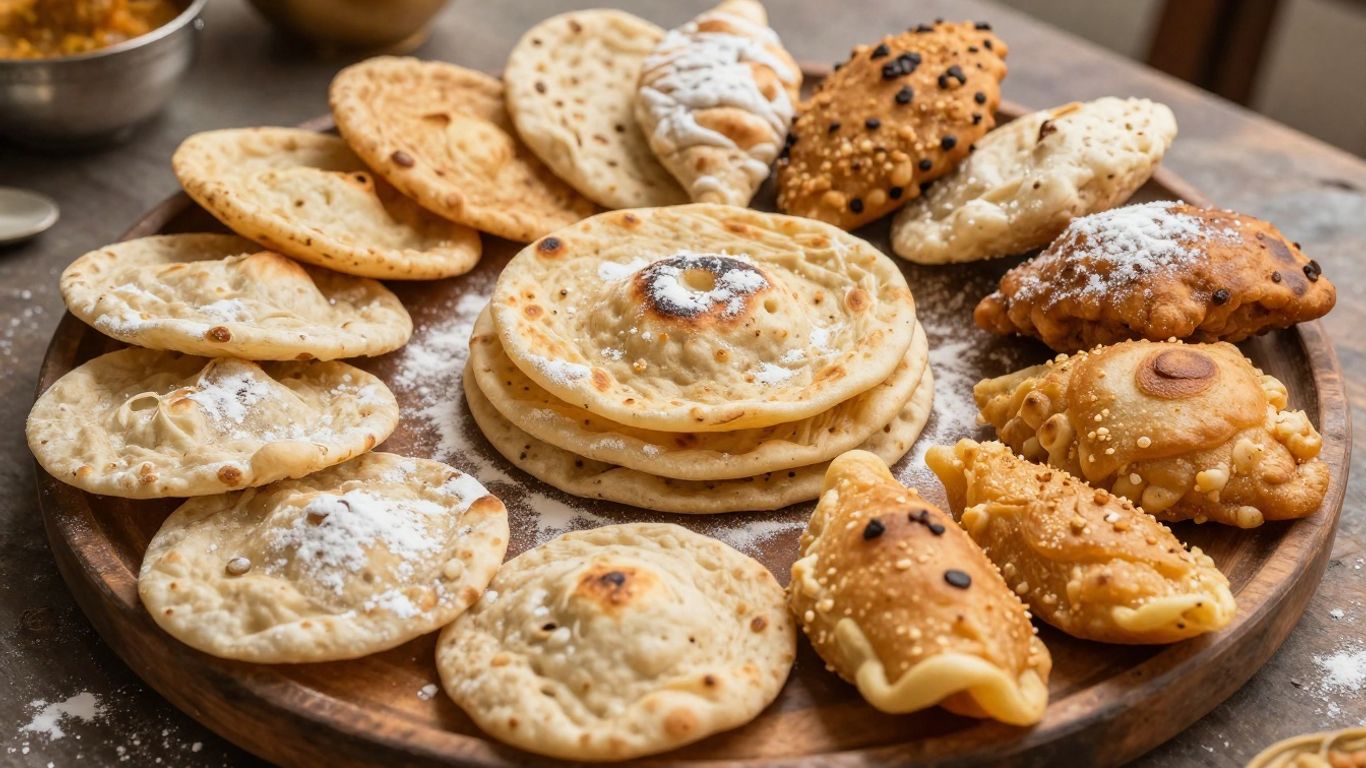
Beyond the everyday roti and naan, India’s bread basket holds a treasure trove of flatbreads, each with its own story and texture. This section explores some of the more intricate and celebratory options that grace tables across the subcontinent.
Layered Delights: Paratha and Parotta
Paratha is a true testament to the art of layering. Made from whole wheat flour, it’s not just a simple dough; it’s a canvas for deliciousness. The dough is rolled out, oiled or ghee-ed, folded, and rolled again multiple times to create distinct, flaky layers. These can be enjoyed plain, letting the buttery crispness shine, or stuffed with a variety of fillings. Think spiced mashed potatoes (aloo paratha), crumbled paneer, or even minced meat. Cooking them on a tawa (griddle) with a generous amount of ghee or oil until golden brown and crisp is key. Parotta, a South Indian cousin, often uses refined flour and a different technique involving stretching and folding the dough to achieve its signature flaky, almost shredded texture when cooked.
The versatility of paratha, from a simple breakfast staple to a hearty meal accompaniment, makes it a beloved choice for many.
Crispy and Fried: Puri, Bhatura, and Papadum
When you want something truly special, fried breads often come to mind. Puri are small, unleavened whole wheat dough rounds that puff up dramatically when dropped into hot oil, creating a delightful, airy pocket. They’re often served with rich curries or sweet dishes like halwa. Bhatura is a more substantial, leavened bread, typically made with refined flour, yogurt, and a pinch of baking soda. It’s deep-fried until golden and wonderfully puffy, with a soft interior, and is famously paired with chole (spicy chickpea curry). Papadums, while not always considered ‘bread’ in the same way, are thin, crispy discs made from lentil, chickpea, or rice flour. They are either fried or roasted and served as a crunchy accompaniment to meals, adding a contrasting texture.
The act of frying these breads transforms them, giving them a satisfying crunch and a rich flavor that makes them perfect for festive occasions or when you’re craving something a bit more indulgent.
Here’s a quick look at these fried favorites:
- Puri: Small, unleavened, puffs up when fried, typically whole wheat.
- Bhatura: Larger, leavened, soft and puffy with a crisp exterior, often made with refined flour and yogurt.
- Papadum: Thin, crispy discs, usually lentil or chickpea based, fried or roasted.
Regional Specialties and Unique Flatbreads
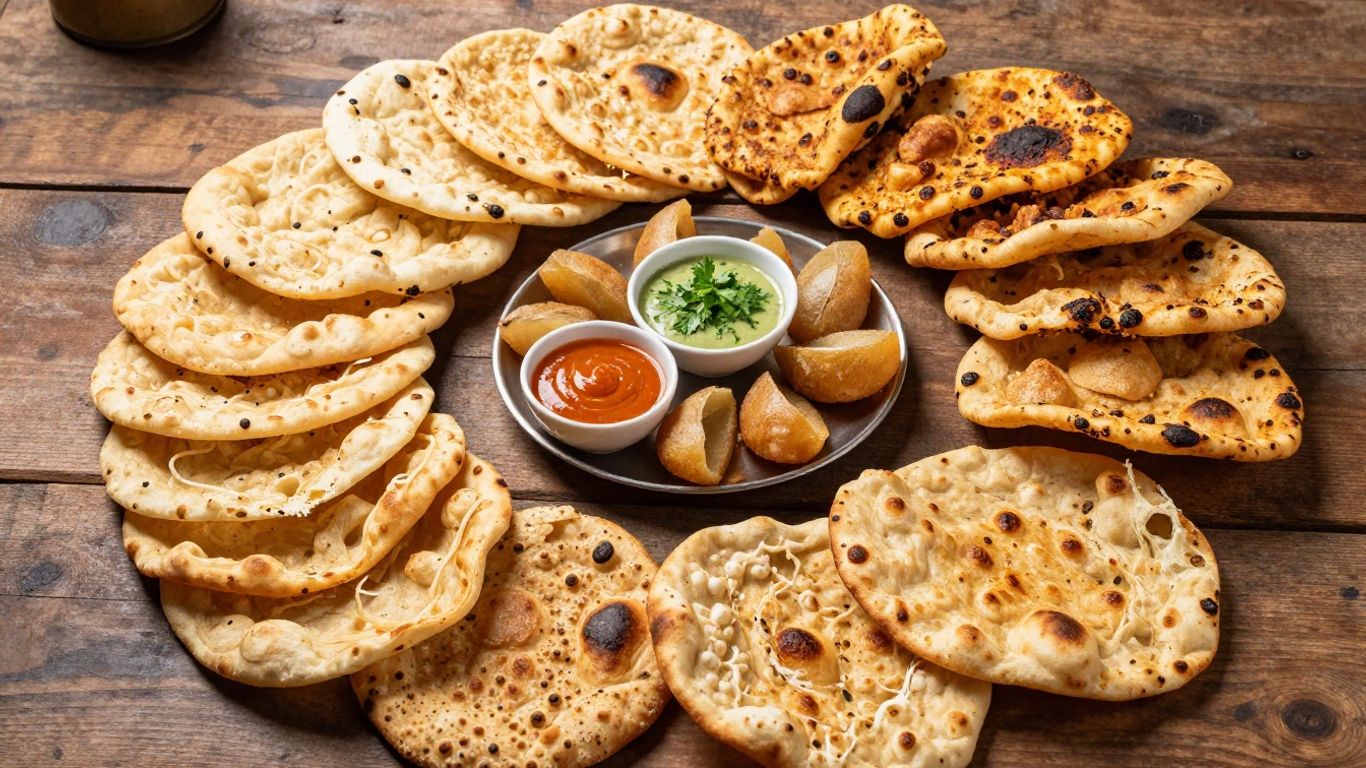
Beyond the well-known roti and naan, India’s vast culinary landscape is dotted with regional flatbreads, each telling a story of local ingredients and traditions. These aren’t just side dishes; they’re often stars in their own right, showcasing the incredible diversity of Indian cooking.
South Indian Pancakes and Millet Breads
Down south, you’ll find a different approach to flatbreads, often leaning on rice and millets. Think of Adai, a hearty pancake made from a mix of lentils and rice flour, or Pesarattu, a delicate crepe primarily from moong beans. These are typically thicker than their northern counterparts and can be packed with flavor from ingredients like chopped onions, curry leaves, and green chilies mixed right into the batter. They’re fantastic with a dollop of yogurt or a spicy chutney.
Then there are the millet-based breads, like Akki Roti (rice flour) and Ragi Roti (finger millet flour). These gluten-free options are often made by mixing the flour with finely chopped vegetables and spices. The dough is then patted thin, sometimes on a banana leaf for extra aroma, before being cooked on a griddle. They have a wonderfully earthy flavor and a satisfying chew.
Thepla and Bhakri: Flavors from Western India
Heading west, particularly to Gujarat, brings us to the Thepla. This is a wonderfully versatile flatbread, often made with a combination of whole wheat flour, gram flour, and sometimes millet flour. What makes thepla special is the addition of finely chopped fenugreek leaves (methi), which give it a distinct aroma and a slightly bitter, earthy taste. Many recipes also incorporate grated vegetables like bottle gourd or spinach. Thepla is known for its slightly spicy kick and is traditionally enjoyed with cooling yogurt or a sweet pickle, making for a balanced flavor profile.
Another notable bread from this region is Bhakri. This is a simpler, unleavened flatbread, often made with just millet or sorghum flour and water. It has a rustic, hearty texture and a robust flavor that pairs exceptionally well with spicy vegetable preparations or rich lentil dishes. It’s the kind of bread that feels grounding and deeply satisfying.
Here’s a quick look at some of these regional stars:
| Bread Name | Primary Flour | Key Ingredients/Flavor | Region |
|---|---|---|---|
| Adai | Rice, Lentils | Mixed lentils, spices | South India |
| Pesarattu | Moong Dal (Lentils) | Moong beans, spices | South India |
| Akki Roti | Rice Flour | Rice flour, herbs, spices | South India |
| Ragi Roti | Finger Millet Flour | Millet flour, herbs, spices | South India |
| Thepla | Wheat, Gram, Millet | Fenugreek leaves, spices, sometimes vegetables | Gujarat |
| Bhakri | Millet, Sorghum | Simple flour and water | Western India |
These regional breads highlight how staple ingredients and local tastes shape culinary traditions. They offer a different texture and flavor experience compared to the more widely known flatbreads, inviting a deeper exploration of India’s food culture.
A Taste of Home, Wherever You Are
So, we’ve taken a little trip through the amazing world of Indian flatbreads. It’s pretty clear that these aren’t just side dishes; they’re a huge part of what makes Indian food so special. From the soft, pillowy naan you can tear into a curry, to the simple, everyday roti that’s a staple at so many tables, each bread has its own story. Whether you’re trying to recreate a favorite dish at home or just curious about what to order next time, remember that these breads are more than just food. They’re about comfort, tradition, and sharing a meal. They really do bring people together, no matter where you are in the world.
Frequently Asked Questions
What’s the difference between Roti and Naan?
Roti, also called chapati, is a simple flatbread made with just whole wheat flour and water. It’s cooked on a flat pan called a tawa. Naan is a bit fancier; it uses refined flour, often has yogurt or milk in it, and is traditionally cooked in a super hot clay oven called a tandoor, which makes it soft and a little bubbly.
Are there different kinds of Indian breads?
Oh yes, tons! India has so many kinds of breads, each with its own special taste and way of being made. You’ve got soft ones like roti, flaky ones like paratha that can be stuffed with yummy things, crispy fried ones like puri, and even thin, pancake-like ones like dosa from the south. Each region has its own favorites!
What’s the best way to eat Indian breads?
Indian breads are super versatile! You can use them to scoop up delicious curries and lentil dishes, eat them for breakfast with yogurt and pickles, or even have them as a snack. They’re meant to be part of the meal, adding texture and helping you enjoy all the other flavors.