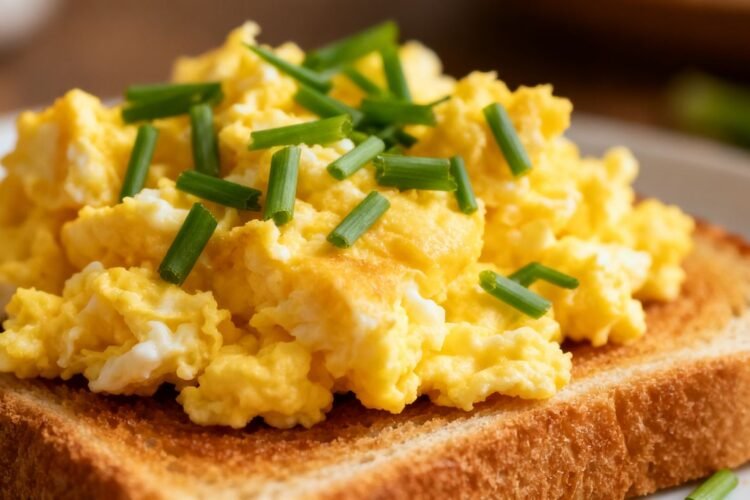
So, you’re curious about the scrambled egg on toast calories, huh? It’s a classic breakfast, right? Easy to make, usually pretty tasty. But have you ever stopped to think about what’s actually in it, nutritionally speaking? We’re talking about the good stuff like protein and the not-so-good stuff if you eat too much, like fat and calories. Let’s break down this simple meal so you know exactly what you’re putting into your body.
Key Takeaways
- A standard serving of scrambled eggs on toast can range from 200 to over 400 calories, depending on how it’s prepared and what’s added.
- The main contributors to scrambled egg on toast calories are the eggs themselves and any fats used for cooking, like butter or oil.
- While eggs provide valuable protein and nutrients, additions like cheese, multiple slices of toast, or fatty spreads can significantly increase the overall calorie and fat content.
Understanding Scrambled Egg on Toast Calories
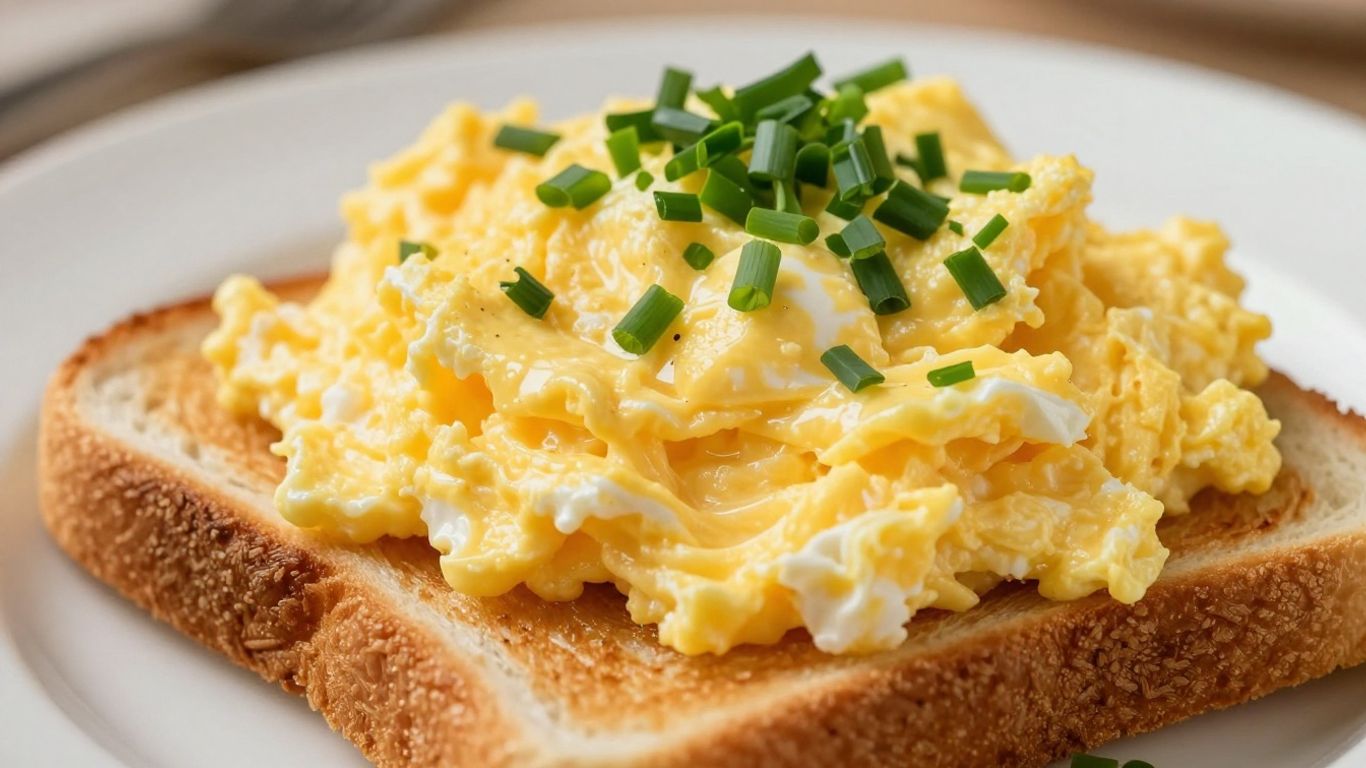
Scrambled egg on toast is one of those comfort breakfasts I keep coming back to, mostly because it’s both simple and filling. But if you’re paying attention to what you eat, calories matter—and it’s not always clear what goes into your morning plate. Figuring out the calories in this classic dish helps you make better choices, especially if you’re eating it regularly. Let’s break things down so it all makes sense.
Calorie Breakdown of Scrambled Eggs on Toast
Calories in scrambled eggs on toast will vary based on the bread type, how you cook your eggs, and anything else you throw in the pan. Here’s a typical calorie breakdown for a common serving (2 large eggs, 1 slice of whole wheat toast, minimal butter or oil):
| Ingredient | Serving Size | Calories |
|---|---|---|
| Large Eggs | 2 | 140 |
| Whole Wheat Toast | 1 slice (30g) | 80 |
| Butter/Oil (for pan) | 1 tsp | 35 |
| Total | 255 |
Of course, if you use larger eggs, white bread, added cheese, or a bit more olive oil, the numbers can climb. But if you keep things simple, you’re usually looking at 250 to 300 calories per plate.
- Standard portion: 2 eggs + 1 slice whole-grain toast + 1 tsp butter/oil
- Swapping out whole-grain for white bread can slightly drop fiber but usually doesn’t drop calories significantly
- Adding extras (like cheese or avocado) will bump up your total pretty fast
This dish is practical if you want protein without going overboard on your daily calories. It’s easy to adjust by choosing different bread or skipping extra fats.
Macronutrient Composition of a Serving
Scrambled eggs on toast isn’t just about calories. The macronutrients give a clearer picture of what you’re eating:
| Nutrient | Example Serving (2 Eggs, 1 Toast) |
|---|---|
| Protein | 13–15g |
| Fat | 10–12g |
| Carbohydrates | 20–23g |
| Fiber | 2–3g (whole wheat) |
This kind of meal gives you a good mix:
- Protein from the eggs (roughly 6g each)
- Carbs from the bread (with a bit of fiber, especially in whole grains)
- Fats from eggs, and extra from butter or oil if you use it
- Relatively low sugar, especially if you stick to plain bread
Balancing these nutrients means you’re not just eating empty calories. You’ll feel full longer, and your body gets what it needs nutritionally.
Factors Influencing Scrambled Egg on Toast Nutrition
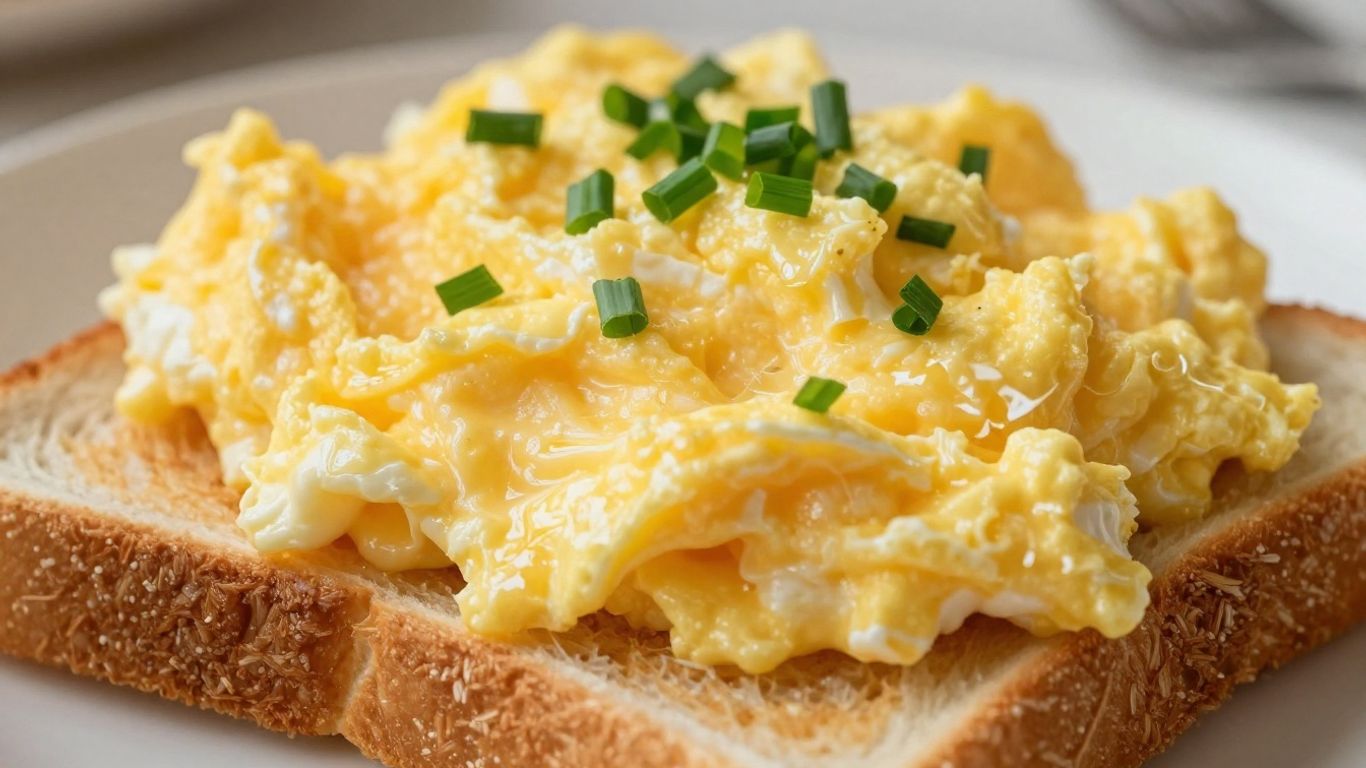
So, you’ve got your scrambled eggs on toast, and you’re wondering about the calories. It’s not just a simple number, though. A bunch of things can change how much you’re actually eating, nutritionally speaking. It’s like baking a cake – a little change here or there can make a difference.
Impact of Cooking Methods and Additions
How you cook those eggs and what you throw in with them really matters. Cooking them plain in a non-stick pan is one thing, but adding butter or cream changes the game. Butter adds fat and calories, while milk or cream can make them fluffier but also dilute the protein a bit per bite. And don’t even get me started on cheese – that’s a whole other level of fat and sodium.
Here’s a quick look at how some common additions can affect things, using a single egg as a base:
| Addition | Approx. Calories Added | Approx. Fat Added (g) | Notes |
|---|---|---|---|
| 1 tsp Butter | 35 | 4 | Adds richness and flavor. |
| 1 tbsp Milk | 10 | 0.5 | Makes eggs creamier, less dense. |
| 1 tbsp Cream | 50 | 5 | Significantly increases fat and calories. |
| 1 oz Cheddar | 110 | 9 | Adds protein, fat, and sodium. |
| Non-stick Spray | 0 | 0 | Lowest calorie cooking option. |
Even small things like adding a handful of spinach can boost nutrients like iron and vitamin K without adding many calories. On the flip side, loading up on cheese or using a lot of butter can quickly turn a simple breakfast into something much more calorie-dense.
The choices you make in the kitchen, from the type of fat used to the seasonings sprinkled on top, have a direct impact on the final nutritional tally of your scrambled eggs on toast. It’s about being aware of these small additions that can add up.
Serving Size and Ingredient Choices
Beyond how you cook it, what you put on the plate and how much of it is there makes a big difference too. We’re talking about the eggs themselves and the toast.
- Egg Size: Eggs come in different sizes – medium, large, extra-large. A jumbo egg has more protein and calories than a medium one. If you’re tracking closely, knowing the size of your eggs is a good idea.
- Bread Type: This is a big one. White bread is mostly simple carbs. Whole-grain toast, however, brings fiber, which is great for digestion and keeps you feeling full longer. Some people even go for low-carb bread options to fit specific diets.
- Portion Size: Are you having one slice of toast with two eggs, or two slices with three eggs? It sounds obvious, but doubling the toast or eggs doubles a lot of the nutritional components.
For example, a standard serving might be two large eggs scrambled with no added fat on one slice of whole-wheat toast. But if you switch to two slices of white toast and scramble the eggs in a tablespoon of butter, you’re looking at a significantly different calorie and fat count. It’s all about what fits your needs and preferences for the day.
Wrapping It Up
So, there you have it. Scrambled eggs on toast can be a pretty straightforward meal, but as we’ve seen, the calories and nutrients can really change based on how you make it. Whether you’re adding a splash of milk, a knob of butter, or serving it with a side of avocado, each choice adds up. For most people just looking for a decent breakfast, don’t stress too much about the exact numbers. Just knowing that eggs are packed with protein and toast gives you carbs is usually enough. But if you’re really tracking things closely for fitness or health goals, paying attention to those little details, like the type of bread or the amount of fat you use, can make a difference. It’s all about finding what works for you and your plate.
Frequently Asked Questions
How many calories are in a typical serving of scrambled eggs on toast?
A standard serving, like two scrambled eggs on one slice of toast, usually has around 200 to 300 calories. This can change a bit depending on how you cook the eggs and the type of bread you pick.
What makes scrambled eggs on toast a good breakfast choice?
Scrambled eggs are packed with protein, which helps you feel full and gives your muscles support. When you add toast, especially whole-grain toast, you get energy from carbs and fiber. It’s a pretty balanced way to start your day, giving you a mix of important nutrients.
Does adding things to my scrambled eggs change the calories a lot?
Yes, it can! Adding butter or oil when cooking will increase the calories and fat. Things like cheese also add calories and fat, while adding veggies like spinach or peppers can boost nutrients without adding many calories. So, what you add really makes a difference.