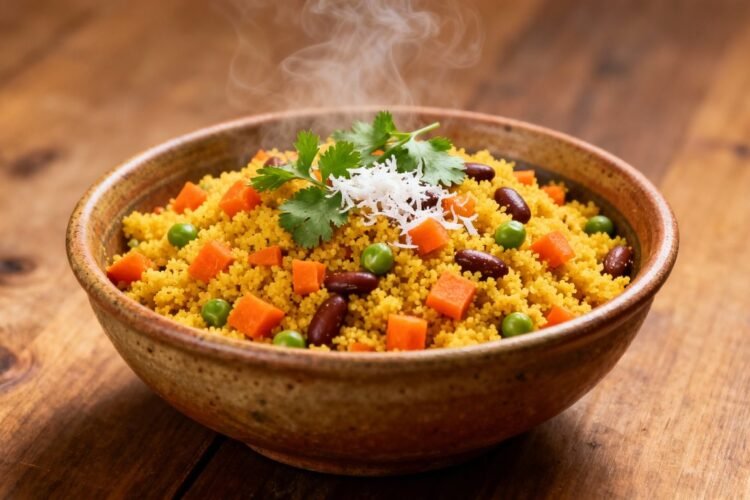
Looking for a breakfast that’s both tasty and good for you? You’ve come to the right place. This article is all about making the perfect vegetable upma, a classic South Indian dish that’s surprisingly simple to whip up. Whether you’re a seasoned cook or just starting out, we’ll guide you through making a delicious and satisfying bowl of upma that you’ll want to make again and again. Forget those bland breakfasts; get ready for something flavorful and filling!
Key Takeaways
- The right ratio of semolina to water is key for a soft, non-sticky upma.
- Roasting the semolina beforehand prevents lumps and adds a nice nutty flavor.
- Adding vegetables and tempering with spices and lentils makes this recipe for veg upma a complete and healthy meal.
Understanding The Perfect Recipe For Veg Upma
The Heart Of A Delicious Upma
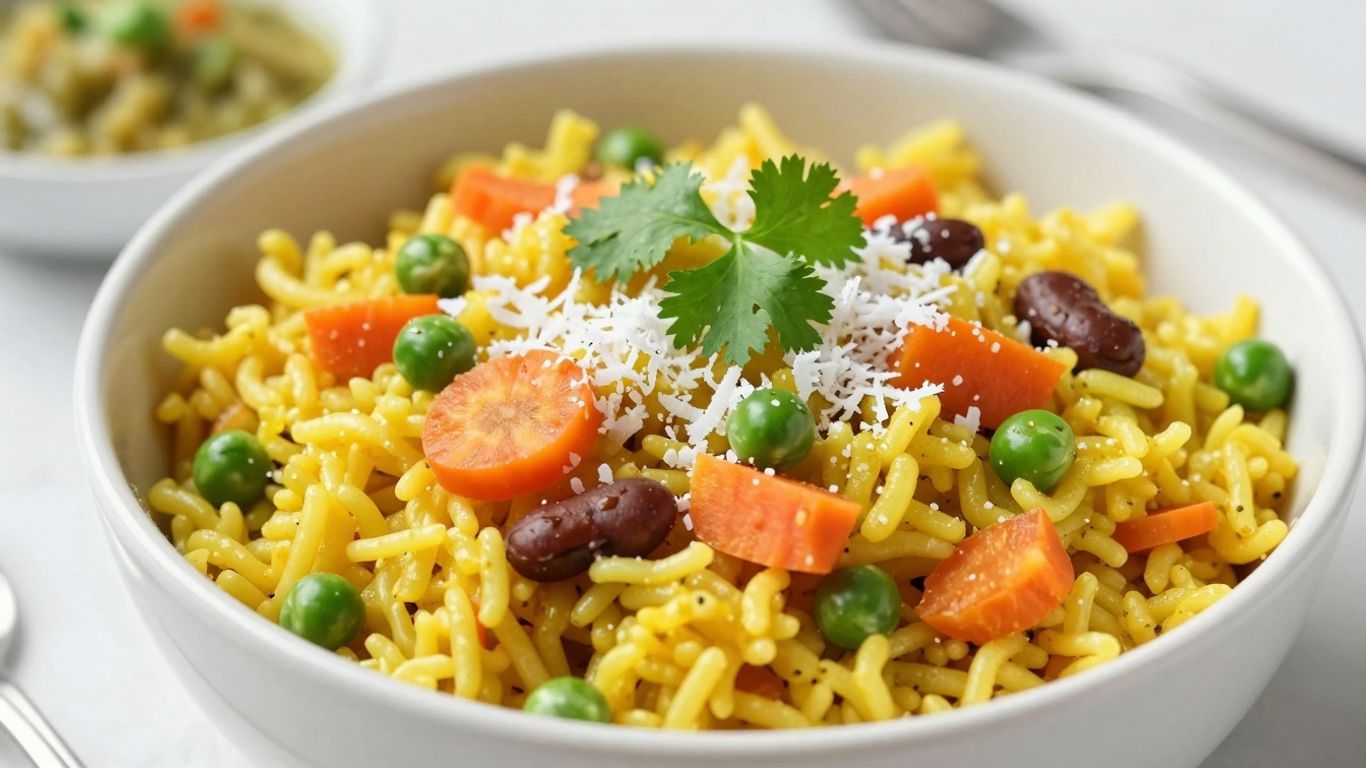
Upma is a breakfast dish that’s a staple in many South Indian homes. It’s a simple, one-pot meal made from semolina, often called rava or sooji. What makes upma truly special is its versatility and how it can be customized with different vegetables and spices. The key to a fantastic upma lies in getting the texture just right – it should be soft and fluffy, not mushy or dry. This dish is quick to prepare, making it a go-to for busy mornings, and it’s also a great way to sneak in some extra veggies.
Getting the right balance of ingredients and cooking time is what separates a good upma from a great one. It’s all about that satisfying mouthfeel.
Key Ingredients For A Flavorful Upma
To make a truly delicious vegetable upma, you’ll want to gather a few key items. The base is, of course, semolina (rava or sooji). Beyond that, a good tempering is where the flavor really starts. This usually involves:
- Seeds: Mustard seeds and cumin seeds add a warm, earthy base. Sometimes urad dal and chana dal are included for a bit of texture and nutty flavor.
- Aromatics: Fresh curry leaves are a must for that signature aroma. Finely chopped onions, green chilies, and ginger add layers of taste.
- Vegetables: Carrots and peas are common choices, adding color, sweetness, and nutrients. Feel free to add others like beans or bell peppers.
- Nuts: Peanuts or cashews provide a delightful crunch that contrasts nicely with the soft semolina.
- Finishing Touches: A squeeze of lemon juice at the end brightens everything up, and fresh coriander leaves add a burst of freshness.
Here’s a quick look at the typical ratios that work well:
| Ingredient | Quantity (for 1 cup semolina) | Notes |
|---|---|---|
| Semolina (Rava) | 1 cup | Roast until fragrant |
| Water | 3 cups | Adjust based on semolina type |
| Oil/Ghee | 2-3 tablespoons | For tempering and roasting semolina |
| Mustard Seeds | 1/2 teaspoon | |
| Urad Dal | 1 teaspoon | |
| Chana Dal | 1 teaspoon | |
| Curry Leaves | 1 tablespoon | |
| Onion | 1 small, chopped | Optional |
| Mixed Vegetables | 1/2 cup, chopped | Carrots, peas, beans, etc. |
| Peanuts/Cashews | 2-3 tablespoons | For crunch |
| Lemon Juice | 1 teaspoon | To finish |
| Coriander Leaves | 1 tablespoon, chopped | For garnish and freshness |
Crafting Your Ideal Veg Upma
Achieving The Perfect Texture
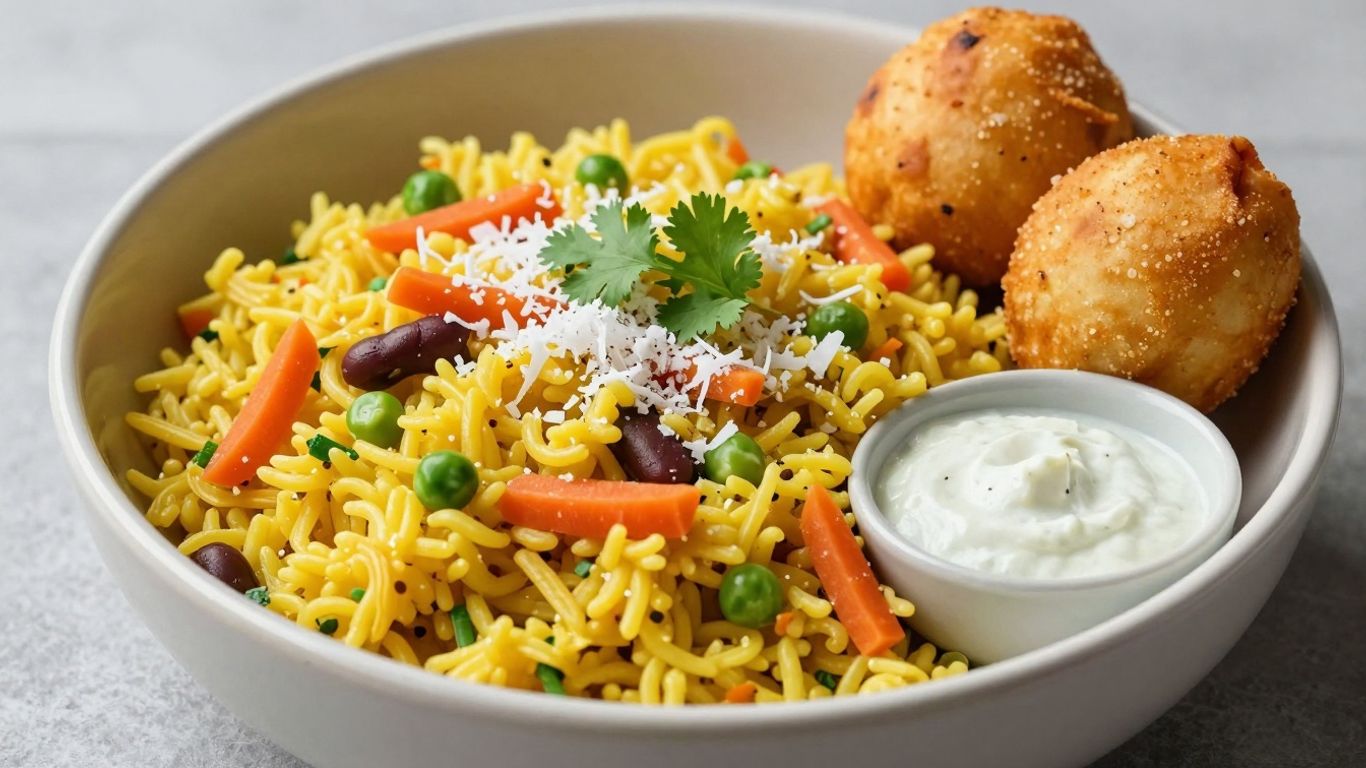
Getting the texture of your upma just right is key. Nobody wants a mushy or overly dry breakfast. The secret often lies in the ratio of semolina (rava or sooji) to water. While many recipes suggest a 1:2 or 1:2.5 ratio, I’ve found that a 1:3 ratio of rava to water works best for most types of semolina, giving you a fluffy, non-sticky result. It took some trial and error, but this ratio is pretty foolproof.
Here’s a quick guide to the liquid ratio:
- Fine Semolina (Bombay Rava/Sooji): 1 cup rava to 3 cups water.
- Coarser Semolina: You might need slightly more liquid, perhaps 3.5 cups.
Remember to roast your semolina beforehand. This step is super important. Roasting it in a bit of ghee or oil until it’s fragrant and lightly colored prevents it from becoming gummy when cooked. Let it cool completely before you start making the upma.
Tips For A Superior Upma
Beyond the basic steps, a few little tricks can really make your veg upma shine. It’s all about building layers of flavor and getting that satisfying consistency.
- The Tempering (Tadka): Don’t skip the tempering! This is where a lot of the flavor comes from. Start with oil or ghee, then add mustard seeds, cumin seeds (if you like them), urad dal, and chana dal. Let the dals turn golden brown. Adding peanuts and cashews here too gives a nice crunch.
- Aromatics are Your Friend: Sautéing onions until they’re soft and translucent, along with green chilies and ginger, adds a wonderful base. Curry leaves are a must for that authentic aroma.
- Vegetable Prep: Chop your vegetables small and uniformly so they cook evenly and quickly. Carrots and peas are classics, but feel free to add finely chopped beans or bell peppers.
- The Finish: A squeeze of fresh lemon juice right at the end brightens everything up. Fresh coriander leaves sprinkled on top add a burst of freshness.
Making upma is a bit like a culinary dance. You need to get the heat right, stir at the right moments, and know when to add each ingredient. It’s not complicated, but paying attention to these small details makes a big difference between an okay dish and a truly delicious one. It’s a simple breakfast, but it rewards a little care.
Here’s a quick look at the order of operations for the tempering and cooking:
- Heat oil/ghee and add mustard seeds. Let them splutter.
- Add cumin seeds (if using), urad dal, chana dal, and peanuts/cashews. Sauté until dals are golden.
- Toss in curry leaves, asafoetida (if using), chopped onions, green chilies, and ginger. Cook until onions are soft.
- Add chopped vegetables and sauté for a minute.
- Pour in the hot water and bring it to a boil.
- Slowly add the roasted semolina while stirring continuously to avoid lumps.
- Cook until the water is absorbed and the upma reaches your desired consistency.
- Stir in lemon juice and fresh coriander.
Enjoy Your Delicious Upma!
So there you have it – a simple way to make a really tasty and healthy breakfast. This upma is great because you can throw in whatever veggies you have lying around, and it’s pretty quick to whip up, even on a busy morning. It’s the kind of meal that feels good to eat and is good for you too. Give it a try, and I bet you’ll find yourself making it again and again. It’s a real winner for starting your day off right.
Frequently Asked Questions
What’s the best way to get my upma soft and not sticky?
To make your upma super soft and avoid it getting sticky, make sure to roast the semolina (rava) well before cooking. Also, using the right amount of water is key – a common tip is to use about 3 cups of water for every 1 cup of semolina. Stirring it constantly while adding the semolina also helps a lot!
Can I add other vegetables to my upma?
Absolutely! Upma is great for adding extra veggies. You can toss in chopped carrots, peas, beans, bell peppers, or even some corn. Just make sure to chop them small so they cook through nicely with the semolina. It makes your upma tastier and even healthier!
What should I serve with upma?
Upma tastes amazing with a side of coconut chutney, which is a classic pairing. You can also serve it with a simple pickle, some peanut chutney, or even just a squeeze of fresh lemon juice and a sprinkle of fresh cilantro. A hot cup of tea or coffee goes perfectly with it too!