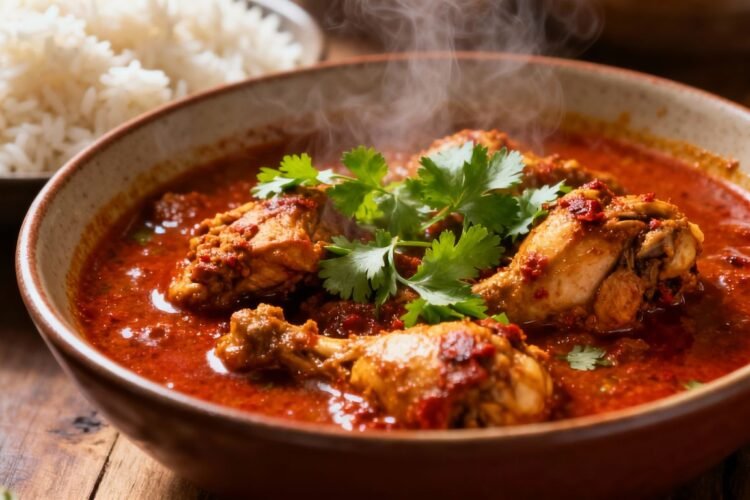
Get ready to explore the vibrant flavors of Mangalore with this authentic chicken curry, also known as Kori Gassi. This dish is more than just a meal; it’s a taste of tradition, passed down through generations. We’ll walk through what makes this chicken curry so special and how you can bring a piece of Mangalore to your own kitchen. It’s a journey for your taste buds, packed with aromatic spices and the creamy goodness of coconut.
Key Takeaways
- Authentic Mangalorean chicken curry, or Kori Gassi, is a rich dish featuring a blend of spices and fresh coconut.
- The unique flavor comes from a specific mix of roasted spices, coconut, and often tamarind for a hint of tang.
- This versatile chicken curry pairs wonderfully with traditional accompaniments like rotti, as well as rice, dosa, or idli.
Unveiling the Essence of Mangalorean Chicken Curry
The Heart of Kori Gassi: A Family Legacy
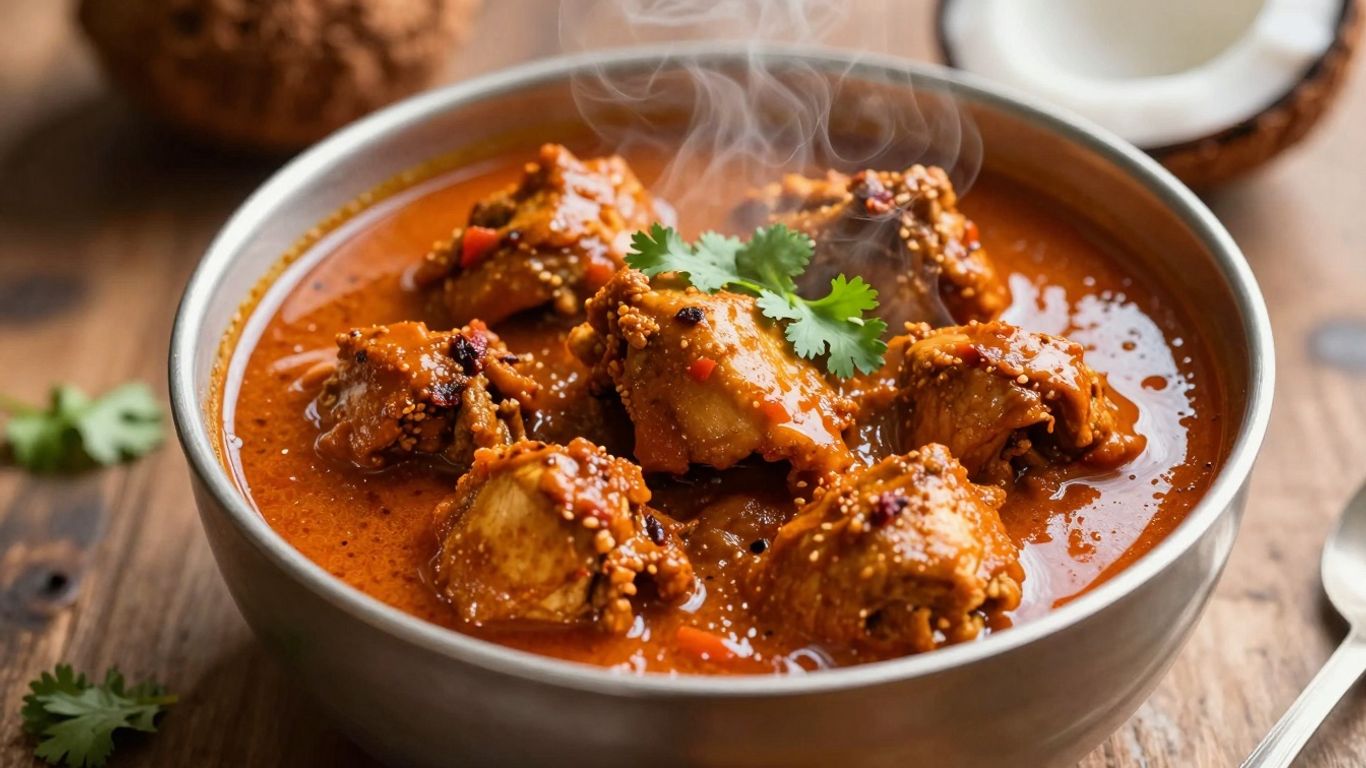
Kori Gassi, a name that might sound exotic, is actually the heart and soul of Mangalorean chicken curry. For many families in the coastal region of Karnataka, India, this dish isn’t just food; it’s a connection to their roots, a taste of home passed down through generations. Think of cozy family dinners, the kind where laughter fills the air and the aroma of spices promises something truly special. This curry often holds a cherished spot in family recipe books, a testament to traditions that have been nurtured and shared. It’s more than just chicken and gravy; it’s a story on a plate, a culinary heritage that speaks of warmth and togetherness.
What Makes This Chicken Curry Unique
So, what gives Kori Gassi its distinct character? It’s a masterful blend of flavors that sets it apart. Unlike many other chicken curries, Kori Gassi often features a rich, creamy base derived from freshly ground coconut, giving it a luxurious texture and a subtle sweetness. The spice profile is also quite specific, usually involving a carefully roasted blend of spices like coriander seeds, cumin, and dried red chilies, which are then ground into a fine paste. This roasting process really brings out a depth of flavor that’s hard to replicate.
Here’s a quick look at what typically goes into making it special:
- Coconut: The star ingredient, providing creaminess and a mild sweetness.
- Roasted Spices: Aromatic elements like coriander, cumin, and peppercorns, dry-roasted for intense flavor.
- Tanginess: Often a hint of sourness from tamarind, balancing the richness.
- Aromatic Foundation: Ginger, garlic, and onions form the savory base.
The magic truly lies in the balance – the way the heat from the chilies, the earthiness of the roasted spices, and the creamy coconut milk come together. It’s a symphony of tastes that’s both comforting and excitingly different.
Crafting Your Authentic Mangalorean Chicken Curry
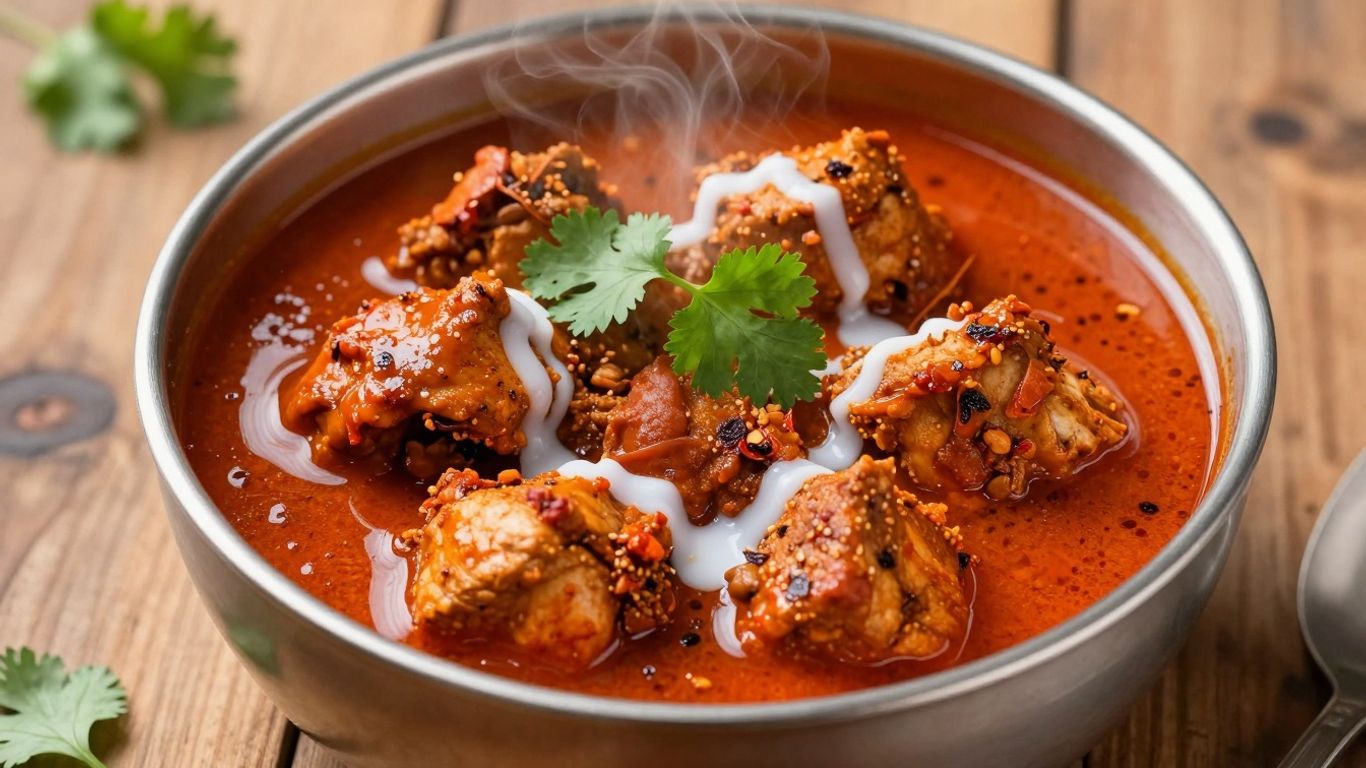
Making a true Kori Gassi is a bit of an adventure, but a really rewarding one. It’s all about building layers of flavor, starting with a really good spice base and then letting the chicken simmer just right. Don’t be intimidated by the ingredient list; most of it is pretty standard for Indian cooking, and the result is totally worth it.
Key Ingredients for a Flavorful Base
To get that signature taste, you’ll need a few things that really make a difference. Fresh ingredients are key here. We’re talking about good quality chicken, of course, preferably bone-in for extra flavor. Then there’s the aromatics: onions, garlic, and ginger form the backbone of most Indian curries, and this one is no different. You’ll also want some tomatoes for a bit of tang and body, though some traditional recipes rely solely on tamarind for that acidic kick. And don’t forget the coconut – it’s what gives Kori Gassi its creamy richness.
Here’s a quick rundown of what you’ll generally need:
- Chicken: About 1 kg, cut into pieces. Bone-in is best.
- Onions: 1-2 large, finely chopped or ground.
- Garlic: A good amount, maybe 6-8 cloves, minced or ground.
- Ginger: A thumb-sized piece, grated or ground.
- Tomatoes: 1-2 medium, chopped (optional, depending on your preference).
- Coconut: Freshly grated or desiccated, toasted for depth.
- Tamarind: A small lime-sized ball, soaked in water for its juice.
The Art of Spices and Coconut
This is where the magic really happens. The spice blend for Kori Gassi is what gives it its unique character. You’ll be toasting whole spices like coriander seeds, cumin seeds, peppercorns, cardamom, cloves, and cinnamon. This process really brings out their aroma and flavor. Then, these toasted spices are ground into a paste, often along with dried red chilies for heat. The type of chili you use matters – Byadgi chilies, for example, give a lovely red color without being overwhelmingly spicy.
Toasting the spices is a step you really shouldn’t skip. It transforms them from raw ingredients into fragrant flavor bombs that are the soul of the curry. Take your time with this part; a gentle, even heat is what you’re aiming for.
After grinding the spices, you’ll often toast grated coconut until it’s golden brown. This adds a nutty depth that’s hard to beat. Some recipes add the toasted coconut directly to the spice paste, while others might toast it separately and add it later. The final step involves simmering the chicken in this rich masala, then adding thick coconut milk towards the end to create that signature creamy, spicy gravy. Adjusting salt and water to get the consistency just right is the final touch before letting it rest and meld all those wonderful flavors together.
Serving and Savoring Your Mangalorean Creation
So, you’ve put in the work, and your kitchen smells amazing. Now comes the best part: enjoying your authentic Kori Gassi! This dish is meant to be shared, so gather your favorite people around the table.
Traditional Pairings for Kori Gassi
While this curry is fantastic on its own, it really shines when paired with the right accompaniments. Traditionally, Kori Gassi is served with rotti, a type of unleavened flatbread. The slightly crisp, yet soft texture of rotti is perfect for soaking up all that rich, flavorful gravy. It’s a simple combination, but trust me, it’s a match made in culinary heaven.
Here are some classic ways to enjoy your Kori Gassi:
- Rotti: The quintessential pairing. Its neutral flavor lets the curry be the star.
- Steamed Rice: A simple bowl of fluffy white rice is always a good idea. It’s great for those who prefer a softer base.
- Neer Dosa: These thin, lacy crepes made from rice batter offer a delicate texture that complements the curry beautifully.
- Idli: Soft, steamed rice cakes that are another popular South Indian choice for soaking up curries.
Remember, the goal is to create a balance of textures and flavors. The richness of the curry needs something to anchor it, and these traditional pairings do just that.
Exploring Variations and Accompaniments
While rotti and rice are the go-to, don’t be afraid to get a little creative. Some people enjoy Kori Gassi with a side of pickled onions or a simple cucumber raita to add a cooling contrast to the spice. If you’re feeling adventurous, you could even try it with a side of crispy fried papadums for an extra crunch.
Some folks also like to experiment with the base. While this recipe uses tomatoes, you could try omitting them and relying solely on tamarind for that signature tanginess. It gives the curry a slightly different, brighter profile.
And if you happen to have any leftovers (which is unlikely, but possible!), they often taste even better the next day. Just reheat gently and enjoy another delicious meal. It’s a dish that truly celebrates the heart and soul of Mangalorean home cooking.
A Taste of Home
So there you have it, a real taste of Mangalore right in your own kitchen. This Kori Gassi isn’t just a dish; it’s a connection to a place, a family, and a whole lot of flavor. Whether you serve it with fluffy rice, crispy rotti, or soft idlis, the rich, spicy coconut gravy is sure to be a hit. Don’t be afraid to play around with the spice levels or even add a little extra coconut if that’s your thing. Cooking this curry is like taking a little trip, and the best part is, you get to eat the souvenirs. Enjoy every bite!
Frequently Asked Questions
What makes Mangalorean Chicken Curry special?
This curry is special because it uses a unique mix of spices along with fresh coconut. It has a rich, creamy taste that’s a little tangy and a little spicy, making it different from other chicken dishes.
What do people usually eat with Kori Gassi?
Traditionally, Kori Gassi is served with ‘rotti,’ a type of flatbread. However, it’s also delicious with plain rice, fluffy idlis, or crispy dosas. You can pick whatever you like best!
Can I adjust the spice level of this curry?
Yes, you absolutely can! If you prefer less spice, you can reduce the number of dried red chilies used when making the spice paste. Taste and adjust as you cook to make it perfect for your liking.